0 0
0
No products in the cart.

How to Protect Your Crop from Sudden Wilting in the Egyptian Summer? | tna W rna

Jun 24, 2026 / By Anas Heaba / in Growing Guides

Imagine this scene: you wake up in the morning to check the tomato seedlings you planted on your rooftop two weeks ago, only to find the leaves drooping like melted plastic, and the soil dry even though you watered them yesterday. This is not just temporary thirst; it is a real warning sign. In Egypt's scorching summer, where temperatures reach 45°C in the shade, plants experience immense heat stress leading to rapid physiological wilting, which can end an entire growing season within hours if you do not act quickly and correctly.

The question that arises: can you, as a hobbyist or small farmer, predict this crisis and prevent it before it destroys your hard work? The answer is yes, but not by relying on intuition or a fixed daily watering schedule. The solution lies in understanding the plant's own language by monitoring simple vital indicators, and converting these readings into smart irrigation decisions that conserve every drop of water and every plant in your limited space. This article is your practical guide to doing just that.

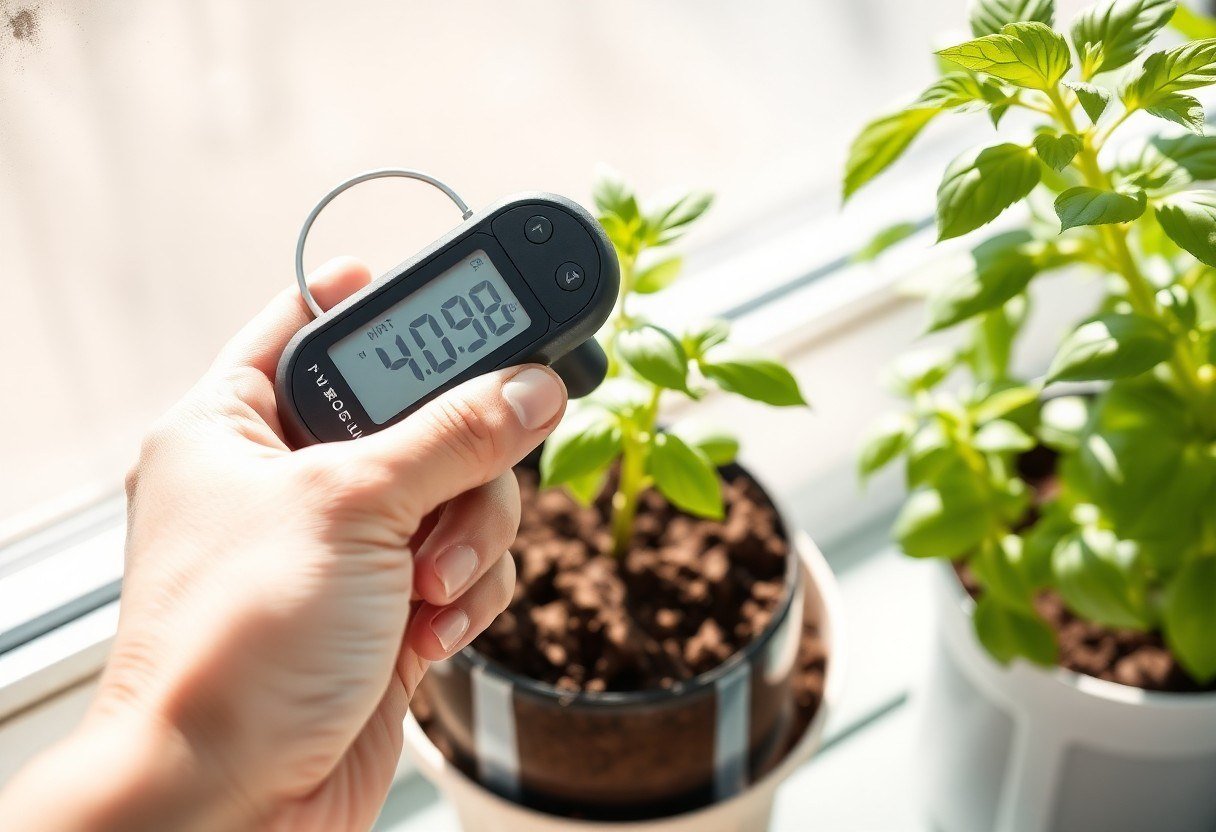
A hand holding a soil moisture meter in a basil pot under the sun

Why Is This Important?

Egypt suffers from a water gap of up to 40 billion cubic meters annually, according to reports from the Ministry of Irrigation, yet hobbyists and small farmers waste large amounts of water due to watering at the wrong times or in inappropriate quantities. In small spaces (such as rooftops and balconies), the soil volume is limited, meaning it loses moisture twice as fast under direct sunlight. Overwatering not only wastes water but also causes root suffocation and increases the chances of fungal diseases, especially on hot, humid nights.

The numbers speak: a study conducted by Cairo University on tomato plants in pots showed that plants watered based on actual soil moisture readings (rather than a fixed schedule) consumed 35% less water and increased their yield by 20%. Simply put, smart irrigation is not a technological luxury but an economic and environmental necessity in light of climate change and rising water and electricity costs.

The Root of the Problem

The wilting you see is not just a lack of water in the soil. The scientific reason is deeper: when the air temperature rises above 38°C, the transpiration rate (water loss from leaves) increases dramatically and may exceed the roots' ability to absorb water from the soil, even if the soil is moist. This is called "temporary physiological wilting," and it occurs because the plant closes its stomata (respiratory pores) to protect itself, halting photosynthesis entirely. If high temperatures persist for long hours, temporary wilting becomes permanent, and plant cells die.

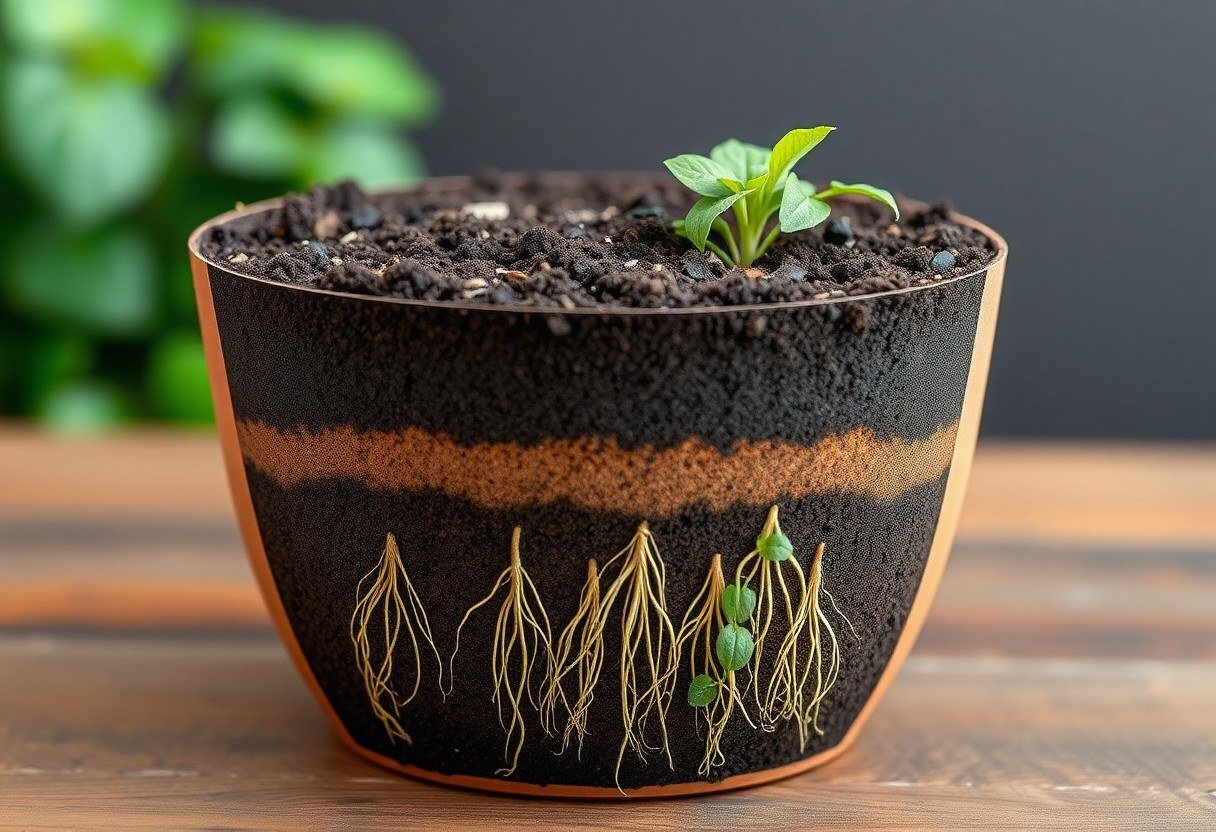
The problem worsens in pots and small containers because the soil quantity is small, meaning the heat and moisture reserve is limited. The surface soil dries quickly, while deeper soil may remain moist, tricking the farmer who waters daily with a small amount, wetting only the surface without reaching the deep roots. The optimal solution is to know the soil moisture at the actual root depth, not just at the surface.

Cross-section illustration of a pot showing dry soil on the surface and moist soil at depth with roots

The Solution Step by Step

  1. Measure Soil Moisture Regularly: Use a digital soil moisture meter (or even a clean wooden stick if you are just starting). Insert the probe to a depth of 5-7 cm in the pot (where the roots are concentrated). If the reading is below 30%, the plant needs water immediately. If it is between 40-60%, it is in the ideal range. Above 80%, do not water, or you will drown the roots.
  2. Determine the Optimal Watering Time: The best time to water in the Egyptian summer is just before sunrise (4-5 AM) or one hour after sunset (7-8 PM). Avoid watering at midday entirely, because cold water on hot leaves causes thermal shock and burns, and more than 50% of it evaporates before reaching the roots.
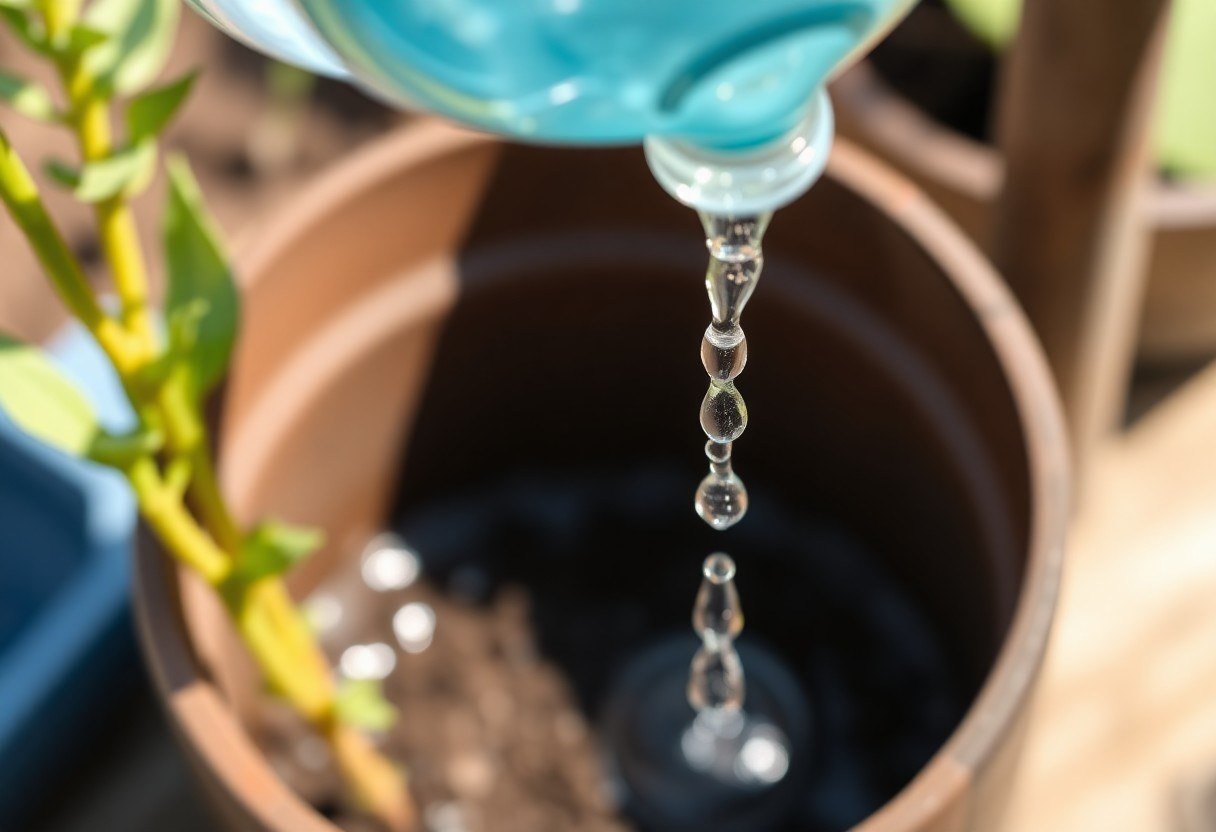
  3. Use a Simple Drip Irrigation System: Even for a single pot, you can install one drip emitter connected to an inverted water bottle (DIY). This ensures water reaches the roots slowly without surface runoff. For larger areas, use a small pump and a simple electronic timer.
  4. Add a Mulch Layer: Cover the soil surface in the pot with a 2-3 cm layer of rice straw, small gravel, or even paper shreds. This reduces surface evaporation by up to 70% and keeps the soil cool.
  5. Monitor the Weather and Adjust the Schedule: On days when temperatures exceed 40°C or hot, dry winds blow (Khamsin), you may need to water twice a day (morning and evening) with a smaller amount each time. Use a reliable weather app to follow forecasts.
Simple drip irrigation system using an inverted water bottle in a pot

Practical Tips and Tools

  • Choose the Right Pots: Unglazed terracotta pots allow water to evaporate from the sides, cooling the soil but increasing water consumption. Plastic pots retain moisture longer and are better for beginners in hot summers.
  • Use Pot Feet: Lift the pot a few centimeters off the ground to ensure good drainage of excess water and prevent root rot, especially after evening watering.
  • Try Sub-irrigation: Place a deep saucer under the pot and fill it with water, allowing the soil to absorb water from below through capillary action. This method encourages roots to grow downward and reduces foliar diseases.
  • Sense the Plant's Needs: Learn to read the plant's language. If leaves are drooping early in the morning (before sunrise), the soil is too dry. If leaves droop at midday and then perk up in the evening, this is normal in extreme heat and does not require additional watering.

Common Mistakes to Avoid

  • Fixed Daily Watering: Watering every day with the same amount without measuring is the biggest mistake. On cloudy or moderate days, the soil may be moist enough for three days. Overwatering kills roots by suffocation faster than thirst.
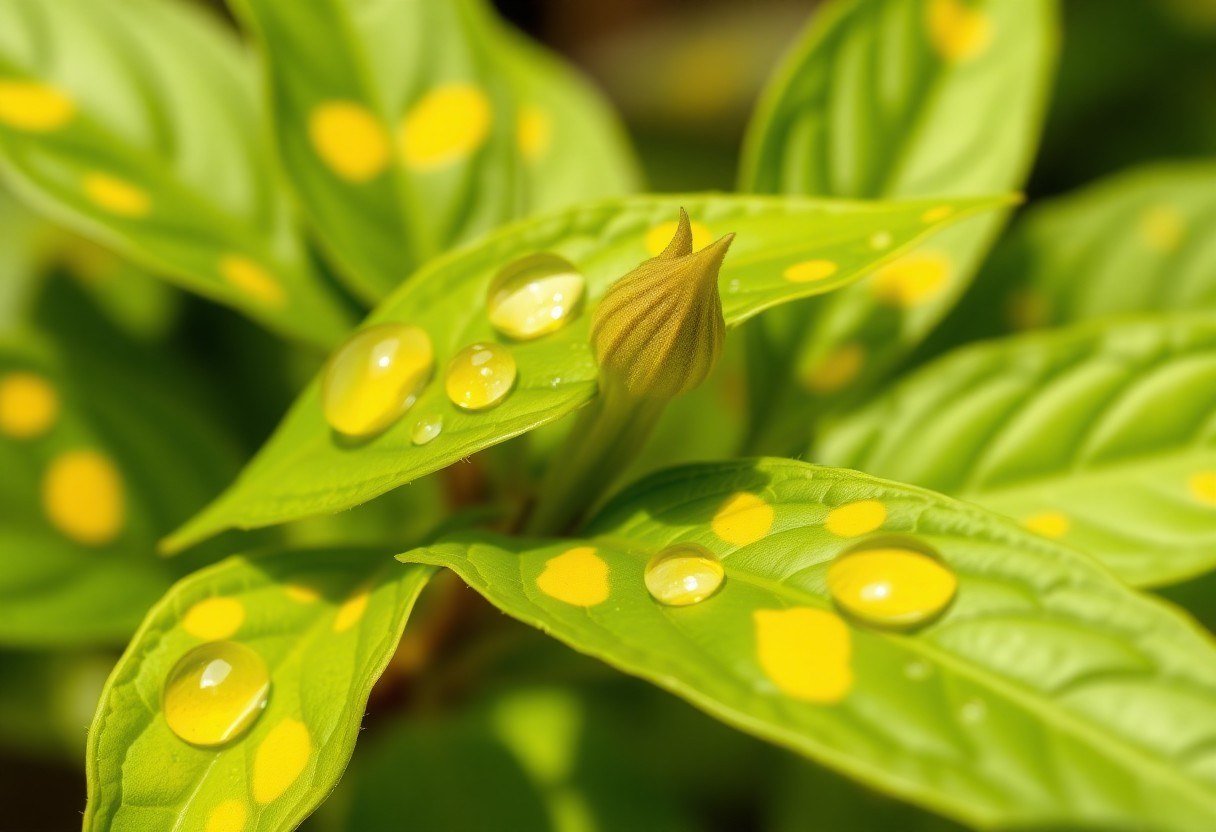
  • Wetting the Leaves When Watering: In the hot Egyptian summer, water on leaves acts like a magnifying glass under the sun, causing localized burns. More dangerously, it creates a humid environment ideal for fungal diseases like powdery mildew. Water only the soil, not the plant.
  • Using Very Cold Water: Cold tap water (especially early in the morning) shocks the roots in hot soil. Fill your watering can in the evening and let it sit overnight to reach room temperature before use in the morning.
  • Neglecting Drainage: Ensuring there are drainage holes in the bottom of the pot is vital. If water pools at the bottom, roots rot within days. Add a layer of gravel or perlite at the bottom of the pot to improve drainage.
  • Total Reliance on Automation: Even if you use a timer or automatic sensor, do not leave the system unattended for more than two days. Mechanical failures (clogged drippers, power outages) are common, and you might wake up to a dead crop.
Plant leaves with sunburn caused by water droplets

Frequently Asked Questions

How do I know I am watering enough without overwatering?

Water slowly until you see the first drop of water come out of the drainage holes at the bottom of the pot. This means the soil is fully saturated. Stop immediately. Do not let the pot sit in the drained water for more than 30 minutes, then discard the excess water in the saucer.

Can I use tap water directly?

Yes, but it is better to leave it in an open container for 24 hours to allow the chlorine to evaporate, which can harm beneficial microorganisms in the soil. Rainwater (if available) or filtered water is best.

What are the best heat-tolerant plants for beginners?

Basil, mint, cactus, bougainvillea, and molokhia. These plants tolerate relative drought and high temperatures. Tomatoes, cucumbers, and peppers require more care in summer, especially during the flowering and fruiting stages.

Does misting the leaves (foliar spray) help reduce heat?

A light misting of the leaves very early in the morning (before sunrise) can help raise humidity around the plant and reduce transpiration. But do not do this at midday or in the evening, as nighttime moisture on leaves causes fungal diseases.

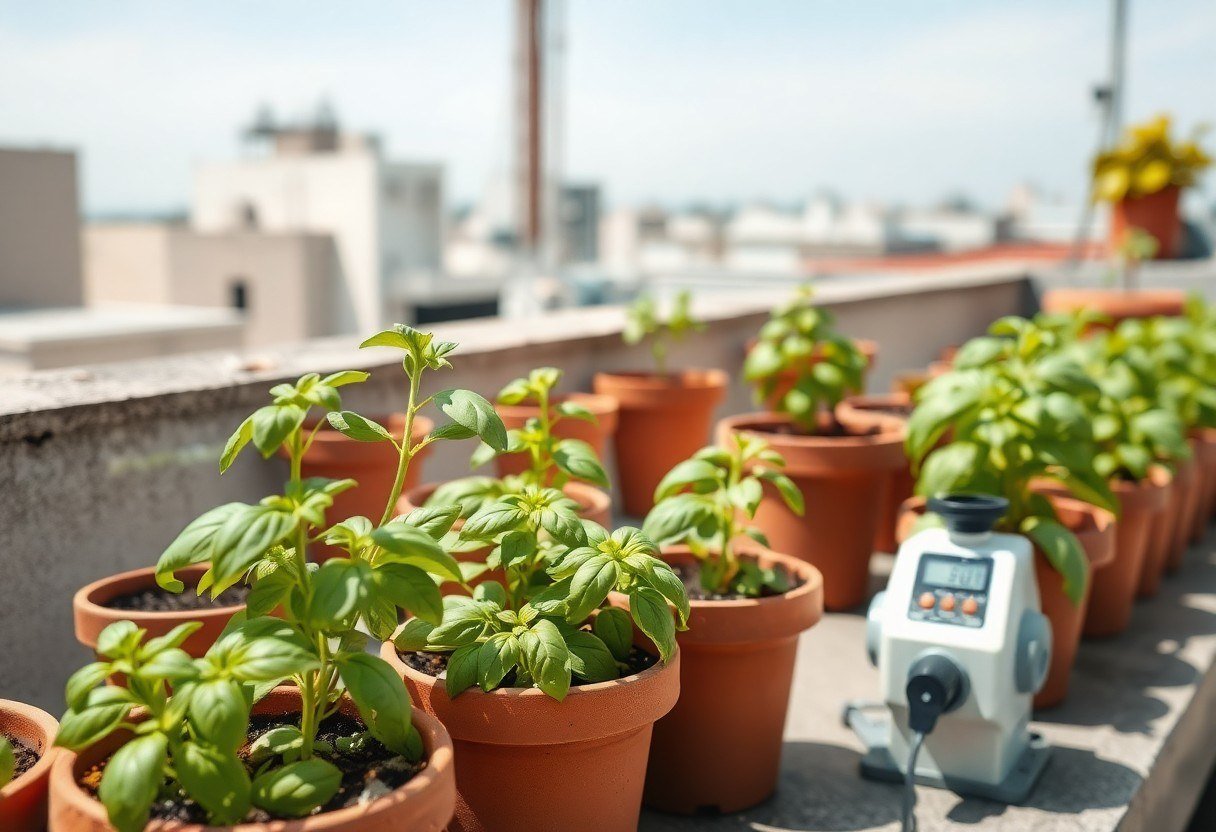
Healthy basil plants in terracotta pots on a rooftop with a thermometer and small water pump

Conclusion

Protecting your crop from wilting in the Egyptian summer is not a matter of luck or long experience, but of smart monitoring and precise timing. Start with one simple step: buy a soil moisture meter (or make one from a wooden stick) and stop watering based on guesswork. Learn to read your plant, and apply the principle of slow, deep watering instead of frequent surface watering. And if you want to take a step forward into the world of smart agriculture, you can use a development board like the Arduino MEGA2560 Prototyping Shield – Project Board Working Area to build a simple automatic irrigation system that reads soil moisture and waters your plants automatically. Remember: every drop of water you save today is an investment in your farming future tomorrow. Start now, and watch the difference.


Contact Us تواصل معنا