0 0
0
No products in the cart.

Can I Grow Tomatoes on My Balcony Despite Heat and Limited Space? | tna W rna

Jun 25, 2026 / By Anas Heaba / in Growing Guides

Imagine with me, my Egyptian farmer or hobbyist friend: you are standing on your small balcony, under the scorching August sun, wondering: "Can I really grow sweet local tomatoes here, in this tight space, without the plants dying of thirst or burning from the heat?" This question is not just curiosity; it is a real hope for millions of Egyptians who own balconies or rooftops and dream of fresh organic produce, but are confronted with a harsh climate and limited resources.

The truth is that farming in small spaces is no longer a luxury or a passing hobby; it has become a necessity for achieving personal food security and saving on the rising costs of vegetables. However, the problem is that Egypt's environmental conditions—high heat and aridity—make this task akin to an engineering challenge requiring smart solutions, not just seeds and water. This is where smart farming comes in: using simple, low-cost technologies to monitor and improve the plant's environment, allowing you to obtain an abundant harvest even in the smallest spaces.

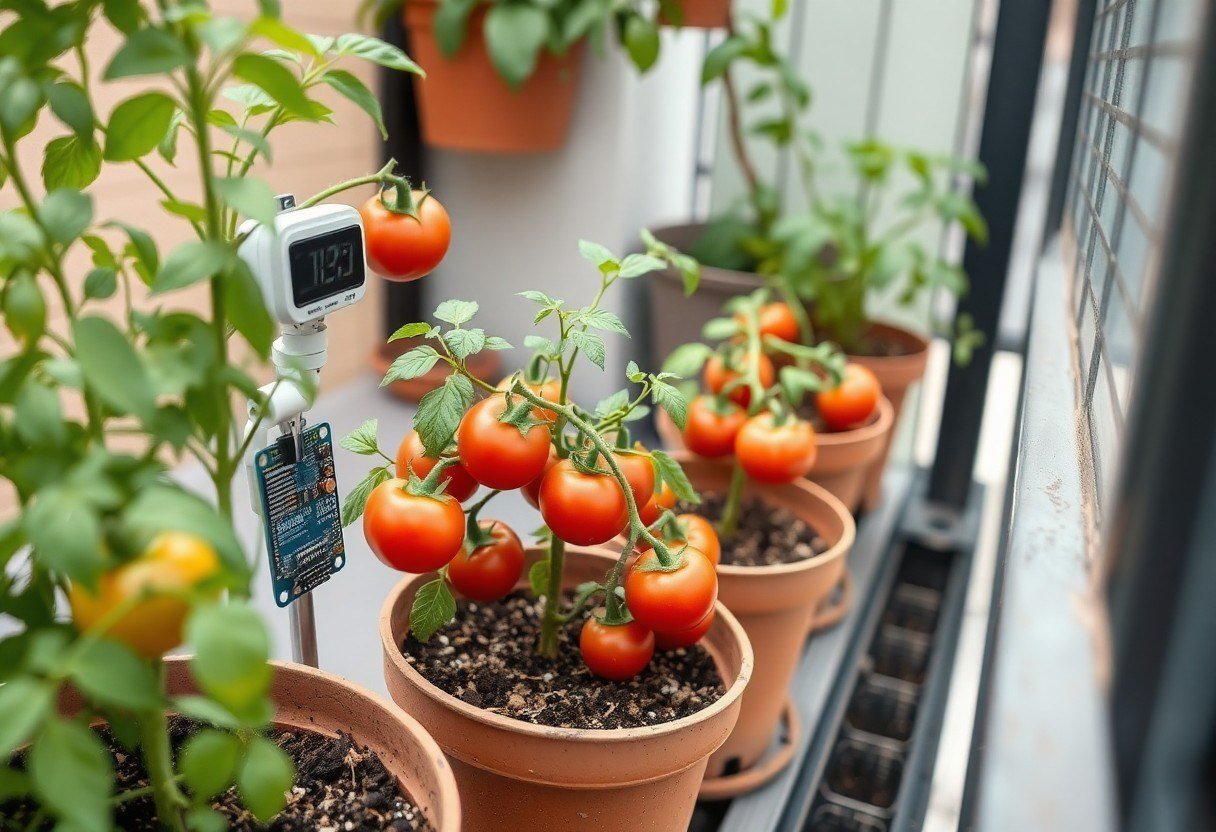
Small home balcony with tomato plants in pots and a small Arduino-powered sensor station

Why Is This Matter Important Now?

Egypt suffers from dual challenges: water scarcity and rising temperatures. According to reports from the Ministry of Water Resources and Irrigation, the per capita share of water is about 560 cubic meters annually, which is far below the global water poverty line (1,000 cubic meters). At the same time, summer temperatures reach 40 degrees Celsius or more in most governorates, causing heat stress for plants and increasing their water needs.

For the Egyptian farmer or hobbyist, this means every drop of water is precious, and every extra degree of heat could mean crop failure. In small spaces like balconies, the soil is very limited, causing it to dry out quickly and be exposed to heat faster than open ground. Therefore, any system that helps you precisely control irrigation and monitor surrounding conditions is not just a luxury, but an essential tool to ensure your farming success and save water and effort.

The Root of the Problem: Why Do Plants Die on Egyptian Balconies?

The problem is not a lack of love for your plant, but a lack of understanding of the language the plant speaks. The plant communicates with you through its leaves and soil: if the soil is too dry, it wilts. If it is too wet, the roots rot. If the temperature is too high, it stops growing and burns its leaf tips. But you cannot see these subtle changes until it is too late.

Scientifically, plant health depends on three main factors: soil moisture (which determines water availability), air temperature (which affects transpiration and photosynthesis), and soil pH (which controls nutrient absorption). On a balcony, these factors change rapidly: at noon, the soil temperature in the pot can rise to 50 degrees Celsius, while dropping to 25 degrees at night. These sharp fluctuations cause shock to the plant and weaken its immunity. The traditional solution is daily manual watering, but it is inaccurate: you either drown the plant or leave it thirsty. Here, you need an electronic eye to monitor and decide on your behalf.

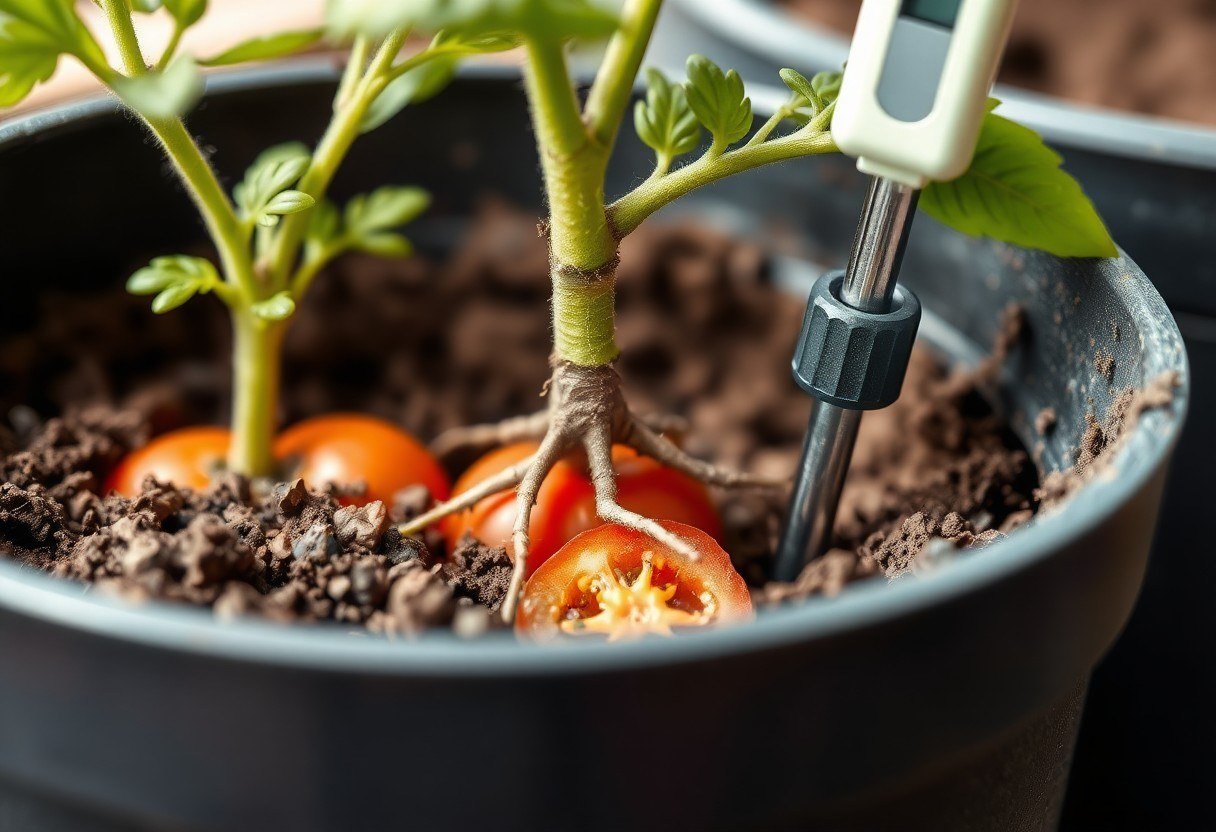
Soil moisture sensor dipped in a tomato pot with visible roots

The Step-by-Step Solution: How to Build a Smart Irrigation System for Your Balcony?

  1. Determine your plant's needs: Start by planting a tomato variety suitable for hot climates (such as Bandora tomatoes or heat-resistant cherry tomatoes). Use a pot at least 30 cm deep with good drainage holes.
  2. Prepare the monitoring sensors: Buy a Soil Moisture Sensor and an air temperature and humidity sensor (DHT22 or DHT11). These sensors are cheap (less than 100 EGP) and sold in electronics stores or online.
  3. Connect the sensors to a control board: Use an Arduino UNO board as the brain of the system. Connect the sensors to the board according to a simple circuit (you will find hundreds of tutorials on YouTube in Arabic). The basic programming reads moisture and temperature values every 10 minutes.
  4. Program the automatic irrigation system: Add a Relay and a small water pump (12V) or a Solenoid Valve. Write a simple code that runs the pump only when soil moisture drops below a certain threshold (like 30%), and stops it when it reaches 70%. This ensures not a single drop of water is wasted.
  5. Monitor the data and adjust settings: You can add a small LCD screen to display readings, or even connect the Arduino to an app on your phone via Bluetooth (HC-05 module) to see the plant's status wherever you are. After a week of operation, observe how the plant reacts to the schedule you programmed, and adjust the limits based on your observations.
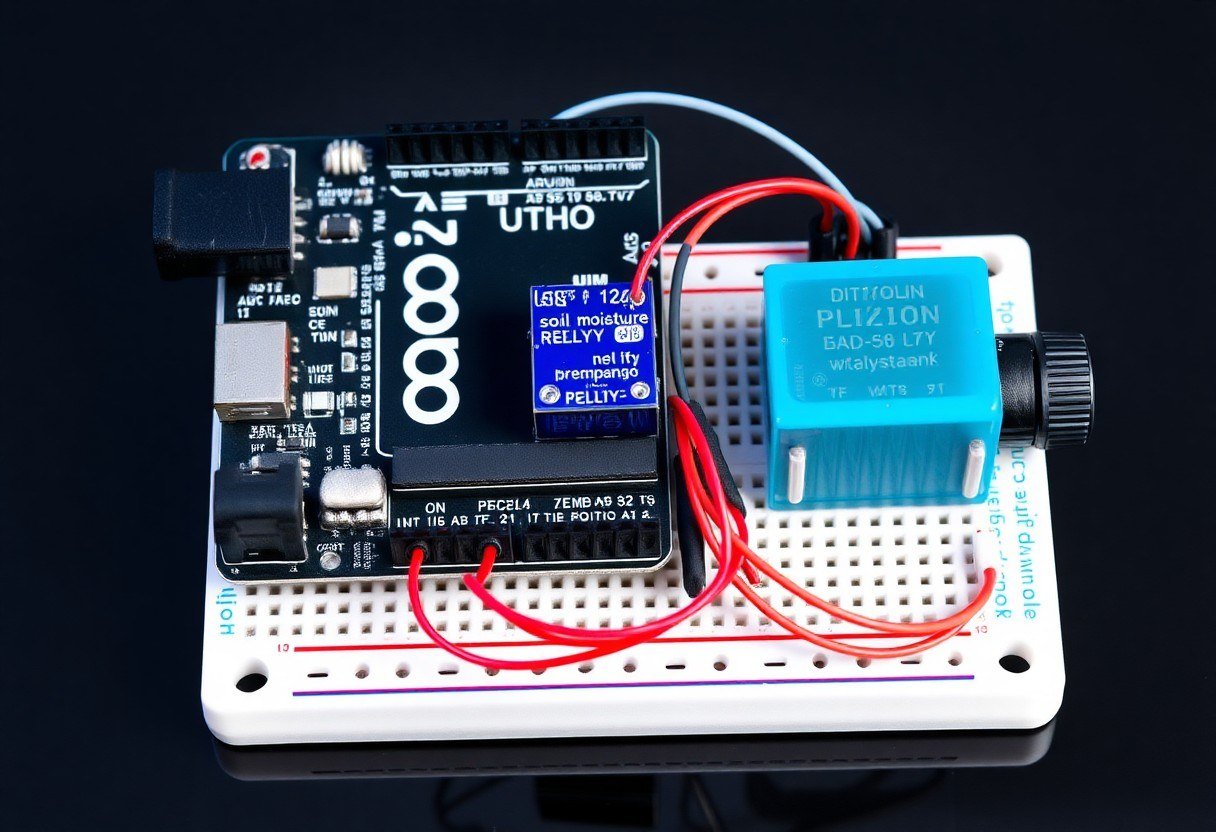
Arduino board connected to a moisture sensor, relay, and small water pump on a prototyping shield

Practical Tips and Tools

  • Choose suitable soil: Use a mixture of peat moss and perlite at a 2:1 ratio to improve drainage and aeration. Avoid heavy clay soil that retains water and suffocates roots.
  • Use collected water: Place a small barrel under a rain pipe or use air conditioner water (pure water) to reduce drinking water consumption. But note: AC water is free of salts, so you may need to add diluted liquid fertilizer weekly.
  • Shade the pot: Wrap the pot with a white cloth or cardboard to reflect sunlight and keep the roots cool. This reduces heat stress by up to 30%.
  • Use an organized prototyping shield: To avoid chaos in wires and unstable connections, use a Prototyping Shield that mounts on top of the Arduino and allows you to build circuits neatly and safely. This prevents short circuits or connection breaks due to wind or movement.

Common Mistakes You Must Avoid

  • Watering large amounts at once: Some believe heavy watering is better, but it drowns roots and prevents oxygen from reaching them. Correction: Small, frequent watering (drip irrigation) is better, and your smart system will do this automatically.
  • Placing the sensor in the wrong spot: If you place the moisture sensor on the soil surface, it will decide the soil is dry even if the roots are moist. Correction: Insert the sensor 10-15 cm deep in the middle of the pot, away from the pot edge.
  • Neglecting sensor calibration: Cheap moisture sensors give inaccurate readings if not calibrated. Correction: Dry the sensor in the air and record the reading (usually 0), then submerge it in a cup of water and record the reading (usually 1023), and use these two values in the code to convert readings to accurate percentages.
  • Using a weak battery: The Arduino and pump consume power, and if you use a small battery, the system will stop after hours. Correction: Use an old phone charger (5V/2A) to power the Arduino, and a separate 12V power source for the pump, or use a 12V car battery with a voltage regulator.
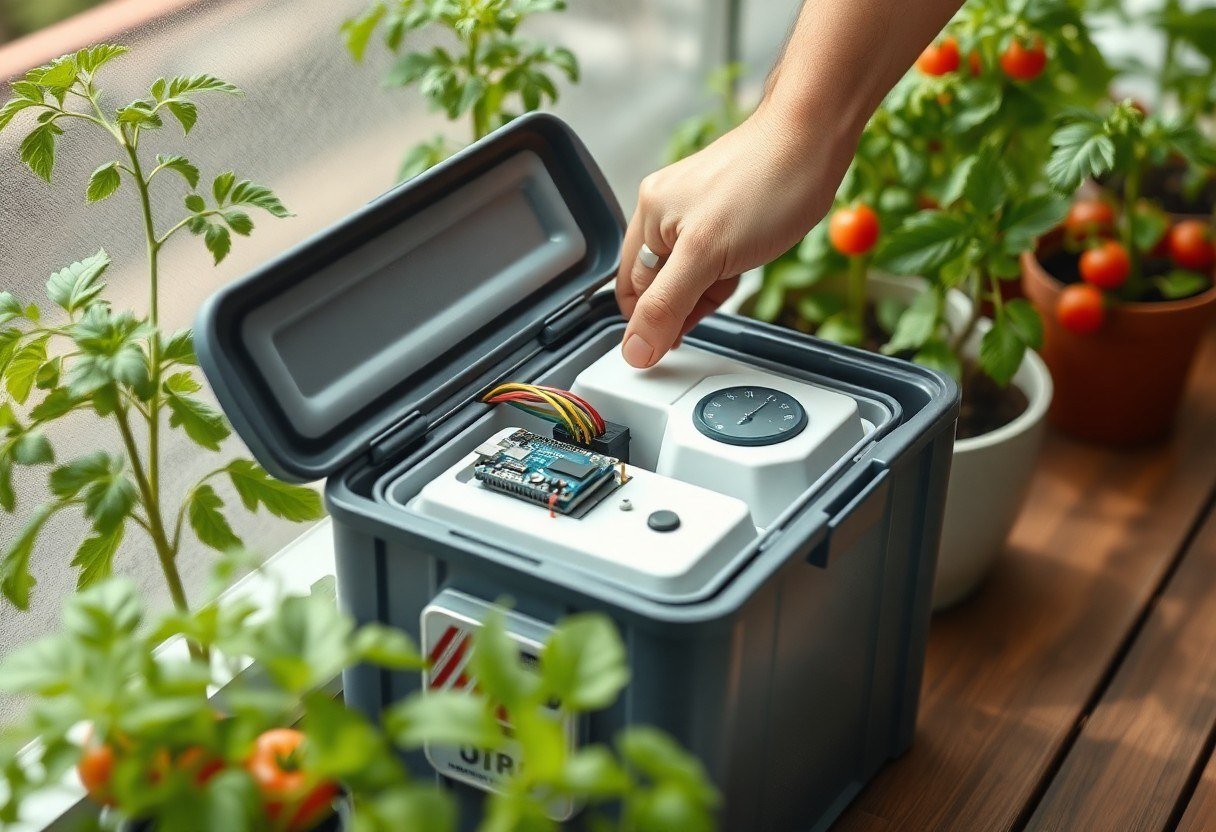
  • Not protecting electronics from moisture: Leaving the Arduino exposed on the balcony exposes it to moisture and dust. Correction: Place the board in a sealed plastic box (like a food storage container) with small holes for wires, and use insulating silicone on connection points.
Person adjusting a smart irrigation system inside a waterproof plastic box on a balcony with tomato plants

Frequently Asked Questions

Do I need programming experience to build this system?

No, not necessarily. There are ready-made, free codes online written in Arabic that you can download and upload to the Arduino with one click. All you need is to know how to connect wires according to the schematic diagram, which is simple and can be learned in an hour.

What is the approximate cost of the system?

The total cost ranges between 300 and 600 Egyptian pounds, including an Arduino board (about 150 EGP), sensors (50 EGP), a relay and pump (100 EGP), and a prototyping shield (50-100 EGP). This is less than the price of a kilo of organic tomatoes in season, and it will serve you for years.

Can the system be expanded to include more than one pot?

Yes, you can add more sensors and pumps using a Multiplexer or by using an Arduino Mega which has more ports. You can also connect the system to a Wi-Fi network (using ESP8266) to monitor 10 pots from your phone.

What should I do if the power goes out?

If you have frequent outages, add a small backup battery (like an old power bank) to power the Arduino only, leaving the pump to be operated manually when needed. You can also program the system to save the last reading in EEPROM memory and resume operation automatically after power returns.

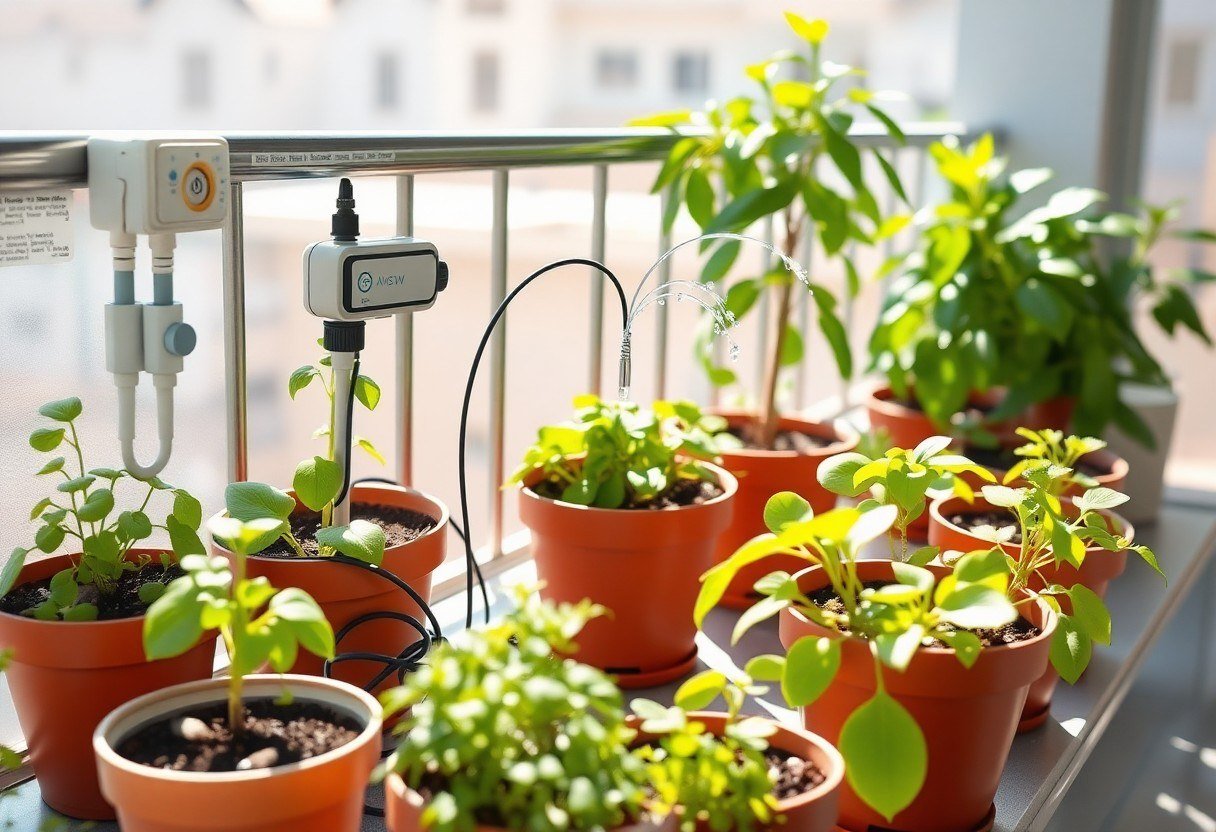
Smart irrigation system with Arduino, backup battery, and multiple sensors connected to several pots on a sunny balcony

Conclusion

My friend, farming on your home balcony is not a distant dream; it is a realistic project that can be achieved with simple tools and smart technologies. Using an Arduino-based monitoring and control system, you can save up to 50% of water, protect your plants from heat stress, and get fresh tomatoes all year round. Start today with a small step: buy a moisture sensor and an Arduino, and experiment on one plant. You will be amazed by the results, and you will feel proud when you eat a fruit grown by your own hands and mind. Remember that every drop of water and every degree of temperature can be controlled, and that technology is not a luxury, but your friend in your daily battle with nature. Start now, and do not hesitate to share your experience with others.


Contact Us تواصل معنا