0 0
0
No products in the cart.

Can Farming in Egypt Be Profitable Despite Heat and High Costs? | tna W rna

Jun 26, 2026 / By Anas Heaba / in Growing Guides

Dear farmer, skilled agricultural engineer, you know we hear people complaining about high prices and low yields, while you keep planting and working hard only to say: "The money isn't enough." The truth is that farming in Egypt has become a tough game: extreme heat, water scarcity, salinity that eats away at the soil, and fertilizer prices that have skyrocketed. But there is hope, and it's not science fiction.

Smart agriculture doesn't mean buying million-dollar robots or becoming a computer engineer. It's simpler than that: using simple control tools like microcontrollers and sensors to automatically monitor and adjust irrigation, fertilization, and ventilation. The difference between a farmer with a simple automation system and one working traditionally is the difference between profit and loss at the end of the season. Let's find out how to start today.

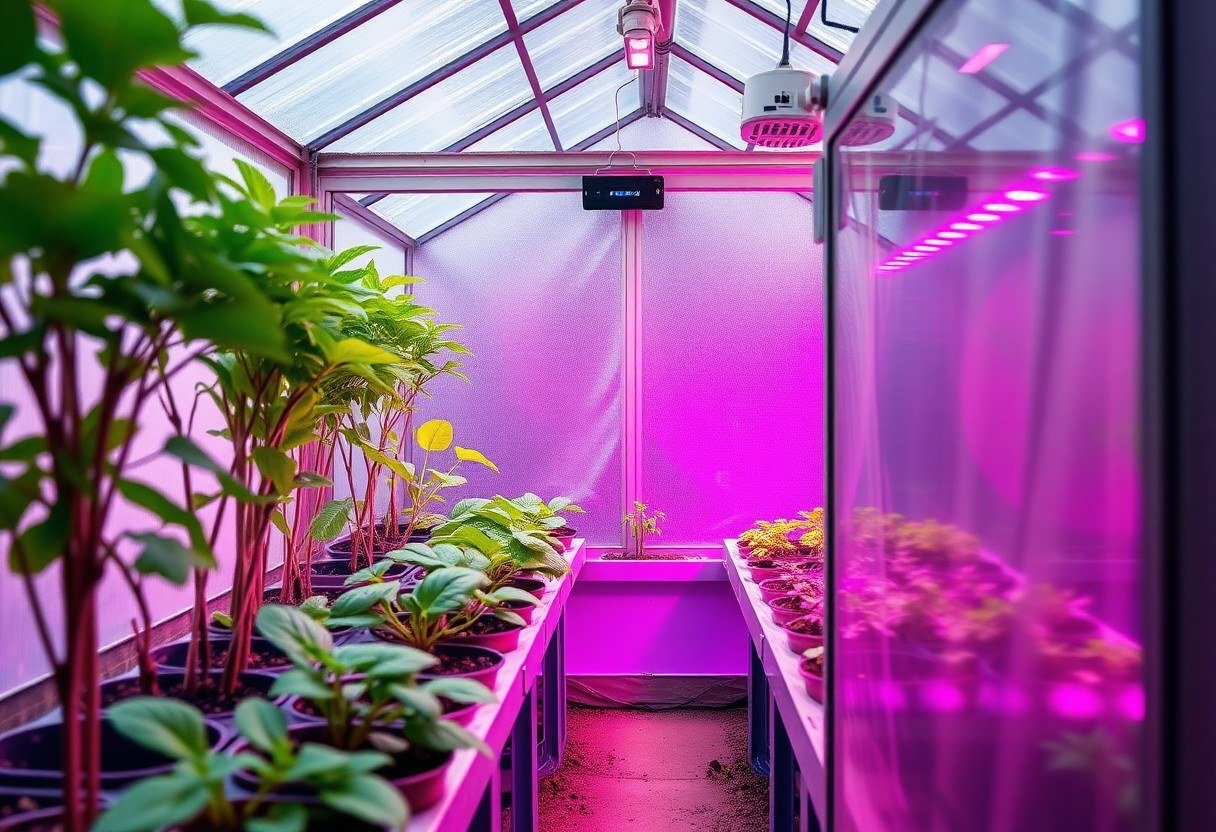
Image of a small greenhouse equipped with sensors and a control screen

Why Is This Important?

Egypt suffers from a water gap of about 20 billion cubic meters annually, and we rely on the Nile River for 97% of our water resources. With population growth and climate change, every drop of water has become precious. At the same time, agricultural land is limited, and most farmers have small plots of less than one feddan. If you can increase productivity per feddan by 30% and save 40% of irrigation water, that means a significant difference in your income.

Field trials in Egypt have proven that using smart irrigation systems with soil moisture sensors reduces water consumption by 30 to 50% and increases yield by 15 to 25%, depending on the crop. Automation also reduces the need for manual labor, which has become scarce and expensive, and allows you to grow high-value crops like strawberries and colored peppers in greenhouses even in the peak of summer.

The Root of the Problem

The problem isn't just the heat or salinity; it's that you water the plants according to your mood, not theirs. The plant needs water when it's thirsty, and fertilizer in specific ratios according to its growth stage. When you overwater, you drown the roots and prevent respiration; when you underwater, you stress the plant. Also, over-fertilizing beyond the plant's needs causes salts to accumulate in the soil, increasing salinity—a major cause of land degradation in Egypt.

The scientific solution is to measure the plant's actual needs using sensors: a soil moisture sensor to know when to irrigate, an EC sensor to measure irrigation water salinity, and a pH sensor to adjust acidity. Then you program a control system to open and close irrigation and fertilization valves based on these readings. The idea is to save water, fertilizer, and time, and to let the plant grow under ideal conditions all the time.

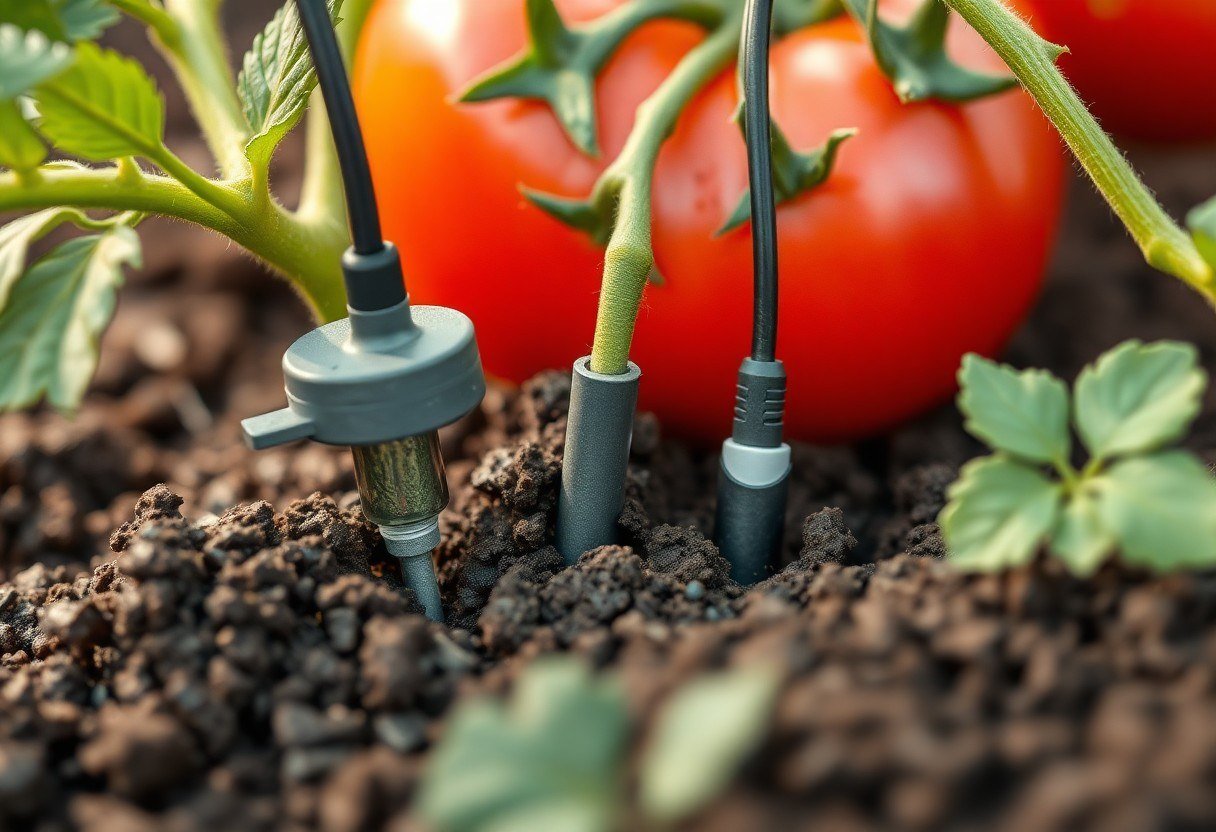
Soil moisture sensor and salinity sensor buried in the soil next to a tomato plant

Step-by-Step Solution

  1. Choose the crop and area: Start with a high-value crop like tomatoes or cucumbers in a small greenhouse (e.g., 100 square meters). A small area is easier to control and less costly.
  2. Set up a drip irrigation system: Install drip lines with electric valves (solenoid valves) for each line or zone. These valves will be the muscles that execute the commands.
  3. Install measurement sensors: Buy a soil moisture sensor (e.g., capacitive soil moisture sensor), an EC/TDS sensor, and an air temperature and humidity sensor (DHT22). Install them in the soil and air inside the greenhouse.
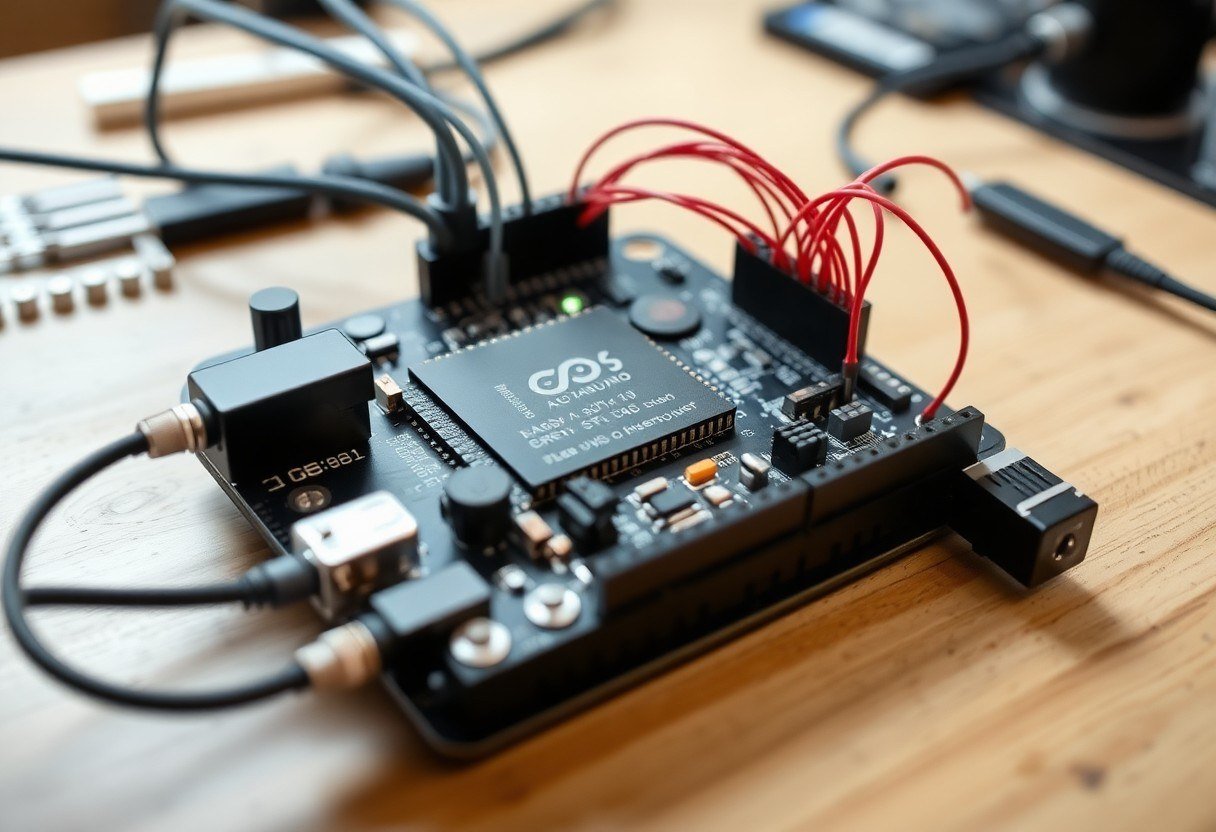
  4. Connect everything to a controller: Use an Arduino Mega 2560 as the brain of the system. Connect the sensors and valves to it. You can use a RAMPS 1.6 R6 3D Printer Control Shield for Arduino Mega2560 (RepRap) to simplify wiring and provide extra ports for valves and motors if you want to expand the system later.
  5. Write the basic code: Program the controller to read the sensors every 10 minutes. If the moisture drops below a certain threshold (e.g., 40%), open the irrigation valve for one minute. If the moisture reaches the upper threshold (e.g., 70%), close the valve. The same goes for fertilization: if EC is low, open the fertilizer valve for a few seconds.
  6. Test and monitor the system: Run the system for a week and observe the results. Adjust the thresholds based on plant response. Record readings in a notebook or on an LCD screen to know what's working and what needs adjustment.
Arduino Mega board with RAMPS shield connected to wires and sensors on a workbench

Practical Tips and Tools

  • Use moisture-resistant sensors: Cheap sensors deteriorate quickly in humid greenhouses. Buy insulated sensors or coat them with silicone.
  • Back up your code: Save the code on your computer and in the cloud, so if the microcontroller gets damaged, you can quickly re-upload it.
  • Use a backup battery: If the power goes out, the system should keep running for at least two hours so irrigation doesn't stop during peak heat.
  • Learn to read sensor data: Not every reading is 100% accurate. Average three consecutive readings to avoid random errors.
  • Start with a semi-automatic manual system: You don't need full automation from day one. Start with controlling irrigation only, then add fertilization, then ventilation.

Common Mistakes to Avoid

  • Installing sensors in the wrong place: If you place the moisture sensor too close to the drip point, it will always read high moisture and water too little. Solution: install it 10 cm away from the nearest drip point.
  • Neglecting sensor calibration: New sensors aren't always accurate. Try submerging the sensor in completely dry soil and in water-saturated soil, record the readings, and adjust the thresholds in the code based on actual measurements.
  • Using unsuitable valves: Cheap electric valves get stuck or leak. Use 12V valves designed for agricultural irrigation, and test each valve before final installation.
  • Ignoring electrical circuit protection: If you connect valves directly to the Arduino without a transistor or relay, you'll burn the board. Use a motor driver or an external relay for each valve.
  • Not considering irrigation timing in summer: Irrigating at noon (11 AM to 3 PM) causes rapid evaporation and leaf burn. Program the system to run early in the morning or after sunset.
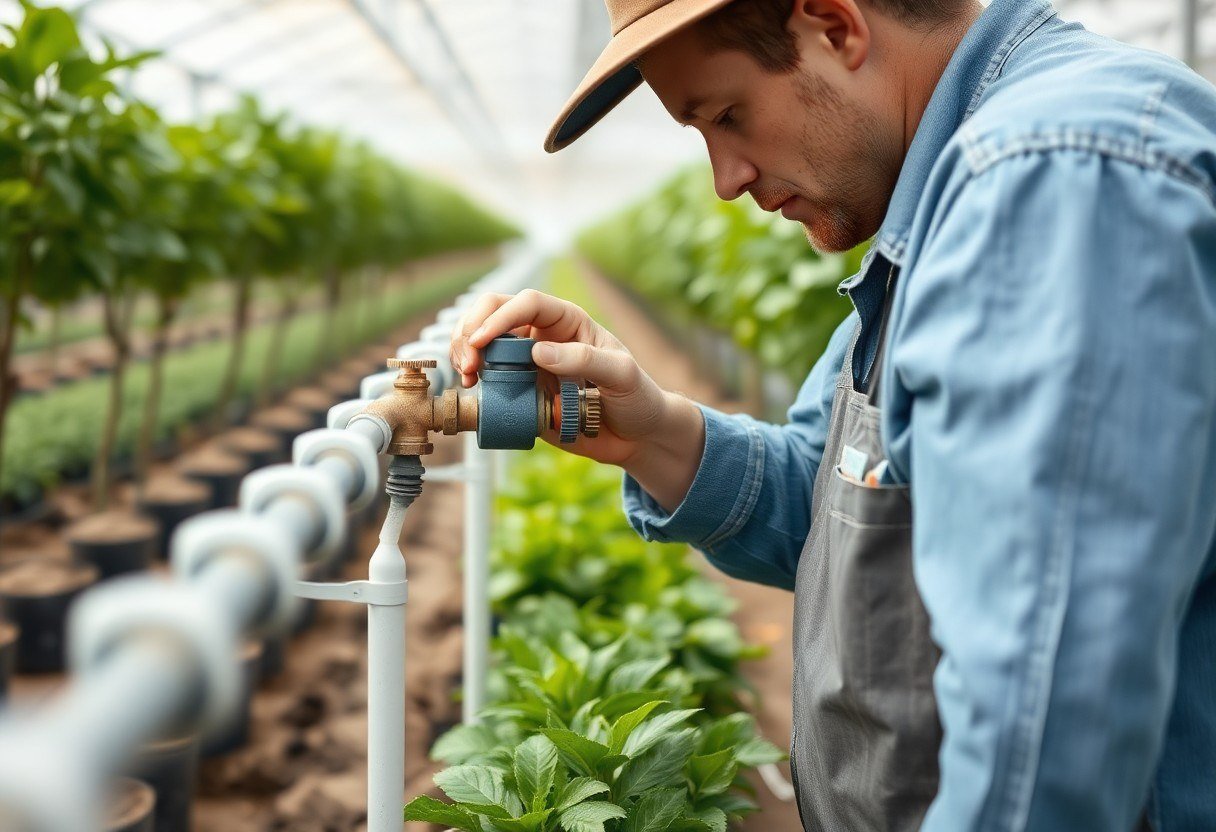
Farmer adjusting an irrigation valve in a greenhouse full of green plants

Frequently Asked Questions

I don't understand programming; can I still apply this system?

Absolutely. There are ready-made libraries and open-source projects online that explain everything in Arabic and English. All you need is to learn the basics of wiring and uploading code, which you can learn in two days. There are also large support communities on Facebook and WhatsApp groups that help beginners.

What is the initial cost of the system? Is it worth it?

A simple system for a 100-square-meter area (sensors + Arduino + valves + wires) can cost between 1500 and 3000 Egyptian pounds, depending on the quality of the parts. If you calculate the savings in water, fertilizer, and labor, you'll recover the cost within one or two seasons at most. After that, every season is pure profit.

Does this system work for open-field farming or only for greenhouses?

It works for both, but for open fields you'll need stronger sensors that withstand weather conditions (rain, sun, dust) and a robust drip irrigation system. Greenhouses are easier to control because conditions are relatively stable.

I have a large area (two feddans); can I scale up the system?

Yes, this system is scalable. You can add additional valves for each irrigation line and use an Arduino Mega because it has many ports. If you reach 8 valves or more, you may need an expansion shield like the RAMPS 1.6 R6 to simplify connecting all valves and motors in one place.

Egyptian farmer smiling while viewing sensor data on his phone next to a lush vegetable garden

Conclusion

Smart agriculture is not a luxury or an extravagance; it is a necessity for the Egyptian farmer who wants to continue and thrive under difficult conditions. With simple steps and a limited budget, you can turn your land from a place you complain about into a profitable, sustainable project. Start today with a small plot, experiment, learn from your mistakes, and see the results. Each season will be better than the last, and you will become a role model for your neighbors. The land speaks, and we just need to listen.


Contact Us تواصل معنا