0 0
0
No products in the cart.

Neem Oil: How to Protect Your Plants from Pests Without Chemicals? | tna W rna

Jun 18, 2026 / By Anas Heaba / in

Imagine waking up in the morning excited to see the tomato seedling you’ve been caring for for weeks, and suddenly you find its green leaves covered in yellow spots, with a tiny army of insects crawling underneath, sucking the life out of it. In an instant, enthusiasm turns to frustration, and you wonder: Is the only solution to spray a chemical pesticide that might harm my family or the taste of the fruit?

This question haunts thousands of Egyptians who are turning their rooftops and balconies into green oases. With rising prices and a desire for clean food, using chemical pesticides is no longer an acceptable option for many. Here, organic neem oil emerges—not just as a "folk remedy," but as a natural, scientific solution that gives you the power to regain control of your garden without fear. In this article, we will understand together why this oil is a true shield, and how to use it wisely to protect your plants and sleep soundly.

Why Is Neem Oil So Important for Today's Grower?

Given the climate changes we are experiencing in Egypt, where temperatures rise to record levels and clean water sources dwindle, insect pests thrive faster than ever. The problem is no longer limited to large farms; even houseplants and balcony plants have become attractive environments for piercing-sucking insects due to heat stress that weakens their natural immunity. Estimates from the Food and Agriculture Organization (FAO) indicate that plant pests cause up to 40% of global crop losses annually, and this figure rises in hot, dry areas if timely intervention is not made.

The real problem is that the traditional chemical solution is no longer effective or safe, especially in small spaces. Systemic pesticides can leave toxic residues in the soil and fruit, and their cost has become an additional burden on the family budget. This is where the importance of organic neem oil lies; it is not just an insect repellent, but a natural extract that acts as an antifeedant and insect growth regulator, breaking their life cycle without creating resistance. It is the ideal choice for those seeking sustainable agriculture on a two-meter balcony or a rooftop, where safety, effectiveness, and reasonable cost are non-negotiable factors.

What Is the Origin of the Problem? A Simple Scientific Understanding of How Neem Oil Works

To understand why neem oil is so effective, we must look at how both the plant and the insect think. Plants do not have an immune system like humans, but they have chemical defense mechanisms. When attacked by an insect, they secrete substances that attract predators of that insect. But in greenhouses or balconies, these natural predators are often absent. This is where neem oil, extracted from the seeds of the neem tree (Azadirachta indica), comes in. Its primary active ingredient is "azadirachtin," a compound very similar to the natural hormones that control insect growth and behavior.

When you spray neem oil on the plant, it does not cause immediate contact kill as chemical nerve pesticides do. Instead, azadirachtin deceives the insect on multiple levels: First, it acts as a powerful antifeedant; as soon as the insect tastes the treated leaf, it loses its appetite and stops eating immediately. Second, it disrupts the hormone ecdysone, responsible for molting and metamorphosis, preventing larvae from developing into pupae or adults, thus completely breaking the life cycle. Third, it reduces the fertility of adult females and prevents them from laying viable eggs. This triple mechanism makes it nearly impossible for pests to develop resistance to neem oil, unlike chemical pesticides that target a single nervous system.

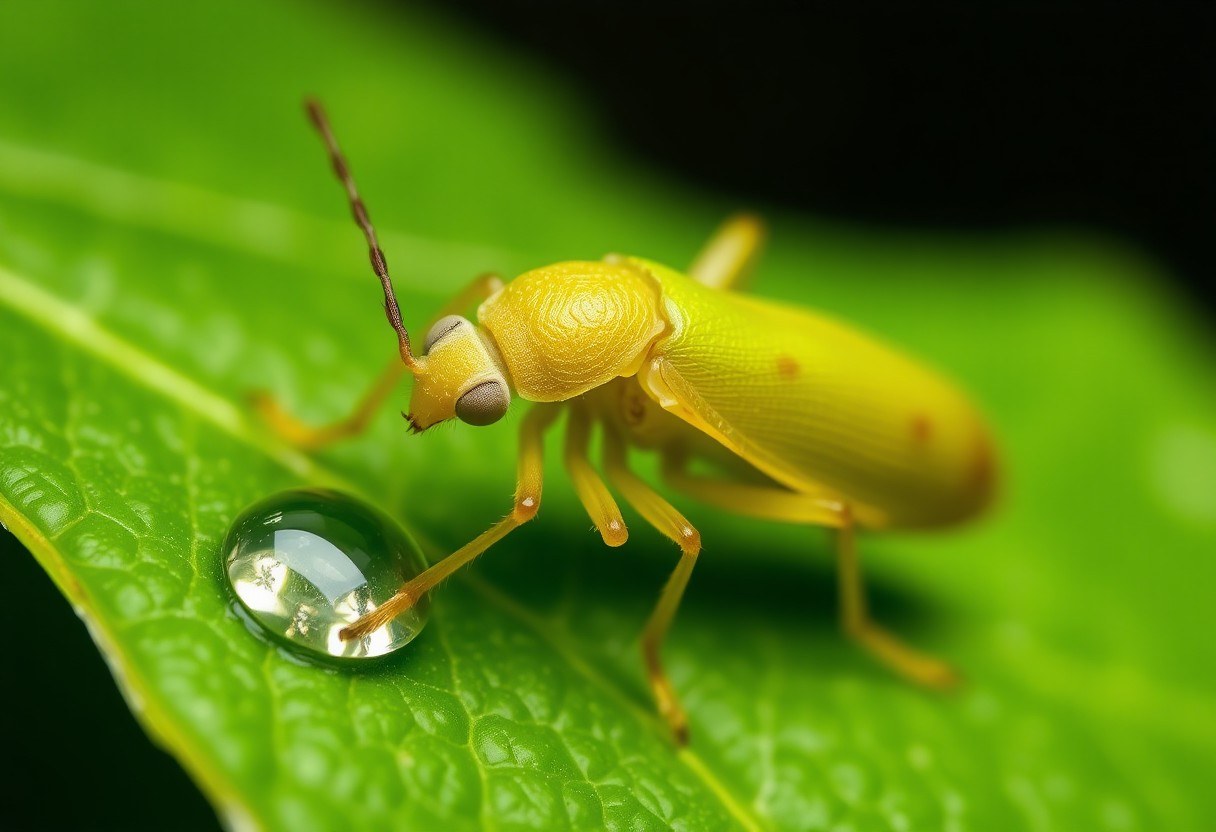
Magnified view of an aphid on a plant leaf with a drop of neem oil solution

How to Use Organic Neem Oil Safely and Effectively: Practical Steps

Using neem oil is not just about randomly mixing it with water and spraying. To get the best results without burning plant leaves, follow these precisely numbered practical steps, and remember that patience is the key to success here because the effect is not immediate but deep and sustainable.

  1. Prepare the Basic Emulsion: Neem oil does not dissolve in water alone. In a small bottle, mix 5 milliliters of pure organic neem oil with 2 milliliters of liquid potassium soap (or a gentle organic dish soap) as an emulsifier. Shake the mixture vigorously until it turns into a homogeneous milky liquid. This step is essential to coat the oil particles and prevent them from floating on the water's surface.
  2. Dilute the Solution for Spraying: Add the milky mixture to one liter of lukewarm water (not cold) in a clean sprayer. Lukewarm water helps distribute the oil better. Shake the sprayer vigorously for a full minute before and during use to ensure the emulsion remains homogeneous.
  3. Test Sensitivity First: Before spraying the entire plant, choose a small, hidden leaf and spray it with a little of the solution. Wait 24 hours. If no brown spots or burning appear on the leaf, the concentration is safe for your plant. Some thin-leaved plants like ferns may be sensitive.
  4. The Golden Spraying Time: Spraying at the wrong time is the number one cause of failure. Always spray at sunset or just after afternoon, when the sun is setting. Why? Because the oil droplets act like magnifying lenses under direct sunlight and will burn the leaves. Also, nocturnal insects and larvae begin their activity at dusk, and beneficial bees have returned to their hives.
  5. The Correct Spraying Technique: Spray the solution on both surfaces of the leaf (upper and lower) until the solution begins to lightly drip. 80% of pests like aphids and red spider mites hide on the lower leaf surface. Focus on the stems and the area where the leaf meets the stem, where eggs concentrate. Don't forget to spray the soil surface around the plant stem to kill any fallen larvae or eggs.
  6. The Smart Repetition Schedule: For treating an active infestation, repeat spraying once every 4-5 days for two weeks. For general prevention, spraying once every 14-21 days is sufficient. Do not spray more than once every 3 days to avoid clogging the leaf pores.
Spraying the lower surface of plant leaves with neem oil solution at sunset light

Practical Tips and Tools to Enhance the Effectiveness of Neem Oil

To get the most out of neem oil and make it part of your plant care routine, there is a set of practical tools and tips that will make your experience easier and more professional. These are not mandatory steps, but they represent the essence of successful home growers' experiences.

  • Invest in a Good Mist Sprayer: Do not use an old spray bottle that previously contained chemical cleaners. Buy a new sprayer with an adjustable nozzle that produces a fine mist spray. Coarse spray wastes the solution and does not cover the leaves evenly. A 1.5-liter sprayer is ideal for balconies.
  • Add an Essential Oil as an Adjuvant: To enhance repellency and increase adhesion, you can add a few drops of pure rosemary essential oil or peppermint oil to the mixture. These oils confuse the insect's nervous system and make the plant's scent unattractive to them, acting as an additional protective layer.
  • Mix with Natural Fungicides: If your plant suffers from a dual problem (insects and fungi like powdery mildew), you can mix neem oil with potassium bicarbonate (one teaspoon per liter) in the same sprayer. This mixture treats both problems together and saves you the effort of spraying twice.
  • Use Filtered or Distilled Water: If your tap water is hard (high in calcium), use filtered water. Heavy minerals in hard water can react with the soap and reduce the emulsion's effectiveness, leaving a white residue on the leaves.
  • Keep Notes: Keep a small notebook or a note on your phone to record spraying dates, solution concentration, and each plant's reaction. After a month, you will know exactly the optimal timing and concentration for your plants in your unique home conditions.

Common Mistakes That Destroy Your Plants When Using Neem Oil

Even natural solutions can turn into a problem if used incorrectly. In my journey, I have seen many enthusiasts make simple mistakes that lead to plant death or treatment ineffectiveness. Avoiding these common mistakes ensures success from the first use.

  • Mistake: Using raw neem oil directly on the leaves.
    Correction: Pure neem oil is very concentrated and will burn the leaves and clog their pores within hours. It must always be diluted and emulsified with potassium soap as we explained. Imagine putting pure cooking oil on a lettuce leaf; that is exactly what will happen.
  • Mistake: Spraying at midday or under direct sunlight.
    Correction: This is the most destructive mistake. Even if the solution is diluted, the oil droplets act as magnifying lenses, burning the leaf tissue in minutes. Safe spraying begins after sunset or just before sunrise. Always choose sunset time so the solution has the cool night hours to work.
  • Mistake: Believing neem oil is an immediate contact killer.
    Correction: This is not a nerve poison. If you spray and see insects still moving after hours, it does not mean failure. The real effect appears after 48-72 hours when the insects stop feeding and larvae die during molting attempts. Patience is key; do not spray again before a full 4 days have passed.
  • Mistake: Spraying stressed or thirsty plants.
    Correction: A plant suffering from drought or wilting is under stress, and its leaf pores are abnormally open. Spraying neem oil on it will cause shock and significant damage. Water your plant well a day before spraying, and ensure its soil is moist and not completely dry at the time of spraying.
  • Mistake: Preparing a large quantity and storing it for weeks.
    Correction: Once neem oil is mixed with water and soap, it begins to degrade and loses its effectiveness within 8-12 hours. Do not prepare more than you need for one spraying session. Always use the mixture fresh, and dispose of any leftovers on outdoor soil, not directly on plants.
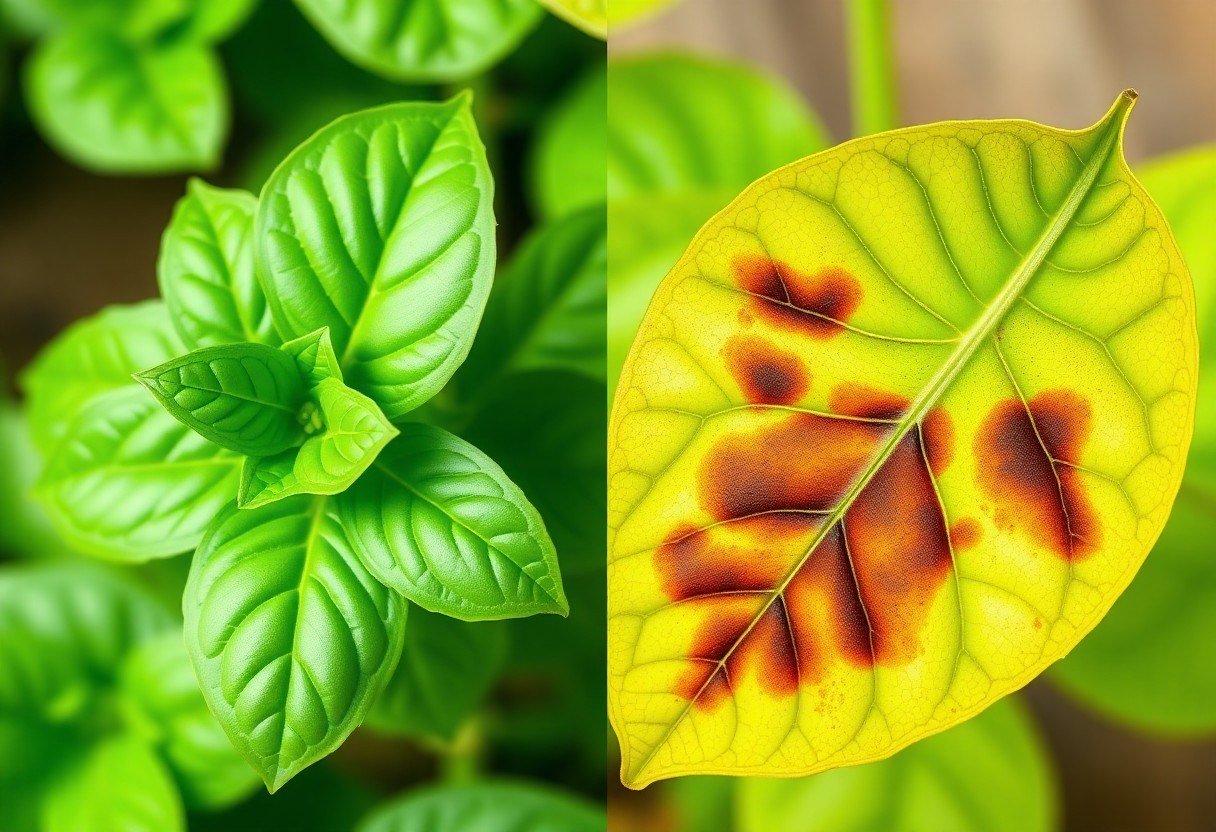
Comparison between a healthy basil leaf and one burned due to incorrect neem oil spraying

Frequently Asked Questions on Every Plant Lover's Mind

Does the strong smell of neem oil harm me, my children, or my pets?

The smell of neem oil is pungent, resembling a mix of garlic and sulfur, but it is completely safe for mammals and birds. It is just an unpleasant odor, not toxic. The smell will disappear from the plants within a few hours of spraying, especially with good ventilation. Just make sure to use pure organic neem oil free of added chemical solvents.

Can I use neem oil on all types of plants without exception?

Most plants tolerate it well, but there are exceptions. Plants with very soft or fuzzy leaves, such as some types of ferns and African violets, may be sensitive. Also, avoid spraying open flowers directly because the oil may stain their petals. Always perform a sensitivity test on one leaf before full spraying, as mentioned in the steps.

Which pests does neem oil actually treat, and are there pests it does not affect?

Neem oil is very effective against piercing-sucking insects such as aphids, whiteflies, thrips, mealybugs, red spider mites, and small butterfly and moth larvae. It also prevents powdery mildew. However, it is less effective against large, tough insects like adult beetles and cockroaches, as it does not easily penetrate their outer shell. In such cases, you may need mechanical methods like hand-picking alongside spraying.

Does neem oil affect beneficial insects like bees and silkworms?

Here lies the genius of neem oil. When you spray in the evening, the solution dries on the leaves and leaves no harmful residue in the air. Bees do not feed on plant leaves, but on nectar and pollen inside flowers. As long as you do not spray directly on open flowers during bee activity in the morning, it is very safe. However, it may harm silkworm larvae if sprayed on the mulberry leaves they feed on, so be cautious in this rare case.

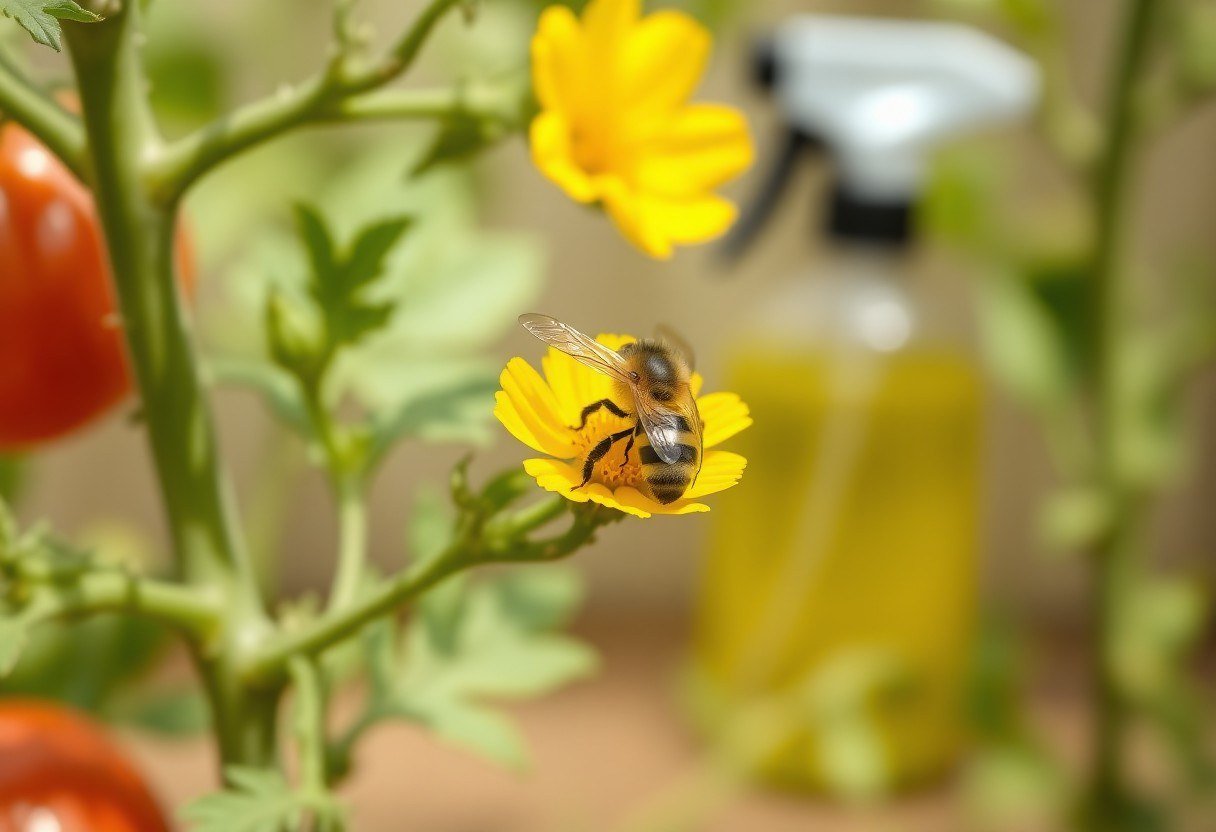
A bee safely pollinating a tomato flower with a neem oil spray bottle in the background

Conclusion: Your Natural Shield Awaits Your Decision

In the end, organic neem oil is not just a product to put on the shelf; it is an integrated agricultural philosophy based on understanding and mimicking nature rather than resisting it with harsh chemicals. It gives you the opportunity to be a smart farmer who protects his crop while maintaining his health and environment simultaneously. Remember that the secret to success lies in patient and regular use, and in respecting the beneficial creatures that share your garden. Start today by trying the steps you learned, and watch your plants regain their health and grow strong. Your garden is a reflection of your care, so give it the shield it deserves.


Contact Us تواصل معنا