0 0
0
No products in the cart.

Small Balcony, Tight Space? Vertical Gardening Saves 70% of Space | tna W rna

Jun 25, 2026 / By Anas Heaba / in Growing Guides

Have you ever stood on your small apartment balcony, looked at that empty spot on the wall, and wondered: "If I had more space, I would have planted it"? This is the problem millions of Egyptians face in modern apartments: a balcony no larger than a few square meters, or a small rooftop that barely fits two chairs. But the truth is that space is not the real problem; the problem is that we think of gardening only horizontally, while the solution lies in the vertical direction.

Vertical gardening is not just an Instagram trend; it is a smart agricultural technique proven to save up to 70% of space compared to traditional gardening. In Egypt, where summer temperatures rise, water is scarce, and fresh vegetable prices soar seasonally, turning your balcony wall into a vertical garden is a practical step to save money and improve your quality of life. In this article, we will take you step by step to understand the system and apply it yourself.

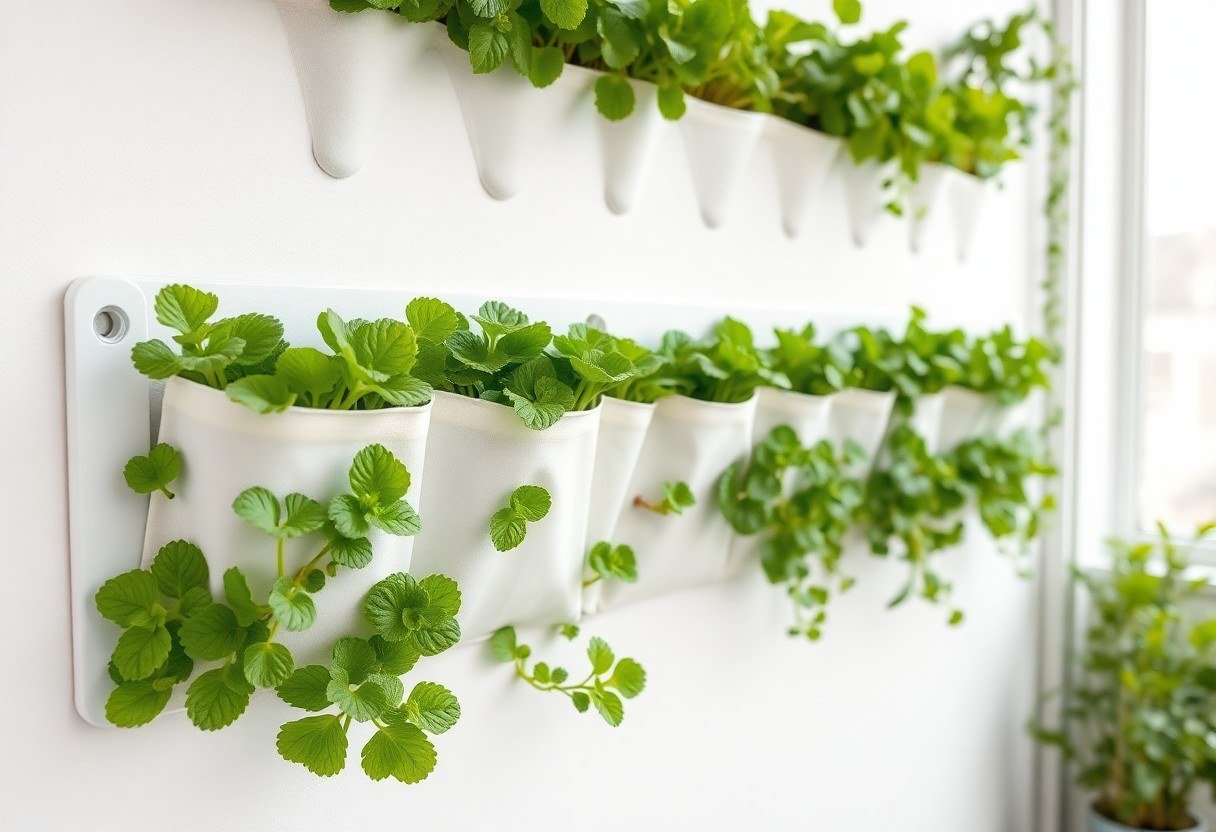
Vertical garden system on an indoor apartment wall, green plants in fabric pockets

Why Is This Important?

Imagine growing 20 plants in an area no larger than one square meter. This is the reality with vertical gardening. According to studies by the Food and Agriculture Organization (FAO), vertical gardening in homes can increase production density by 4 times compared to traditional horizontal gardening. In an 80-square-meter Egyptian apartment, you can grow the equivalent of a 15-square-meter garden using only the walls.

In Egypt, we face three main challenges: First, water scarcity — vertical gardening consumes 20-30% less water thanks to drip irrigation systems that can be easily installed. Second, heat — raising plants off the ground protects them from asphalt and concrete heat in summer and improves air circulation around the roots. Third, cost — the price of leafy vegetables like lettuce, watercress, and mint has risen by over 50% in recent years, and growing them yourself saves you money and ensures clean, pesticide-free food.

The Root of the Problem

Why do plants fail in Egyptian apartments despite our efforts? The root cause is not a lack of love or care, but a misunderstanding of plants' basic needs. Plants need three elements to grow healthily: light, water, and air. In traditional horizontal gardening on the balcony, plants are often crowded on the ground, blocking light from reaching the lower leaves, causing stagnant air around the roots, and leading to rot.

Vertical gardening solves this problem at its source: when plants are hung on the wall, every leaf receives light evenly, air circulates freely between the leaves, and excess water can drain easily without accumulating. Scientifically, this is called "improving the photosynthetic area," where the surface area exposed to light increases by up to 60%, resulting in faster growth and higher yields.

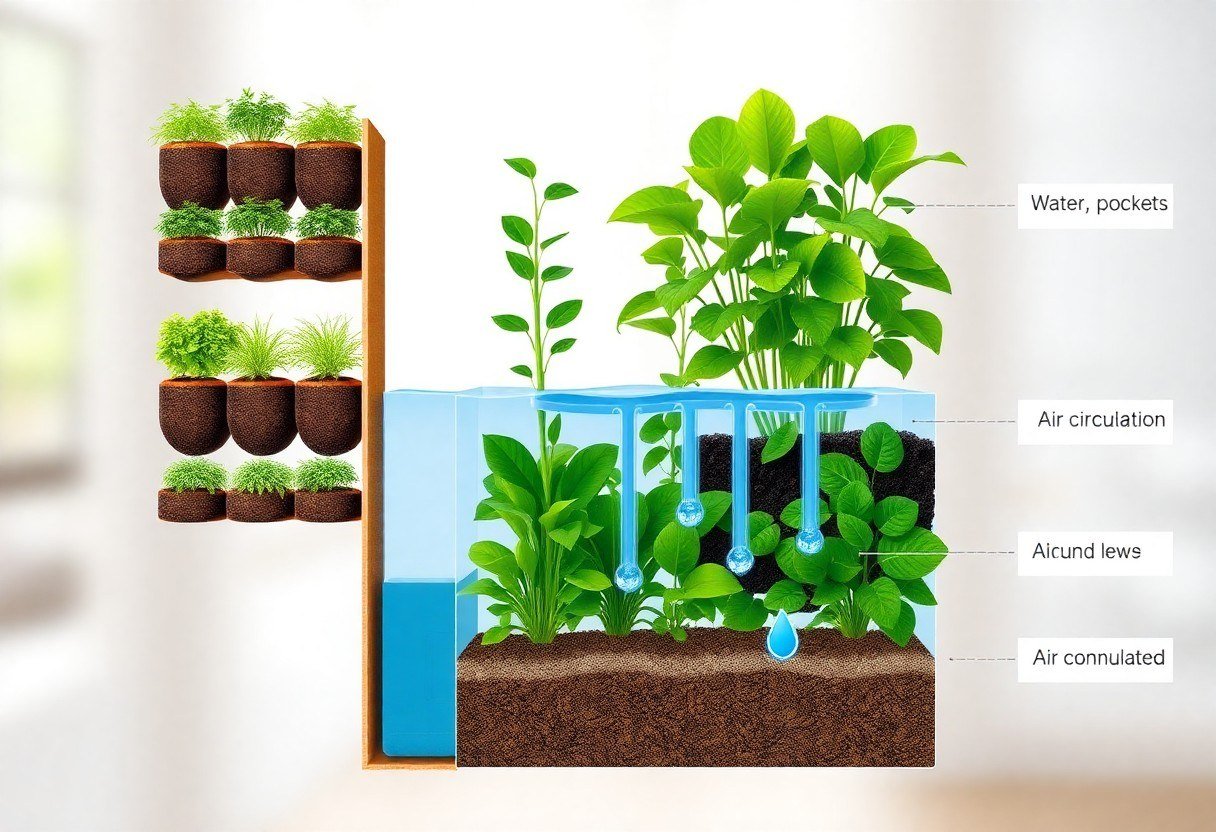
Illustration of water and air flow in a vertical garden system

Step-by-Step Solution

  1. Choose the right wall: Look for a wall on the balcony or rooftop that receives direct sunlight for 4-6 hours daily. A south- or west-facing wall is best in Egypt. Ensure the wall is strong enough to support the weight of the wet system (up to 30 kg per square meter).
  2. Prepare the hanging system: You can use special fabric planting pockets (available at agricultural supply stores) or make your own from thick felt. Attach them to the wall using strong screws and bolts, leaving a 5 cm gap between the wall and the pockets to ensure ventilation.
  3. Choose the right plants: Start with easy, fast-growing plants like lettuce, watercress, mint, parsley, basil, and sweet pepper. Avoid deep-rooted plants like carrots or potatoes initially.
  4. Prepare the soil mix: Use a mixture of peat moss (50%), perlite or vermiculite (30%), and compost (20%). This mix is lightweight, retains moisture, and allows good drainage. Do not use regular garden soil as it is heavy and clumps.
  5. Irrigation system: The best solution is manual drip irrigation: use a plastic bottle with a hole in the cap and bury it in the soil. Fill it with water every 2-3 days. Alternatively, you can install a simple irrigation system with a main pipe and small drippers for each pocket, connected to a small water tank (5 liters) placed higher than the plants.
  6. Planting and care: Plant seeds or seedlings in the pockets, leaving 10-15 cm between each plant. Water the plants early in the morning or evening, avoiding midday watering. Add liquid organic fertilizer once every two weeks.
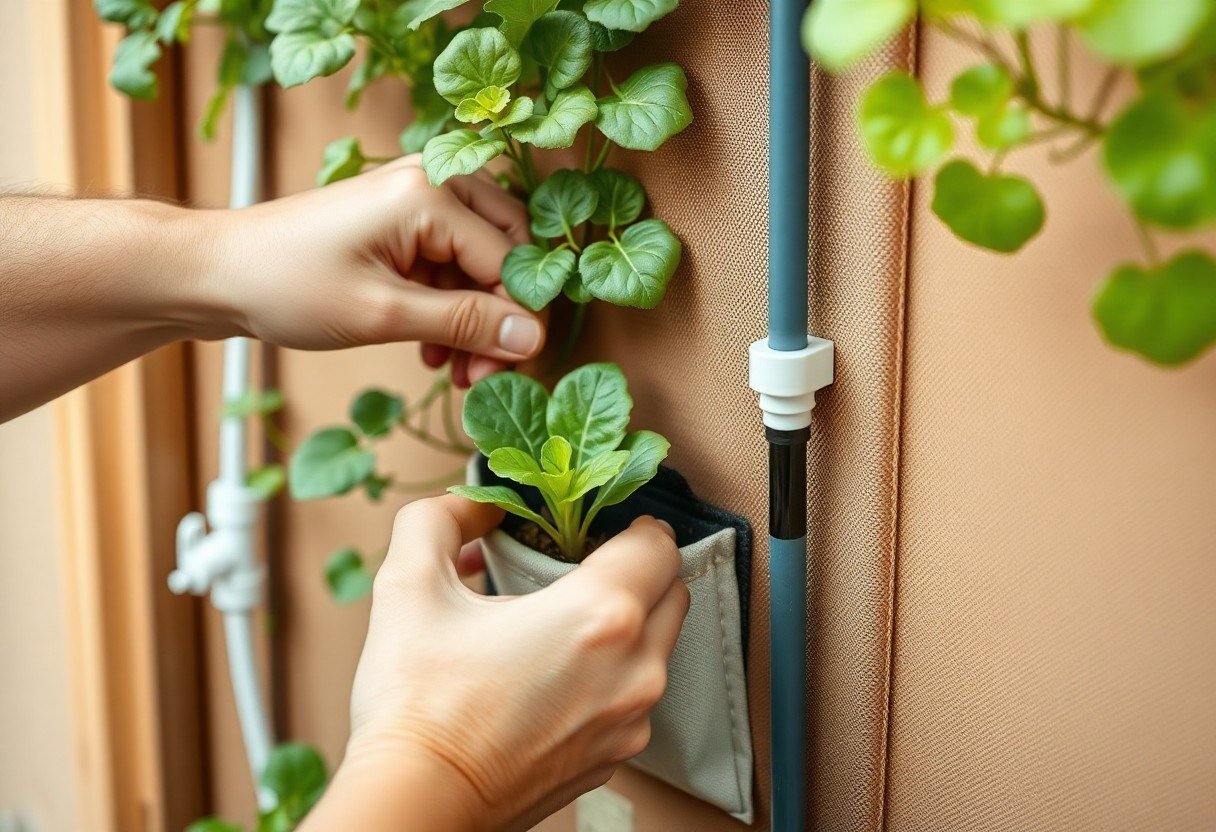
Hands planting a lettuce seedling in a fabric pocket in a vertical garden system

Practical Tips and Tools

  • Use a drainage tray below the system: Place a plastic tray under the pockets to collect excess water, protecting the wall from moisture and preventing water from leaking to neighbors.
  • Choose compatible plants: Plant species with similar water and light needs in the same system. For example, mint and basil need moderate water, while cactus and thyme need drier conditions.
  • Crop rotation: Whenever you harvest a plant, plant another from a different family in its place to avoid depleting the soil. For example, after lettuce, plant beans to fix nitrogen.
  • Monitor pests early: Check plant leaves weekly for aphids or whiteflies. Use a spray of water and organic soap (one teaspoon of liquid soap per liter of water) as a natural solution.
  • Use supplemental lighting: If your balcony does not get enough light, you can add an LED grow light (plant lamp) operating 12 hours a day, especially in winter.

Common Mistakes to Avoid

  • Overwatering: Many believe plants need water daily, but in vertical gardening, soil dries out faster. Test soil moisture with your finger: if it is moist at 2 cm deep, do not water. Overwatering causes root rot.
  • Using heavy soil: Regular garden soil contains clay and sand, making it heavy and leading to pocket clogging and poor drainage. Always use a lightweight, ready-made potting mix.
  • Neglecting to secure the system properly: The weight of soil and water is significant, and if pockets are not fastened with strong screws into the wall, they may fall and cause a mess. Use screws at least 5 cm long with plastic anchors (dowels) suitable for the wall type.
  • Planting unsuitable species for the climate: Some plants, like strawberries, need relative coolness and may not thrive in Egypt's hot summer. Choose heat-tolerant plants like okra, pepper, basil, and molokhia.
  • Ignoring regular fertilization: The soil in pockets is limited in volume and its nutrients deplete quickly. Without regular fertilization, plants become weak and yellow. Add liquid organic fertilizer every 10-14 days.
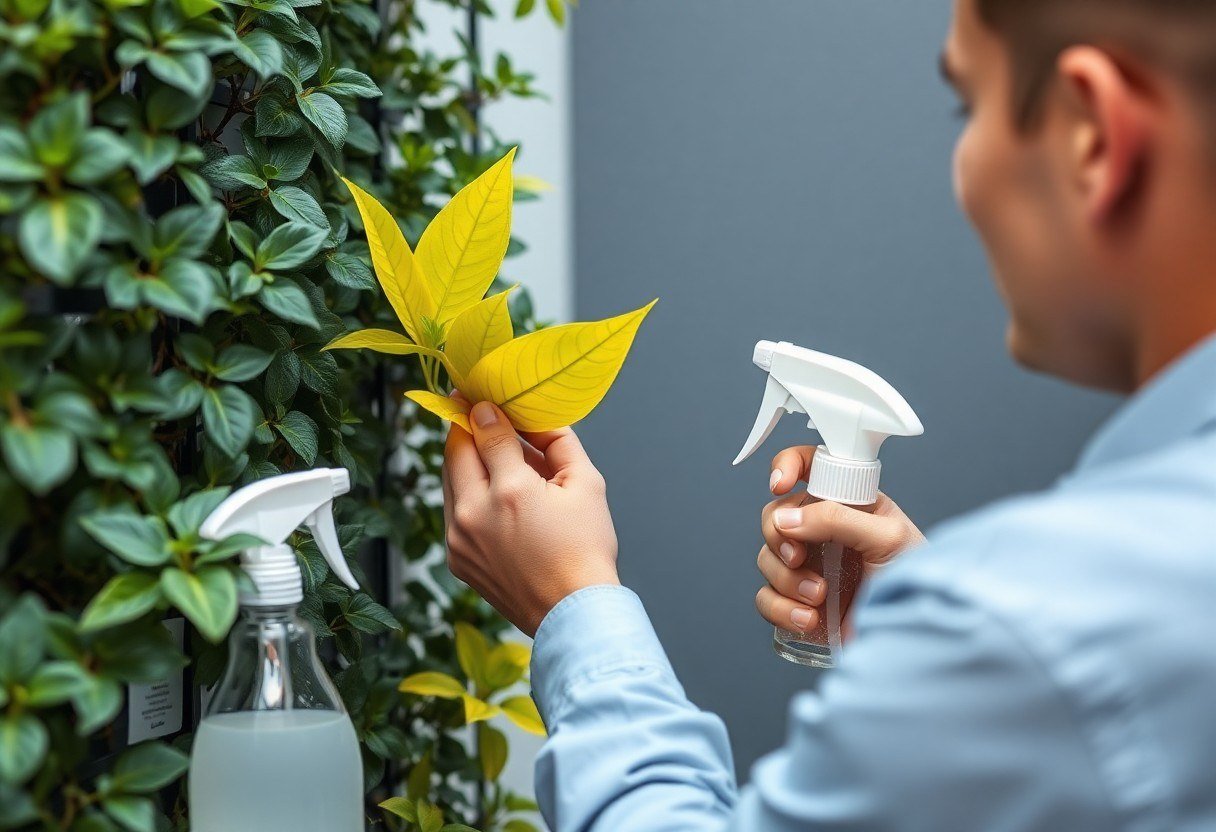
Person inspecting a yellow leaf on a plant in a vertical garden

Frequently Asked Questions

Does vertical gardening cause wall moisture?

Yes, if you do not place a barrier between the pockets and the wall. Use a layer of thick plastic or a moisture-treated wooden board behind the system. Additionally, the drainage tray below the pockets prevents water from seeping into the wall. With these precautions, there is no moisture problem.

How much does it cost to set up a small vertical garden system?

You can start with a very modest budget: fabric pockets (50-100 Egyptian pounds each), soil and seedlings (100-200 pounds), and a drip system using plastic bottles (free). The total may not exceed 300-500 pounds for a small system of 4-6 pockets. You can expand gradually.

What are the best plants for beginners in vertical gardening?

Lettuce, watercress, mint, parsley, basil, and sweet pepper. These plants grow quickly, require no complex care, and tolerate moderate Egyptian temperatures. Avoid climbing plants like tomatoes initially, as they need extra support.

Can root vegetables like carrots be grown vertically?

Theoretically yes, but practically it is difficult because carrots need deep soil (at least 30 cm) and horizontal space for root growth. If you want to try, use very deep pockets (40 cm deep) and ensure the soil is very light and sandy. However, I recommend starting with leafy plants first.

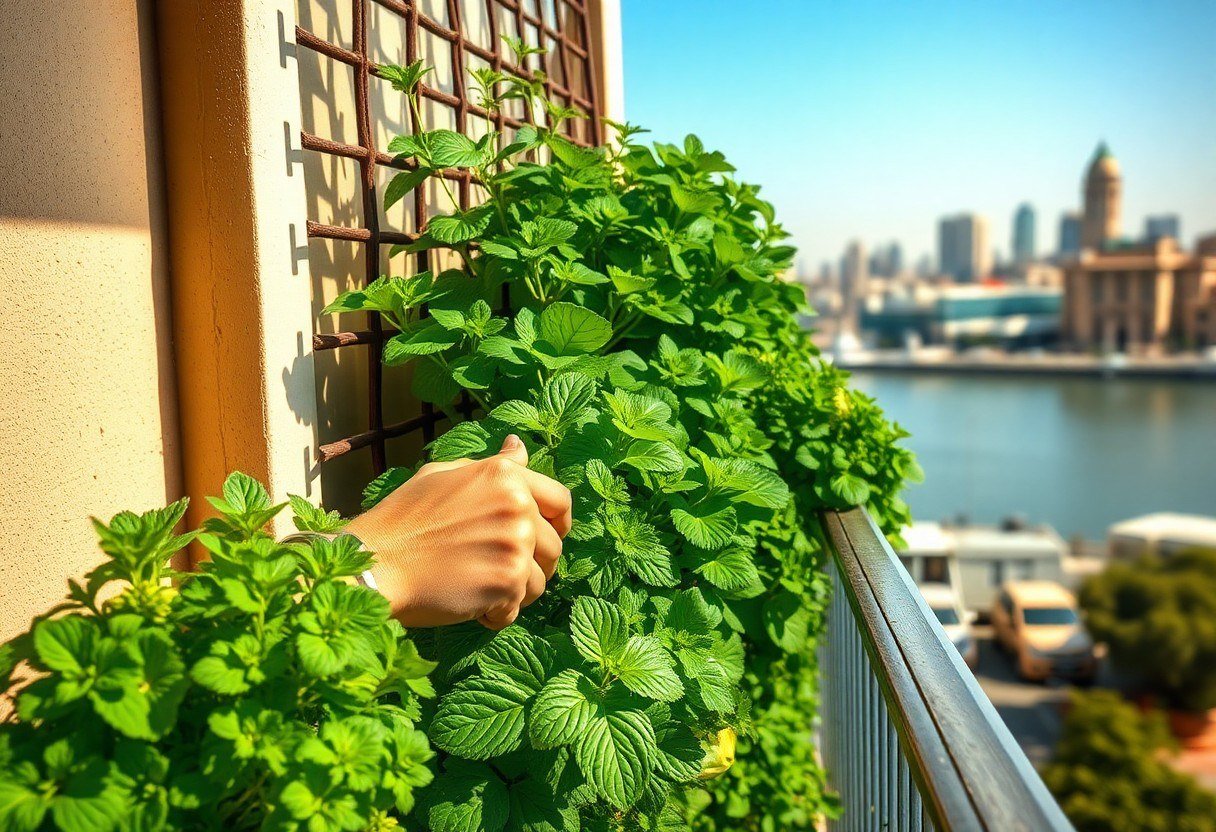
Harvesting fresh lettuce and mint from a vertical garden on a balcony overlooking Cairo

Conclusion

Vertical gardening is not just a solution for tight spaces; it is a transformative shift in your relationship with the food you eat. With an area no larger than one square meter on your balcony wall, you can grow vegetables sufficient for a small family for a month, saving up to 70% of the space you would have used in traditional gardening. Start small: two or three pockets, easy plants, and watch how your balcony turns into a green oasis. In the next article of our "Rooftop Gardens at Home" series, we will discuss smart irrigation systems that save you time and water. Follow us, and share your experience in the comments.


Contact Us تواصل معنا