0 0
0
No products in the cart.

Smart Irrigation for New Egypt: How to Save Water and Boost Your Yield Yourself? | tna W rna

Jun 17, 2026 / By Anas Heaba / in Growing Guides

My dear farmer, owner of a small plot or a rooftop seedling, I have a question for you: How many times have you stared at the water bill at the end of the month feeling something was off? Or watched your crop wither in the peak of heat because you forgot to irrigate, or conversely, drowned and rotted the roots? The problem is not in your hands; the problem is that traditional methods make us consume far more water than necessary, and we waste time and effort on manual irrigation. Egypt today is suffering from real water scarcity, and every drop of water matters. Let's be honest: traditional farming cannot continue like this, and the rising costs we are living through make every wrong decision cost us a lot of money.

The solution is not in buying complex and expensive devices; the solution is in understanding our land and plants more deeply, and using simple tools that help us make the right decisions. I am here to explain to you with all care and concern: how you can transform your land or even your rooftop into a semi-smart agricultural system, saving you at least 30% of water, increasing your yield, and letting you sleep with peace of mind. I will not speak to you in difficult language, nor will I tell you to buy expensive things. I will start with you from scratch: from understanding your soil, to choosing the appropriate irrigation system, to using simple sensors with which you can monitor everything from your phone. The matter is easier than you imagine, and you will save money and effort from the first season.

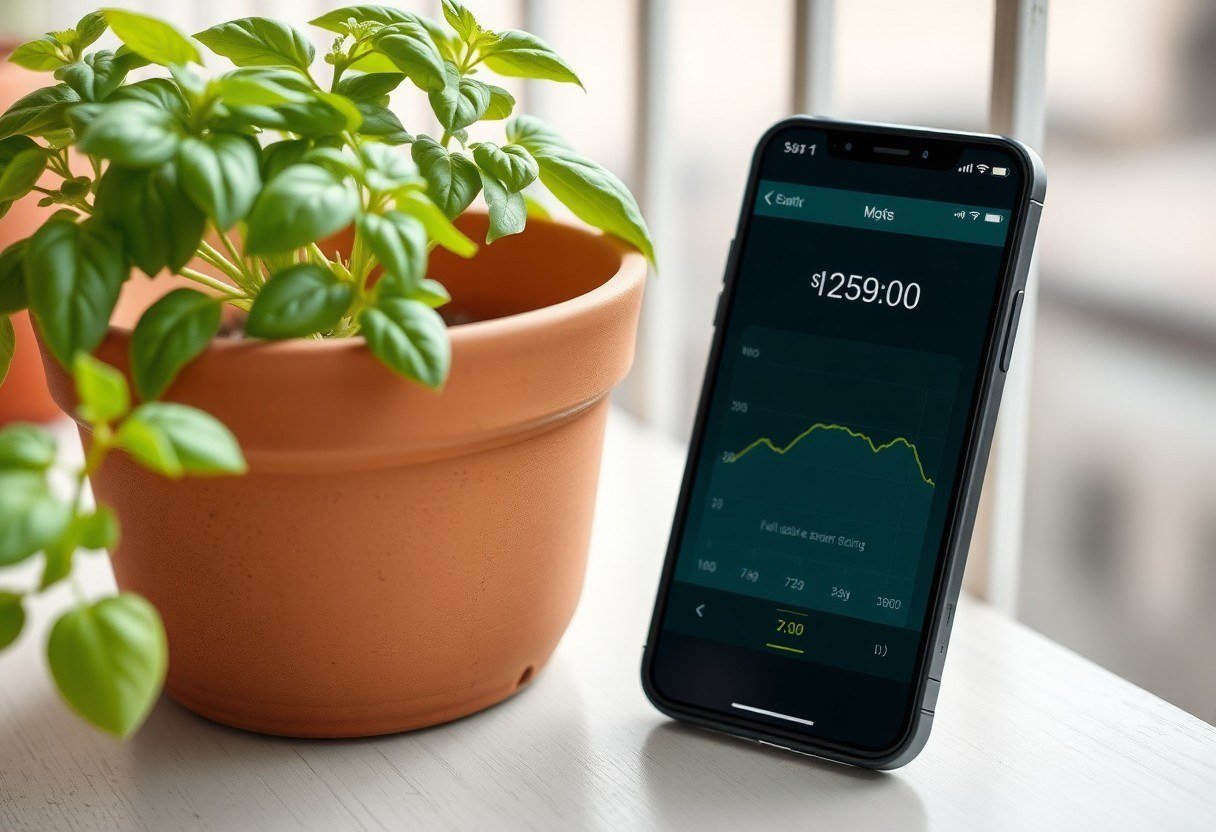
Smartphone screen showing soil moisture data next to a basil pot on a rooftop

Why is this matter important now?

Egypt is facing a real water crisis. According to reports from the Ministry of Irrigation, the per capita share of water has dropped to less than 600 cubic meters annually, which is far below the global water poverty line (1000 cubic meters). This means we must conserve every drop of water. At the same time, the costs of energy, fertilizer, and seedlings are skyrocketing. If you are farming on a small plot or even in pots on a rooftop, any waste of water or fertilizer means money flying away in the air. Smart agriculture is not a luxury; it is a necessity for you to continue and compete.

The numbers speak: a smart drip irrigation system saves 30% to 50% of water consumption compared to surface or sprinkler irrigation. It also reduces the growth of harmful weeds (because water reaches the plant, not the entire soil), and reduces fungal diseases that appear from excess moisture on the leaves. This means a better crop, lower cost, and more time you can spend with your family or at your other job. The old Egyptian farmer used to say, "Water is the secret of life," and today we can say, "Smart water is the farmer's secret."

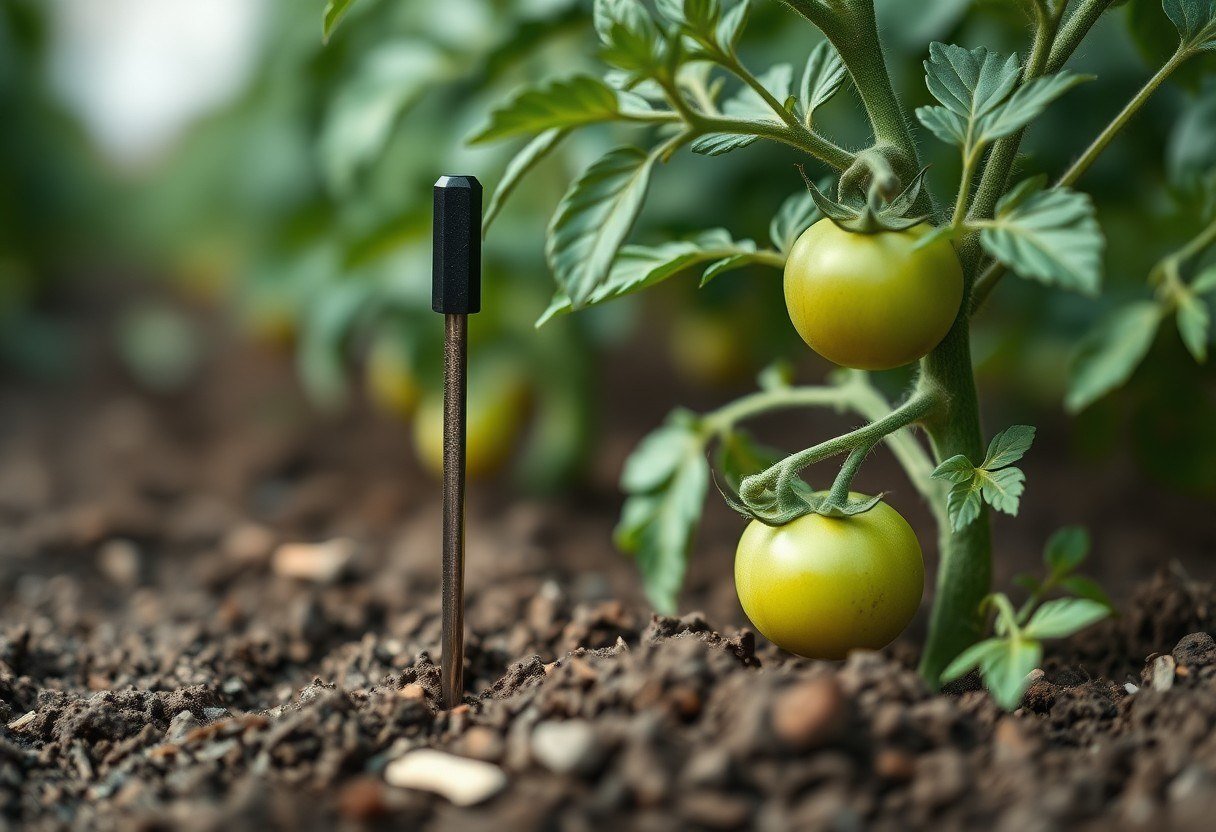
Soil moisture sensor inserted in the ground next to a small tomato plant

The root of the problem: Why do we consume a lot of water without benefit?

The problem is not that we do not water well; the problem is that we water without understanding the plant's actual need. A plant is like a human; it wants to drink when it is thirsty, not every day at the same time. The plant's need for water changes according to: (1) the type of plant itself (tomatoes are different from peppers, different from mint), (2) the growth stage (a small seedling is thirstier than a large plant), (3) the weather condition (hot weather makes water evaporate quickly), (4) the soil type (sandy soil drains water quickly, and clay soil retains water).

When we water the same amount every day, we do two wrong things: we either over-water, so the water goes deep into the ground away from the roots, or we under-water, so the plant withers. The soil itself is also affected: over-irrigation leads to root suffocation (lack of oxygen) and the spread of fungal diseases like root rot. Under-irrigation leads to plant weakness and reduced yield. The solution is simple: we know when the soil is thirsty, and we water it exactly the right amount. This is what soil moisture sensors and automated irrigation systems do.

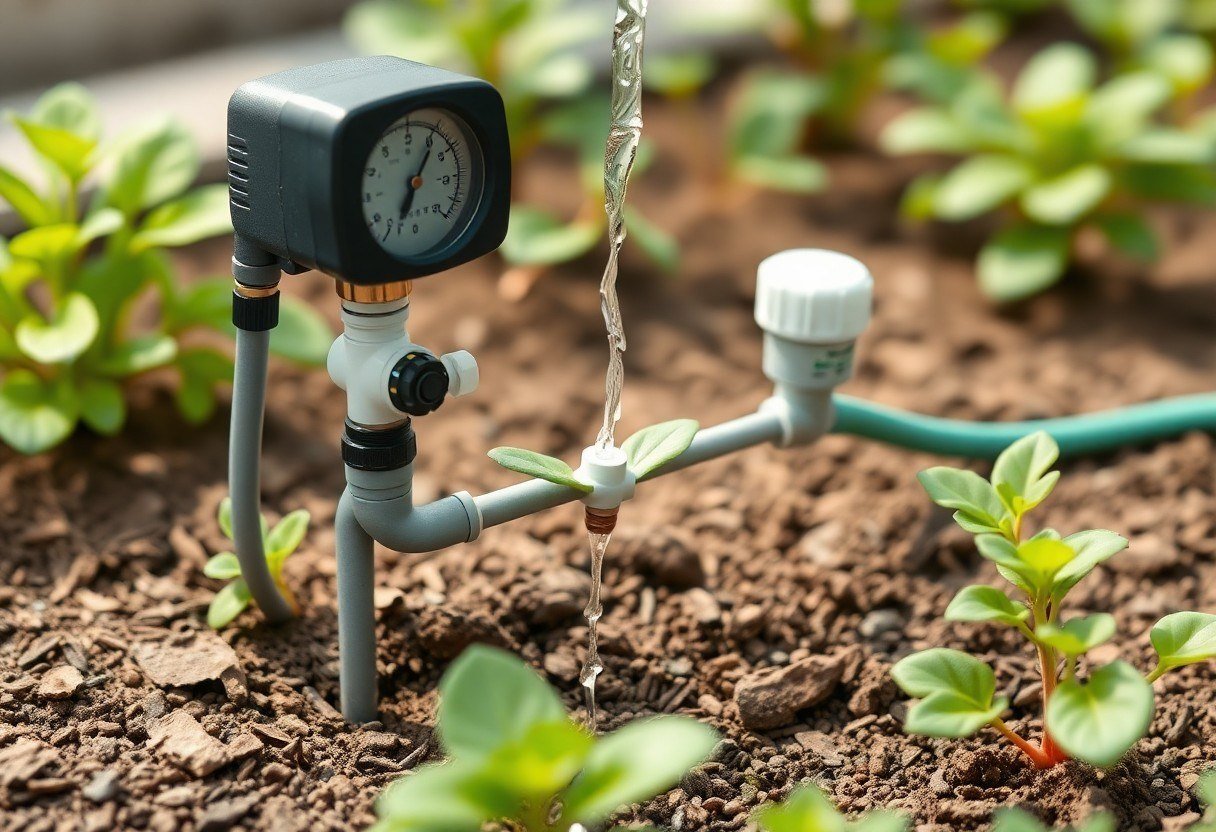
Simple automated drip irrigation system with a timer and water filter connected to a garden hose

The solution step by step: How to start on your own?

  1. Understand your soil: Take a sample of soil, moisten it, and squeeze it in your hand. If it forms a cohesive lump and crumbles after pressing, it is good clay soil. If it remains cohesive like clay, it is heavy clay soil (drains water slowly). If it crumbles immediately, it is sandy soil (drains water quickly). This will determine the frequency and amount of irrigation.
  2. Install a simple drip irrigation system: You do not need a lot of money. Buy a drip irrigation hose (polyethylene), connectors, and adjustable drippers. Draw the irrigation lines along the plant rows, and give each plant one or two drippers. If your farm is small, you can use an inverted plastic bottle with a small hole in the cap as a temporary drip system.
  3. Use a mechanical or electronic timer: A manual timer is cheap and easy; you set the irrigation duration and time on it. But an electronic timer that can control more than one irrigation line is better. This will prevent you from forgetting to water or watering at peak noon (the wrong time because water evaporates).
  4. Install a soil moisture sensor: This is the mastermind. A simple sensor like a capacitive soil moisture sensor costs less than 100 EGP. You connect it to an Arduino or ESP32, and it reads the soil moisture periodically. You can set it to open the valve automatically when the soil dries out, and close it when it reaches the required moisture. This way, you water the plant when it actually wants it.
  5. Monitor from afar (optional but useful): If you want to see the data on your phone from anywhere, use a simple dashboard (like Blynk or ThingsBoard) with a cellular communication module (like the one in the Arduino Portenta CAT.M1 / NB-IoT GNSS Shield) to send data to the cloud. You will be able to see soil moisture and temperature and control irrigation remotely. Not necessary today, but when the area expands, it will be a necessity.
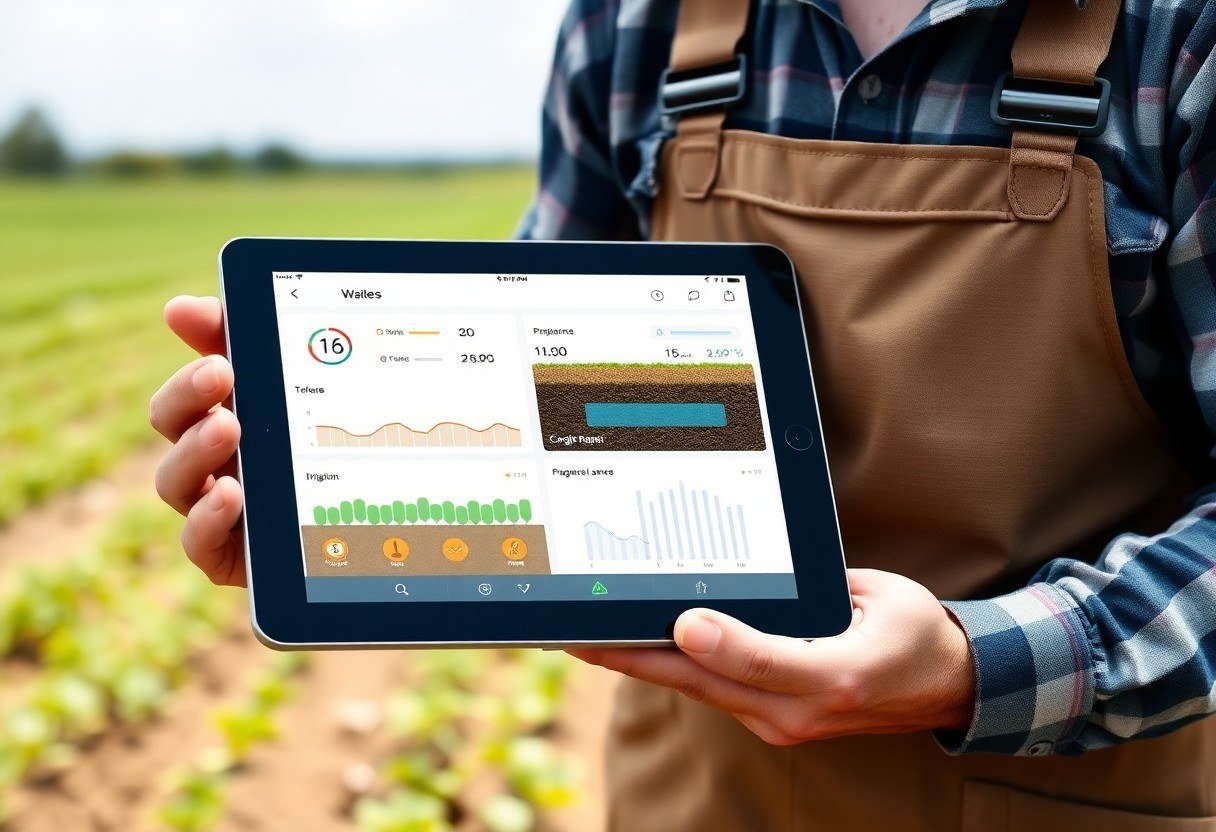
Farmer looking at a tablet showing a dashboard with soil moisture, temperature, and irrigation status

Practical tips and tools

  • Start small: Try the system on 5 plants or on an area of one square meter before generalizing it to the entire land.
  • Use rainwater: If you have a roof, collect rainwater in a barrel and use it for irrigation. Rainwater is free of chlorine and chemicals, and is very beneficial for plants.
  • Cover the soil (Mulching): Place a layer of rice straw, gravel, or black plastic around the plant. This reduces water evaporation by 70%, prevents weeds, and maintains soil temperature.
  • Water early in the morning: The best time for irrigation is from dawn until 8 AM. Water reaches the roots before the sun intensifies, and the chance of fungal diseases decreases.
  • Use liquid organic fertilizer with irrigation (Fertigation): You can mix liquid organic fertilizer (like compost extract) with irrigation water once every two weeks. This feeds the plant directly with the water.

Common mistakes to avoid

  • Irrigating at peak noon: A big mistake. Water evaporates quickly, and leaves, if wet, get burned by the sun. Correction: Water early in the morning or after sunset.
  • Using uneven drippers: If the drippers give different amounts of water, plants will be irrigated unevenly. Correction: Use pressure-compensating drippers or test each dripper before burying the hose.
  • Neglecting the water filter: Impurities and sand in tap or canal water clog the drippers. Correction: Install a simple mesh filter (100 microns) before the timer, and clean it every week.
  • Not considering soil type: Irrigating sandy and clay soil every day for the same duration is wrong. Correction: Sandy soil is always thirsty (frequent irrigation with small amounts), and clay soil saturates quickly (less frequent irrigation with larger amounts).
  • Placing the sensor in the wrong spot: If you put the moisture sensor under direct sun or in a dead zone (away from roots), the reading will be wrong. Correction: Bury the sensor at a depth of 10-15 cm (active root zone), and in an area slightly shaded by the plant.
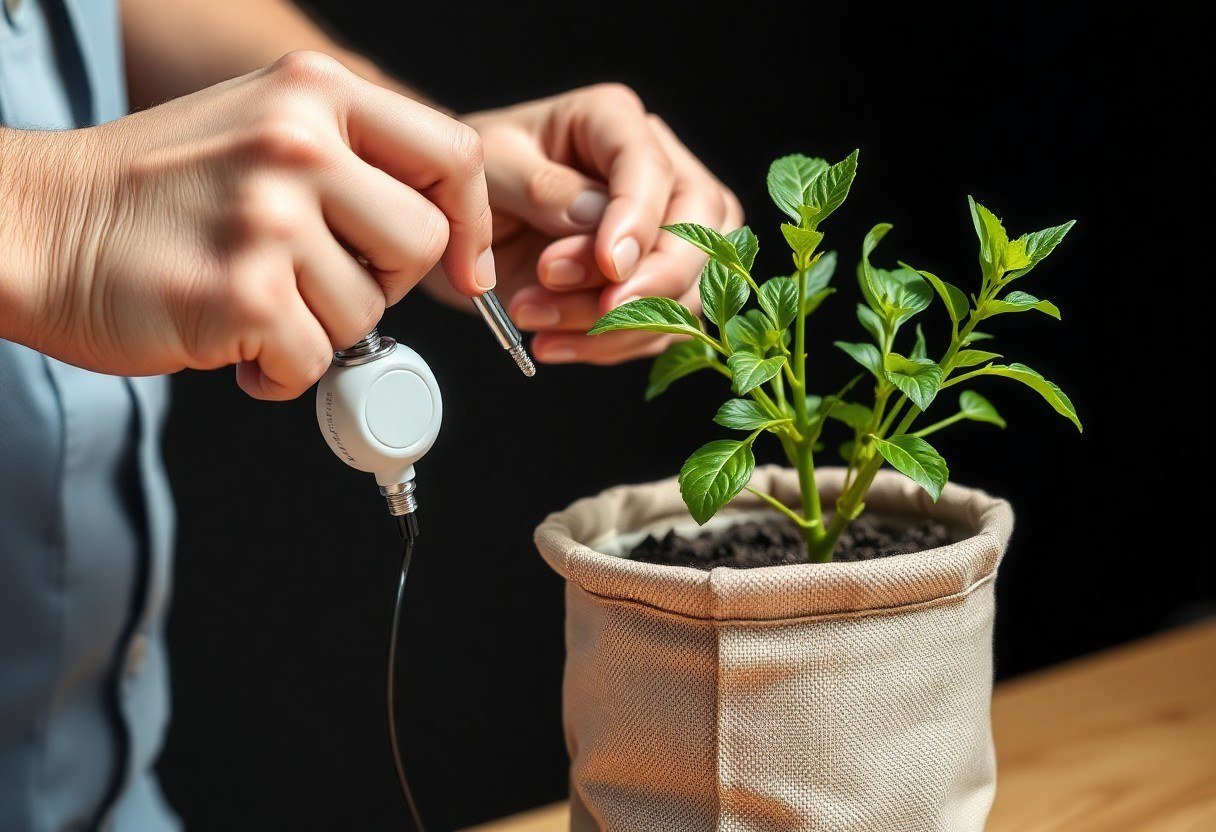
Person adjusting a soil moisture sensor with a screwdriver next to a small green pepper plant in a fabric pot

Frequently Asked Questions

Does this system work for rooftops and balconies?

Absolutely. The system is simple: a thin drip hose, a mechanical timer (battery-operated), and a small moisture sensor. You can easily water 10-20 pots. Just make sure the hose is not clogged, and that the pots have drainage holes for excess water to escape.

What is the approximate cost of this system?

For an area of 10 square meters: hose, connectors, and drippers (200-300 EGP), mechanical timer (150-250 EGP), moisture sensor with Arduino (250-400 EGP). The total is around 600-1000 EGP. You will save this on your water bill within 3 months.

Do I need to be an engineer to install it?

No, not at all. Installation is like a building block game: you cut the hose with scissors, fix the connectors, and wrap the adhesive tape. There are many YouTube videos in Arabic explaining step by step. Anyone with a little patience can do it.

How many years do the sensors last?

Capacitive soil moisture sensors last two to three years if you clean them monthly from salts. Resistive metal sensors rust quickly and are not recommended. It is better to buy the capacitive type.

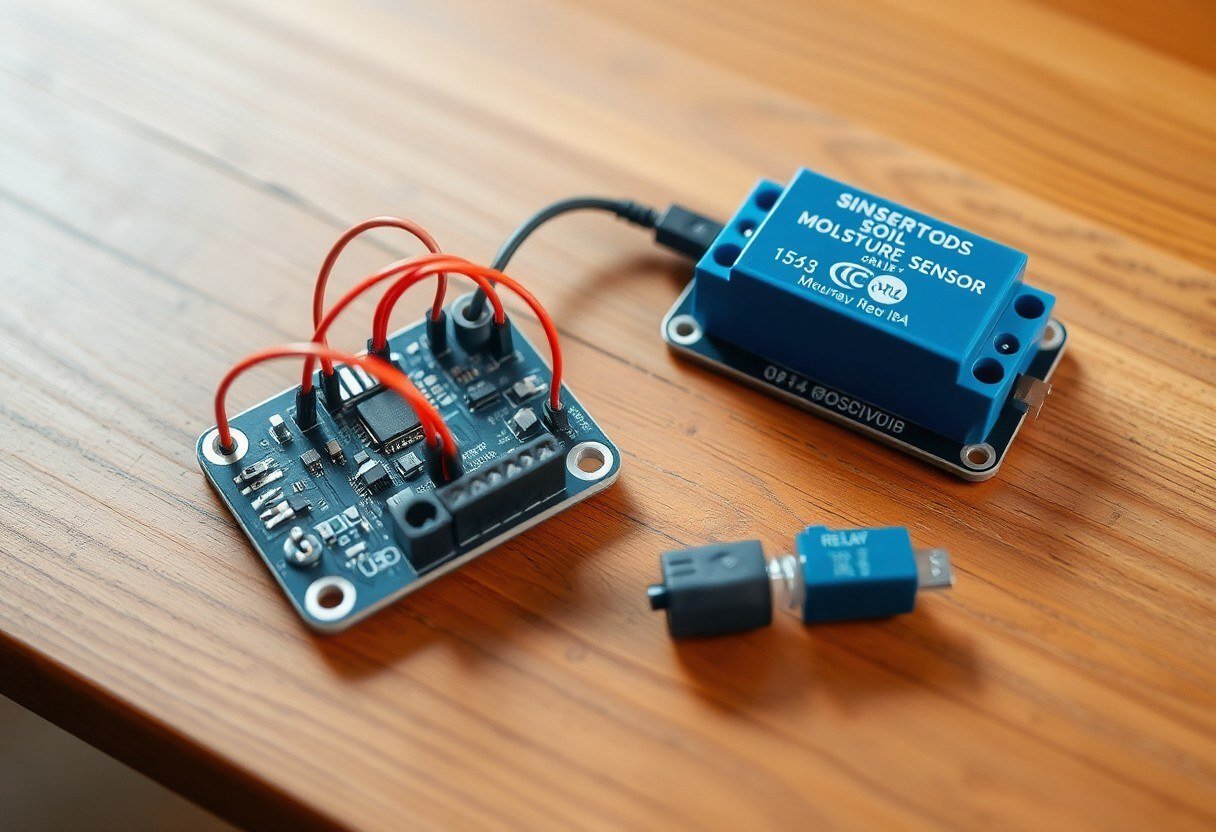
Small electronic board with wires connected to a soil moisture sensor and relay on a wooden table

Summary

Smart agriculture is not science fiction; it is simple tools you can apply today on your land or on your rooftop. The whole idea is to understand the plant's actual need, and use technology to save water, fertilizer, and effort. Start with a small step: install a drip system on 5 plants, place a moisture sensor, and see the difference for yourself. You will be amazed at how much better the yield will be, and how much peace of mind you will feel knowing your plants are safe. The Egyptian land is thirsty, and every drop of water matters. Start today, and be part of the solution. If you want to develop further, you can use advanced devices like Arduino Portenta CAT.M1 / NB-IoT GNSS Shield to monitor and control your system from anywhere in Egypt. Smart agriculture is not a cost; it is an investment in your future and the future of your country.


Contact Us تواصل معنا