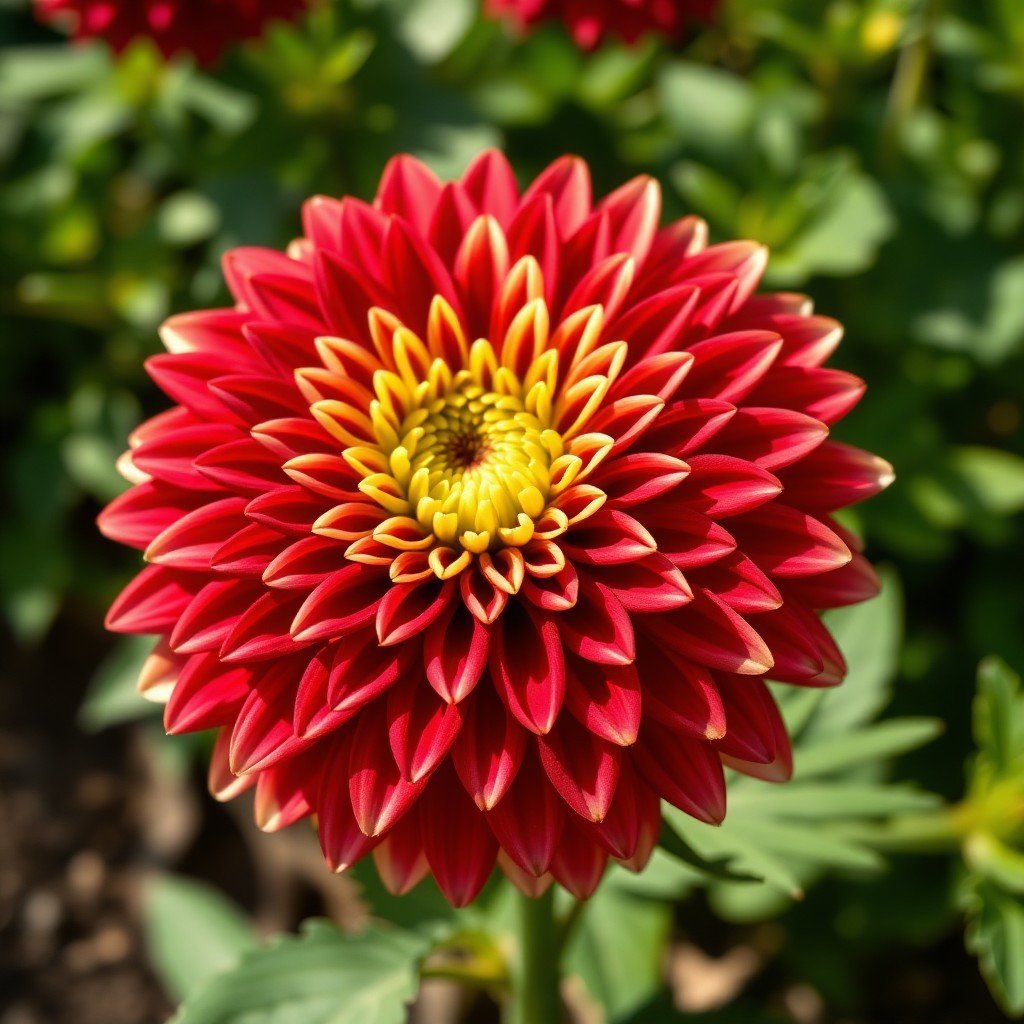
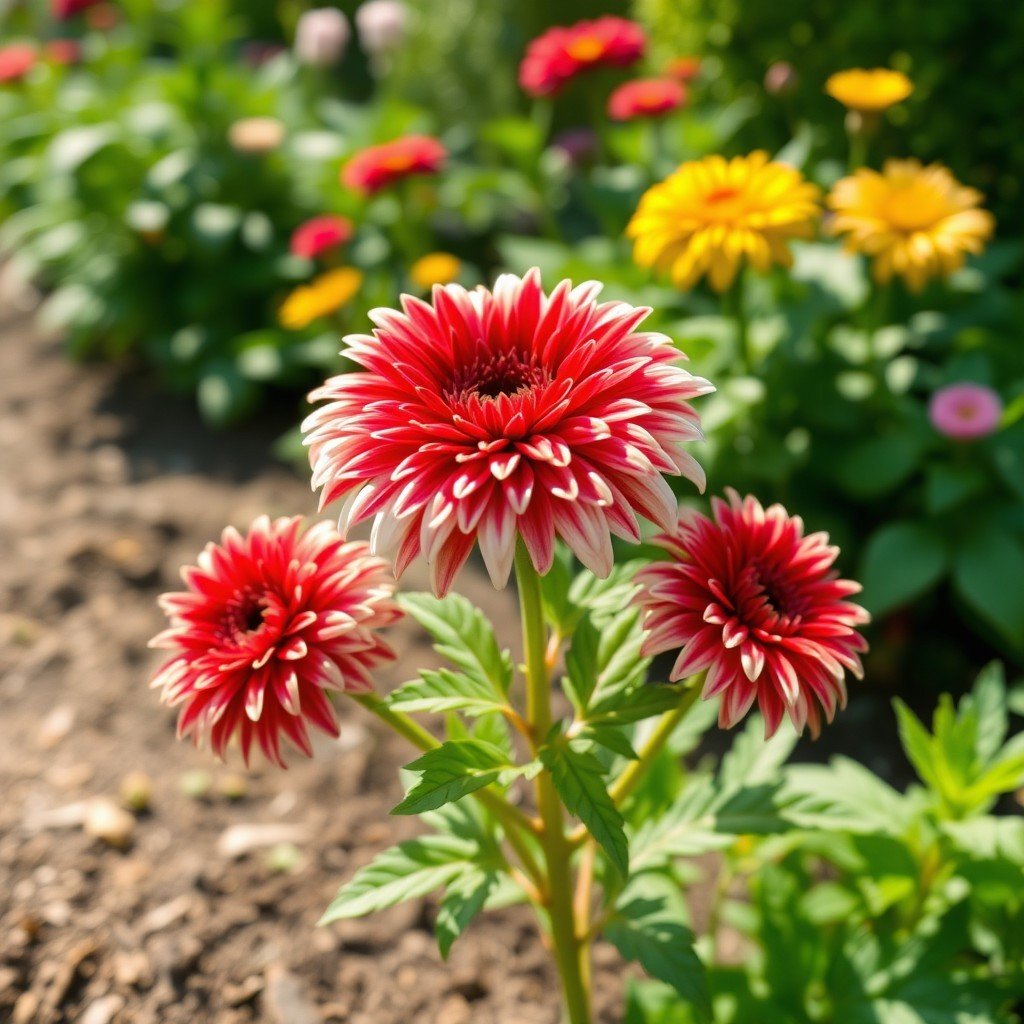
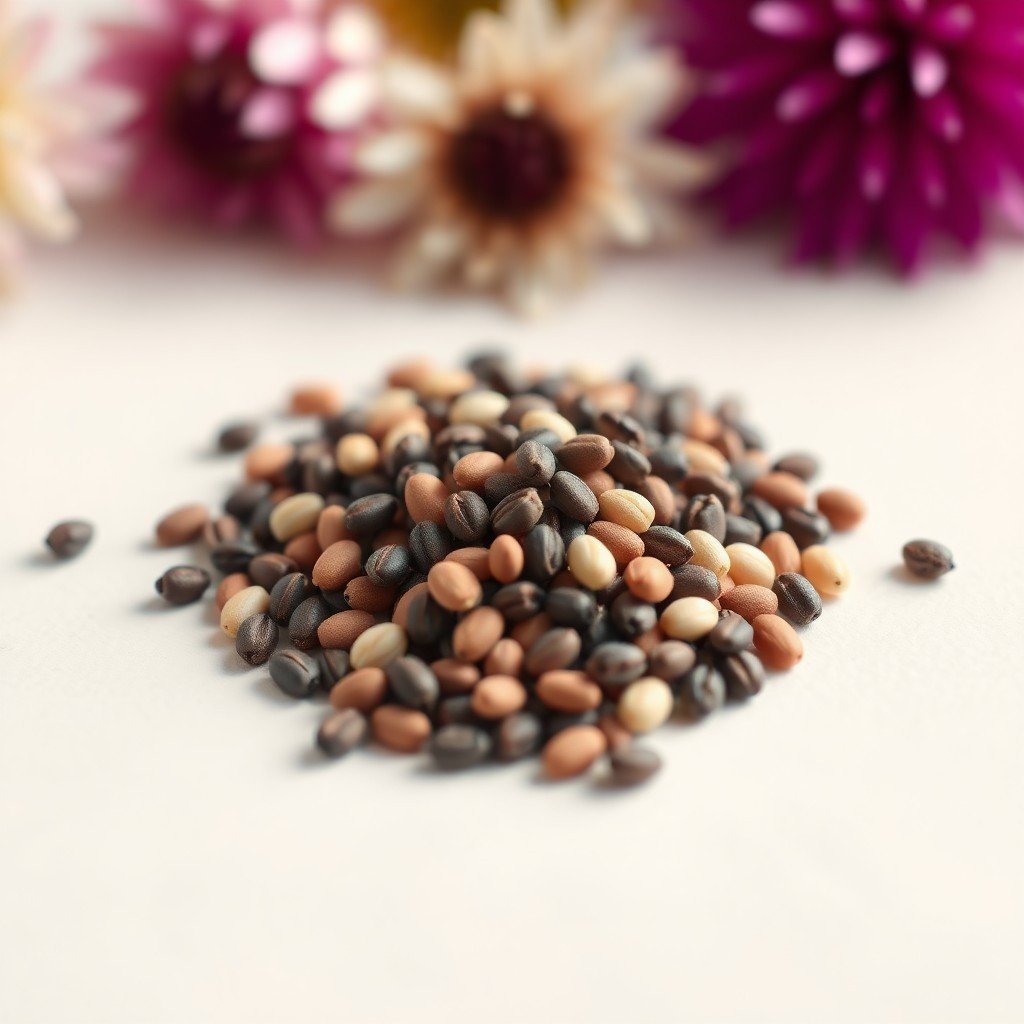
Tricolor Daisy is the showy, multi-coloured face of the chrysanthemum family — each single, daisy-form bloom is ringed with concentric bands of warm colour that fade outward to a bright central disc, giving the flower its name. It is grown purely for ornament: a generous, eye-catching annual that flowers in autumn and is just as happy lighting up a border or bed as it is filling a vase as a long-lasting cut flower. Plant it in groups for a cheerful late-season carpet of colour when most of the garden is winding down.
Planting
Start seed indoors in late winter to mid-spring, roughly 6 to 10 weeks before the last spring frost — spring sowing is the reliable choice, and plants flower the same year with bloom arriving in autumn. Scatter seed on the surface of the starting mix and only barely press it in; do not bury it, because chrysanthemum seed needs light to germinate, so keep it under bright light. At a soil temperature of 18 to 21 C, germination takes about 10 to 14 days; sown around 15 C it usually sprouts within two weeks. Transplant young plants at the same depth they were grown — never bury the root ball, as that starves the roots of air and invites root rot — and move them outdoors only once frost danger has passed. Give each plant about 30 to 45 cm of room, allowing the wider end of that range for spreading types. Choose a full-sun spot offering at least 6 hours of direct sun a day; in poor light the plants turn weak and spindly and set few flowers.
Fertilizing
Before planting in spring, work a low-nitrogen balanced fertilizer into the bed — about 0.2 kg per square metre of a 5-10-5 blend mixed to roughly 15 cm deep. Feed with a dilute fertilizer several times before the buds set, and on poor soils add a second, lighter feed (such as 5-10-5 or 10-6-4) in early summer. Nitrogen has the biggest effect on growth and flowering, but go easy: too much nitrogen delays bloom and reduces the number of flowers, so keep it moderate. Once flowering begins, container plants benefit from a switch to a high-potassium feed such as a tomato feed.
Care
Keep the soil evenly moist all season but never waterlogged. Mums are shallow-rooted, so they need frequent watering in hot, dry spells, and they must have good drainage to avoid root rot; for plants in pots, water once the top few centimetres of mix have dried out. Pinch the tips to force branching and more flowers — make the first pinch when plants reach about 15 to 20 cm tall by removing roughly 2.5 cm from each shoot tip, then repeat when the new branches reach about 15 cm, and stop pinching around mid-summer (about three months before you want bloom). Plants left un-pinched grow tall, leggy and flower poorly. Watch for aphids, leaf miners, leafhoppers, spider mites (worst in hot, dry conditions), caterpillars, capsid bugs, earwigs, and slugs and snails — aphids and leafhoppers also spread viruses, so keeping them in check matters. Avoid overcrowding, shade and wet foliage to head off diseases such as white rust, powdery mildew, grey mould and Septoria leaf spot. Chrysanthemums are short-day plants whose buds are triggered naturally by the shortening days of late summer and autumn, with flowering from September to November, roughly three months after the last pinch — so keep them away from street or porch lights at night, which disrupt that flowering trigger.
In Egypt, sow seed in trays in late winter (January to February) when nights sit around 15 to 21 C, then transplant to the field in February to March once hard frost risk has passed in the Nile Delta. Grow the plants on through spring and summer, pinching until about June to early July, and avoid sowing into the peak of high summer heat. In the Delta (Cairo, Alexandria) this standard cycle works well — autumn bloom falls roughly October to December as the days shorten — but manage powdery mildew and grey mould in the humid coastal autumn air. In Upper Egypt (Aswan, Luxor), start a little earlier and provide afternoon shade with more irrigation through the hotter, drier summer; protect young plants from the harshest June to August sun with light shade, mulch and frequent watering, since heat and drought stress shallow-rooted mums and encourage spider mites.