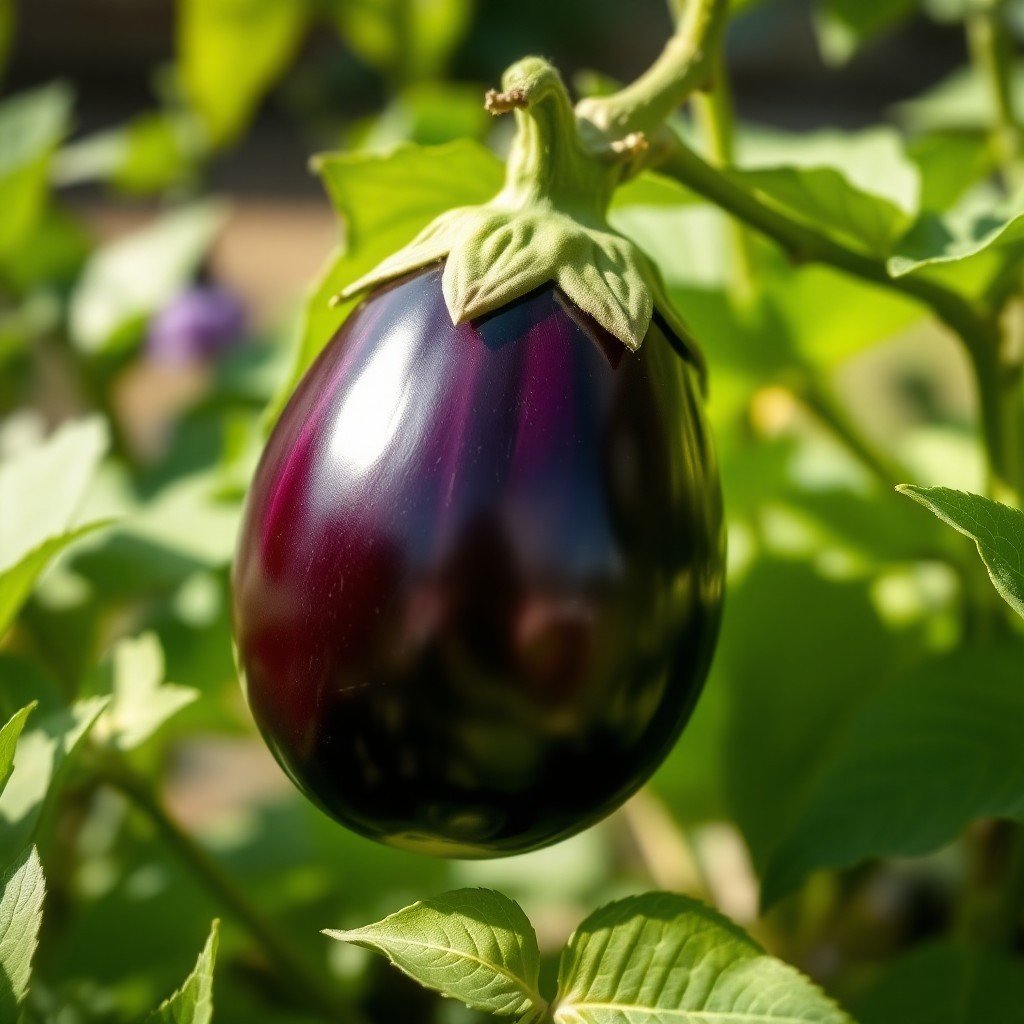
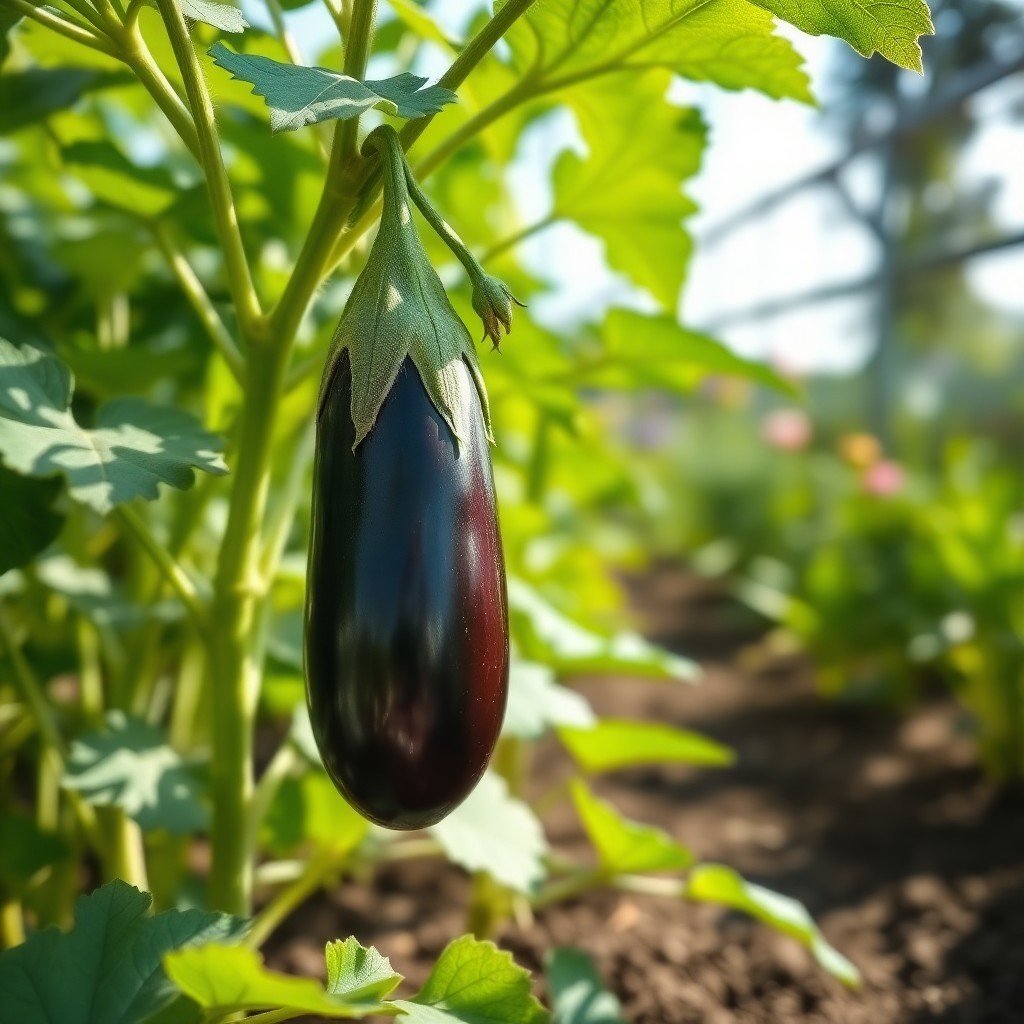
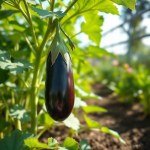
Roman Eggplant is the classic large, plump oval the Egyptian kitchen is built around: smooth, deep-purple skin with a high gloss, firm yet tender flesh, and a mild, faintly sweet flavour that soaks up oil and spice beautifully. Its broad shape and roomy interior make it the go-to choice for stuffing (mahshi), while its firm flesh holds together perfectly on the grill, in the pan, or sliced for moussaka and béchamel-style bakes. Picked young and glossy, it stays sweet and free of bitterness.
Planting
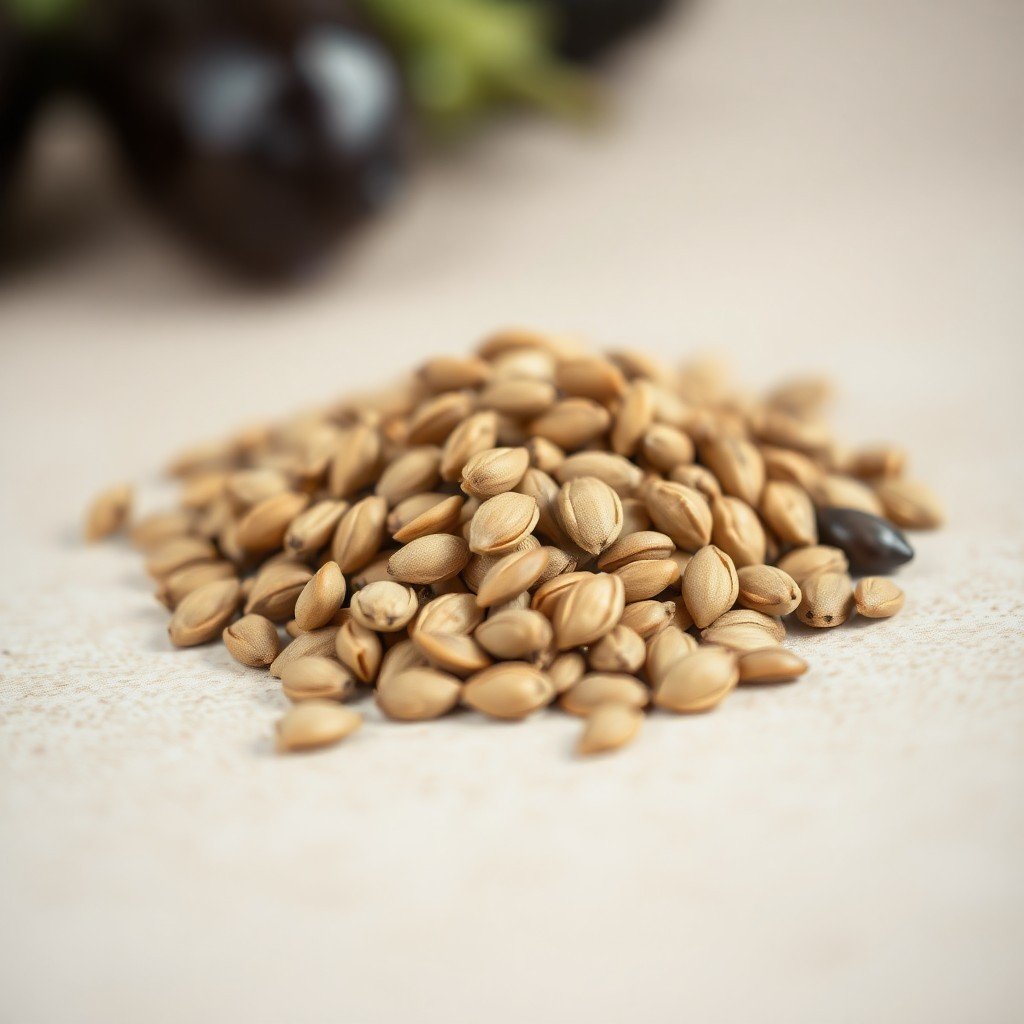
Roman Eggplant is a warm-season, frost-sensitive crop, so give it a head start indoors. Start seeds about 6 to 8 weeks before you plan to transplant outdoors. Sow about 0.6 cm (6 mm) deep and cover the seed lightly. Warmth is everything at this stage: keep the soil between 27 and 32°C until the seedlings emerge, then ease it down to around 21°C, since the seed simply will not sprout in cool soil. A heat mat that holds the flat at roughly 24-29°C until emergence works well. At these warm soil temperatures, expect germination in about 7 to 14 days.
Once true leaves appear, thin or move the seedlings so they stand 5-8 cm apart in flats, or pot them on into individual 5-8 cm pots. Before planting out, harden the young plants off for about a week by cutting back on water and lowering the temperature to around 16°C. Transplant outdoors only after frost danger has fully passed and the soil is warm: wait until nighttime lows stay reliably above 10°C and the soil reaches about 18-21°C. Choose a cloudy, calm day or the late afternoon for transplanting. Set plants about 45 cm apart, in rows 75-90 cm apart; on plastic mulch with two rows, allow 45-60 cm between plants. Give them a full-sun spot with at least 6 hours of direct light a day, and ideally 8-10 hours for the heaviest fruiting.
Fertilizing
Feed the soil before you plant. Work a balanced complete fertilizer such as 10-10-10 or 13-13-13 into the bed before transplanting, at roughly 145-160 g per square metre, adjusting phosphorus and potassium according to a soil test. Aim to keep the soil pH between 6.0 and 7.0. Once the plants are growing, side-dress with nitrogen after the first fruits set, or when the plants are about half-grown, and again after the first harvest. Go easy on nitrogen overall: too much produces bushy, leafy plants that are slow to set fruit.
Care
Steady moisture keeps Roman Eggplant tender and productive. Provide about 2.5-5 cm of water per week; if rain falls short of about 2.5 cm in a week, give the bed a thorough soak at least once, wetting the soil to a depth of around 15 cm. A drip line or soaker hose delivers the most consistent moisture and is well worth it in hot weather. Watch for common pests, including flea beetles (which leave pinhole damage in the leaves), Colorado potato beetle, eggplant lacebug, spider mites, and cutworms; the main diseases to know are Verticillium wilt, the most common, and early blight. To manage Verticillium wilt, rotate away from all members of the nightshade family, potato, tomato, and pepper, for 4-5 years.
Counting from transplanting, fruit is usually ready in roughly 55-80 days, depending on the variety. Harvest while the fruit is still glossy and firm, at about two-thirds of its full size, for the best quality. A simple ripeness test: press the side with a thumbnail, and if the dent stays, it is ready to pick. Dull skin and browned seeds are signs the fruit has gone past its prime. Cut the stem with pruners or a sharp knife rather than pulling the fruit off.
Growing in Egypt
Egypt's climate suits Roman Eggplant well and supports two main cycles. For the main summer crop across the Delta and most of the country, sow in protected nursery beds in January-February, transplant to the field in February-March once the nights warm, and harvest from May into summer; this timing avoids transplanting into the cold of December-January. For a late, autumn crop, sow a second nursery around June-July and transplant in July-August for a harvest before the cold sets in. In the warmer governorates of Upper Egypt (Aswan, Luxor, Minya), the milder winter lets you start the nursery and transplant 2-4 weeks earlier than in the cooler Nile Delta from Cairo northward, where late-winter cold delays safe transplanting until the soil reaches about 18°C. Because Egypt's hot summers, often above 35°C, can cause flower drop and poor fruit set at peak heat, scheduling the main harvest for late spring to early summer, plus a second autumn crop, captures the most productive 21-29°C window. Full sun of 8-10 hours is available year-round, and with high evapotranspiration, consistent drip irrigation of 2.5-5 cm per week is important.