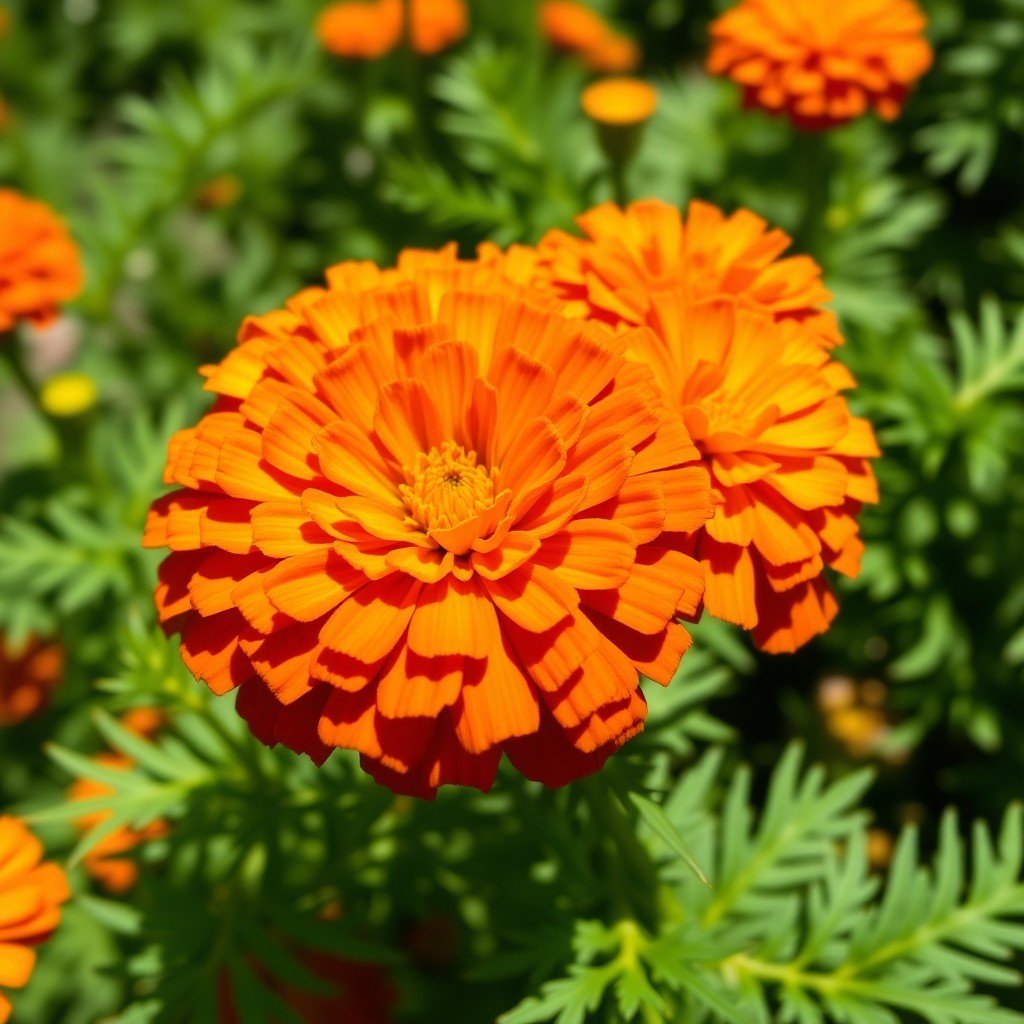
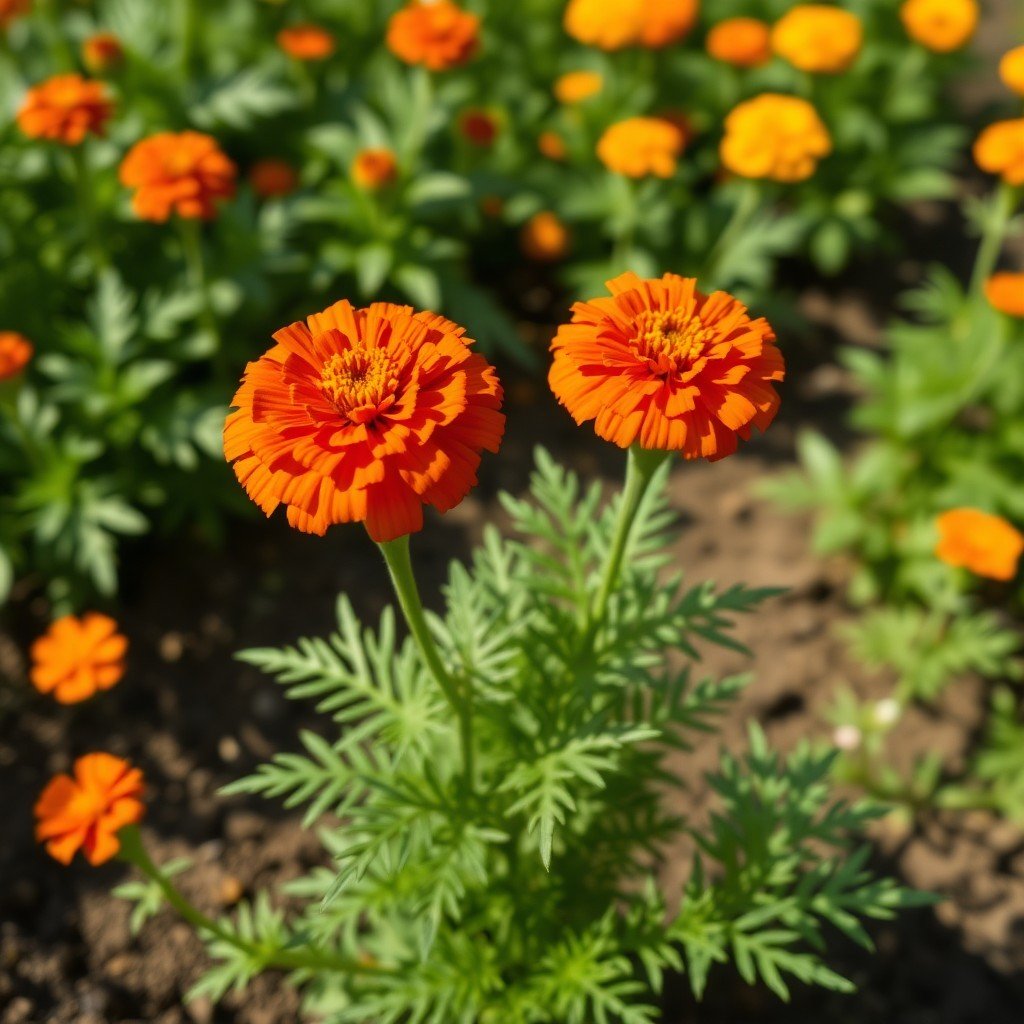
Marigold is one of the most rewarding flowers you can raise from seed: dense, ruffled blooms in warm shades of gold, yellow and orange that sit above finely cut, aromatic foliage with that unmistakable marigold scent. These cheerful, free-flowering plants are a classic choice for sunny borders, edging and patio pots, and they are a favourite companion plant tucked among vegetables. They tolerate very hot summers and reward you with colour for weeks on end, making them an easy, dependable pick for any sunny corner.
Planting
Choose a spot in full sun — six or more hours of direct light each day, since marigolds perform poorly in shade. You can sow the seed straight into warmed soil (around 18 C) or start it under cover and transplant later. Sow about 6 mm deep and cover lightly so the seed is fully buried in the growing media. Seeds sprout quickly, usually in about 5 to 8 days at 21 to 24 C, with a little bottom heat speeding things along. For transplants, start the seed roughly 4 to 6 weeks before you plan to plant out (about 8 weeks for the tall African types), and move plants outside once the soil has warmed. Space French types about 20 to 25 cm apart and the taller African types about 30 to 40 cm apart, in soil with a pH of roughly 6.0 to 7.5. In Egypt the best results come from the cool season rather than the harsh summer: sow from late August through October for blooms that carry through autumn, the mild winter and into spring, or sow in January and February — especially in the warmer south — for a spring display before the heat arrives. Avoid sowing for summer (June to August) bloom, when high temperatures stall growth and flowering.
Fertilizing
Marigolds are light feeders, so a little goes a long way. Work a balanced general-purpose fertilizer with equal parts nitrogen, phosphorus and potassium — or a slow-release feed made for annuals — into the soil at planting time. After that, they often need no further feeding at all. Steer clear of nitrogen-rich fertilizers: too much nitrogen pushes lush leafy growth at the expense of flowers. If you want to encourage more blooms, reach for a balanced formula or one with a higher middle number (phosphorus).
Care
Keep the soil evenly moist for the first couple of weeks after planting to help young plants settle in. Once established, marigolds are drought-tolerant and need only about 25 mm of water per week, letting the soil dry out somewhat between waterings — avoid overwatering. Always water at the base rather than overhead to help prevent disease. Pinching young plants encourages bushier branching, and deadheading the spent flowers regularly keeps the display going, stops the plant setting seed, and reduces disease in humid conditions. Watch for spider mites, aphids, slugs, leafminers, whiteflies, thrips and caterpillars; mites and aphids can be treated with insecticidal soap. In wet or humid weather, gray mold and powdery mildew can appear, so rely on good drainage, generous spacing for airflow and base-only watering to keep plants healthy. Tall African marigolds, which can reach 1 to 1.5 m, may need staking. Plants generally start flowering about 8 weeks (roughly 45 to 70 days) from seed and bloom from summer into autumn.