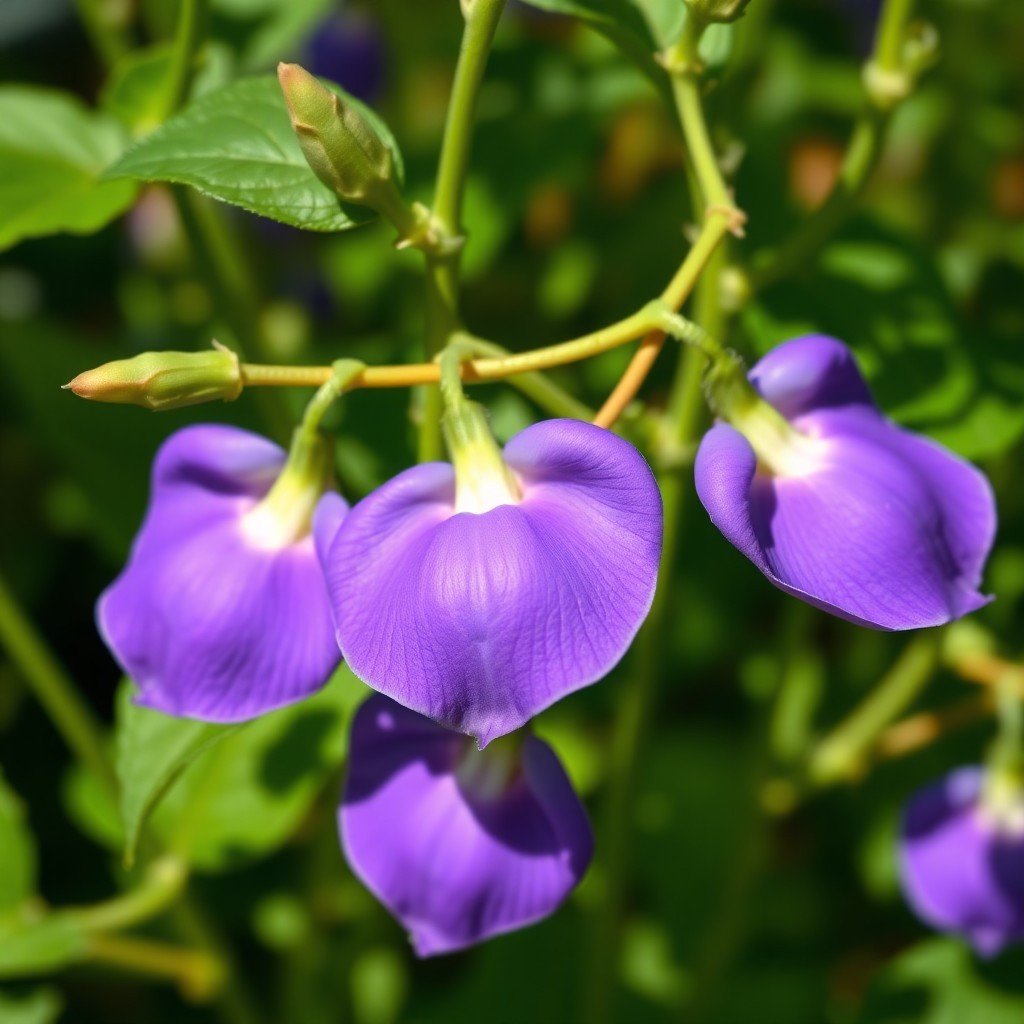
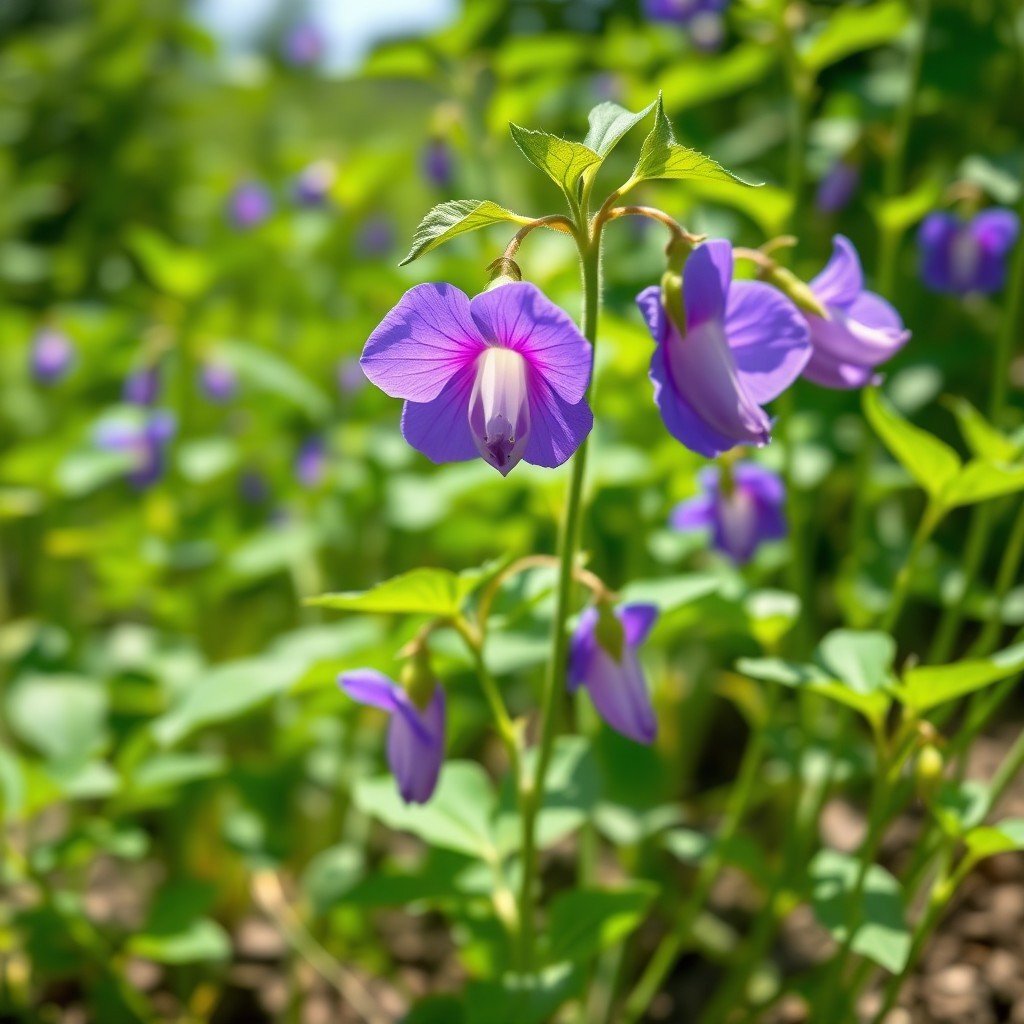
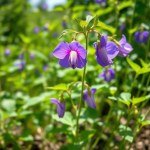
The Blue Tea, also known as Butterfly Pea (Clitoria ternatea), is loved for its electric-blue, pea-like blooms that open up to about 5 cm across with bright yellow centres, carried singly or in pairs along the vine. The petals are the star of a vivid blue herbal infusion that famously shifts colour to purple or pink when a splash of lemon is added, making it as much a kitchen marvel as a tea. As a rapidly growing climbing vine it quickly clothes a trellis, fence or arch in green, flowering through spring, summer and autumn — equally at home dressing up an ornamental corner or supplying petals for a colour-changing cup.
Planting
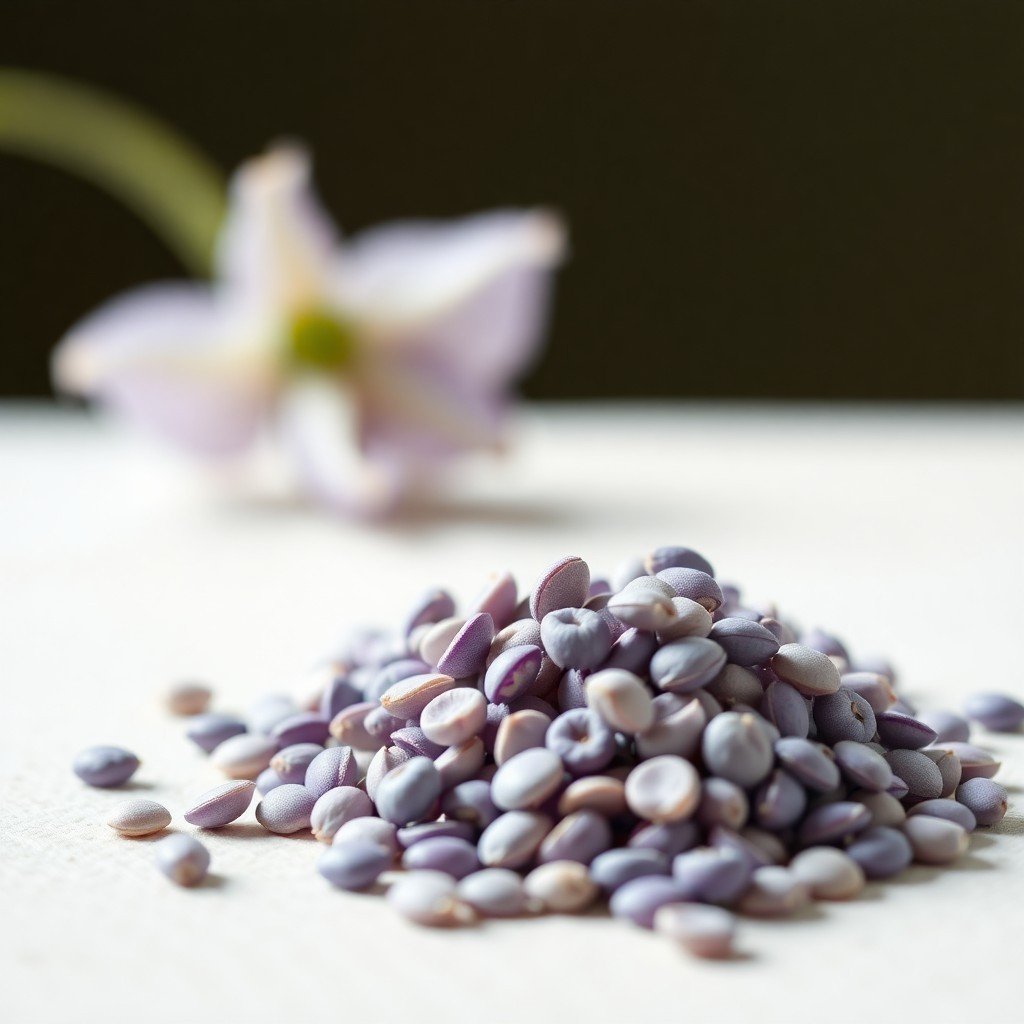
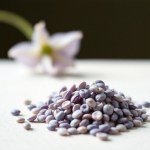
Sow in early spring once the danger of hard frost has passed, treating the plant as a warm-season annual. The seeds are hard-coated, so gently scarify the seed coat with a knife or sandpaper, then soak in warm water for 12 to 24 hours before sowing to improve and speed up germination. Place seeds about 2.5 cm deep (forage guidance allows 1.5 to 4 cm, lightly covered) into warm soil of roughly 18 to 27 C; the plant is sensitive to soil below about 15.5 C. Sow seeds about 7.5 cm apart, then thin to around 15 to 30 cm apart. Seeds can also be started indoors 6 to 8 weeks before the last frost and transplanted out once frost danger passes. Expect germination in about 10 to 21 days. Give it full sun — 6 or more hours of direct sun daily, ideally 6 to 10 hours — and, because it is a fast climber that can reach up to about 4.5 m, provide a trellis, fence or other support for the vines to climb.
Fertilizing
As a nitrogen-fixing legume, Butterfly Pea draws atmospheric nitrogen through root-nodule rhizobia, so it needs little to no nitrogen fertilizer and even works as a green manure that improves soil fertility. Where the response counts, it is phosphorus rather than nitrogen that matters: an Upper Egypt field trial in Toshka applied phosphorus at 0, 30 and 60 kg P2O5 per feddan and saw a significant effect on growth and yield, which is especially useful in low-fertility desert soils. On soils that lack compatible bacteria, inoculate the seed with a broad-spectrum cowpea-group rhizobium strain (for example Tropical Group M, CB 756) to help establishment.
Care
This vine tolerates a wide range of soils — loam, heavy clay or sand — across a pH of about 5.5 to 8.9, but it always wants good drainage and rewards you in organic-matter-rich soil. It prefers consistent moisture, with moderate watering once established; although it is notably drought tolerant (growing where rainfall is as low as 400 to 500 mm and enduring a 5 to 6 month dry season), it performs best with steady watering, so avoid waterlogging and overwatering that lead to root rot. Optimal growth is at about 19 to 28 C, and it tolerates down to roughly 15 C; it is frost-sensitive and only regrows from woody stems or the base if already woody when frost strikes. Watch for whiteflies and spider mites among the pests, and for anthracnose and bacterial soft rot among diseases. Flowering begins within a few months of a warm-season sowing, with the plant covering the ground 30 to 40 days after sowing and reaching mature pods in about 110 to 150 days.