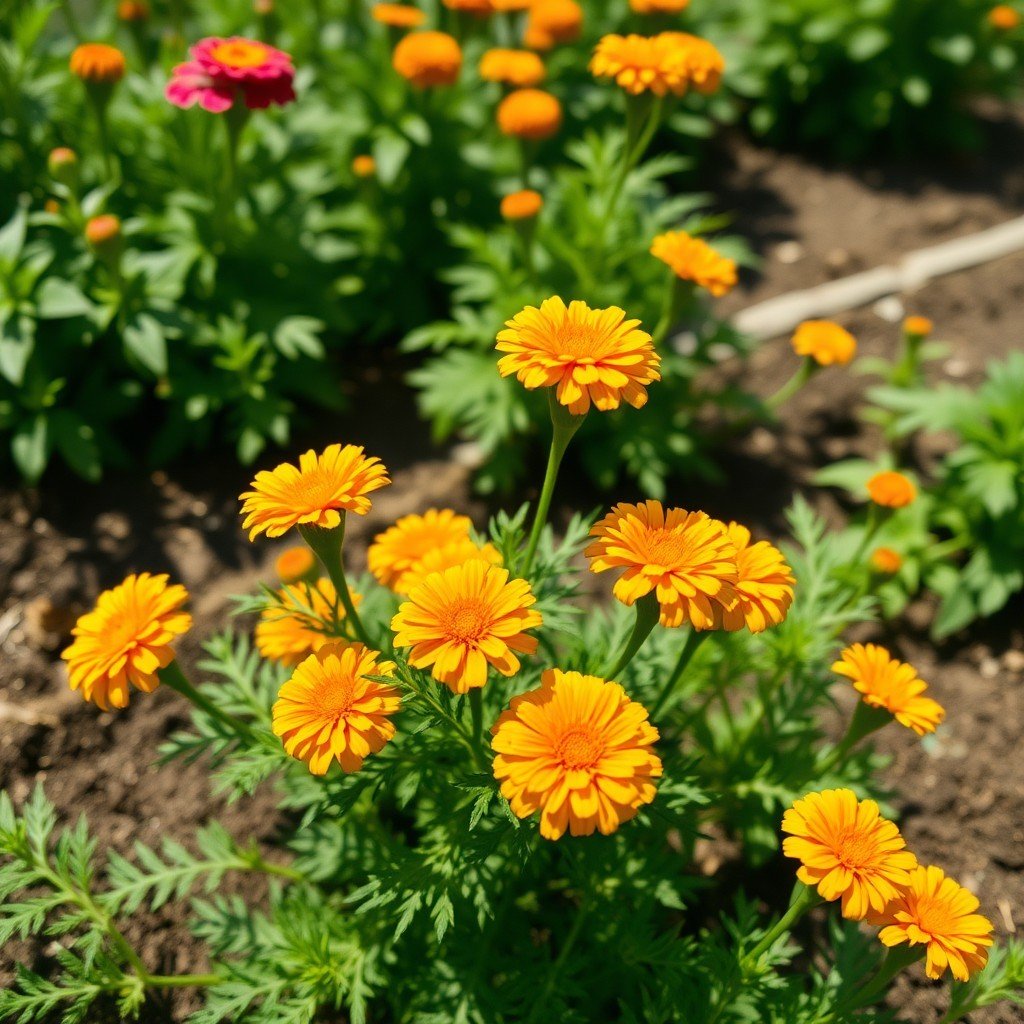
This golden African marigold (Tagetes erecta) is the tall, showy member of the marigold family, prized for its big, fully double pompon blooms in a warm, glowing yellow. The dense, rounded flower heads sit on strong upright stems, making them a favourite for bold borders, mass plantings and long-lasting cut arrangements. Because it is a slow-maturing tall type, it rewards a little patience with a generous, season-long display that brightens any sunny corner of the garden.
Planting
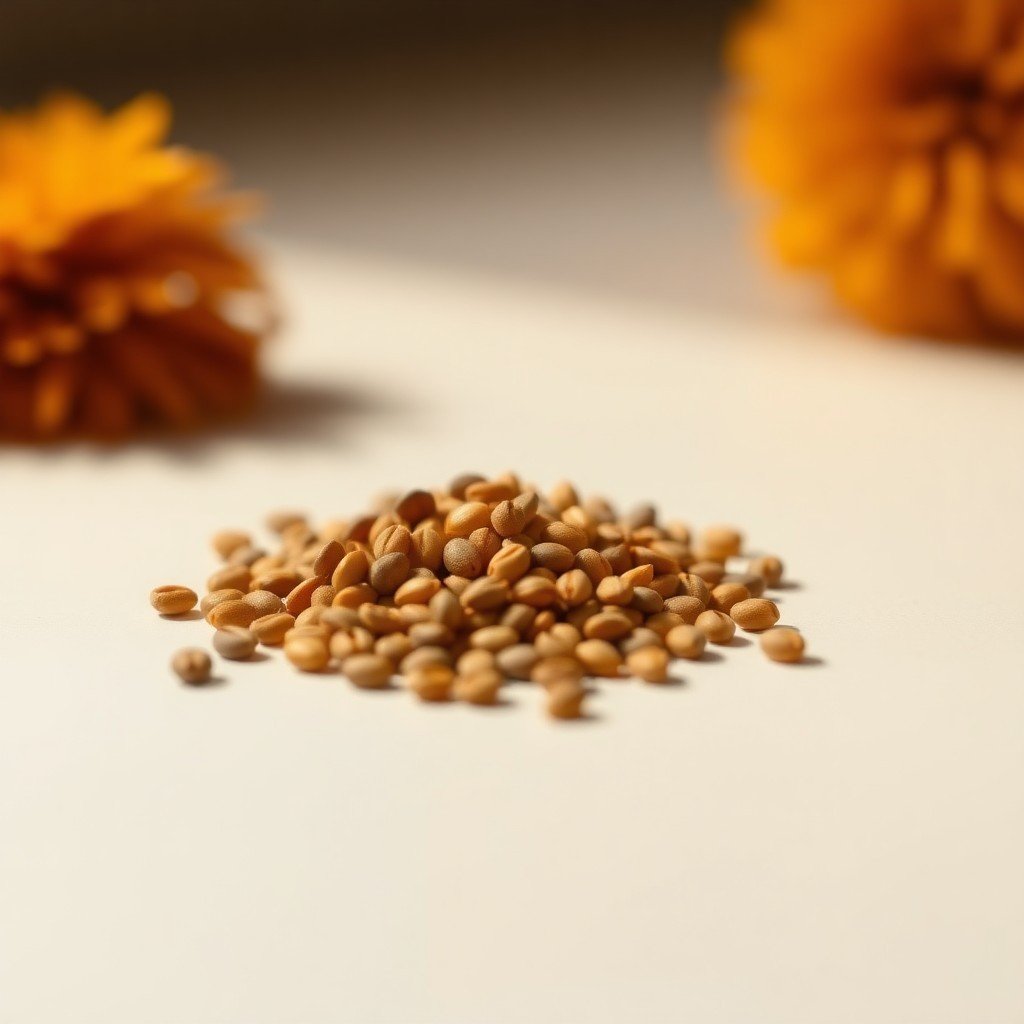
Sow the seeds about 6 mm deep and cover them lightly, making sure each seed is fully tucked under the growing media. As a tall African type, this marigold matures more slowly, so for transplants start the seeds indoors around 8 to 10 weeks before planting out. Seeds usually sprout within 5 to 8 days when kept warm at about 21 to 24 C, and a little bottom heat helps them along. Give each plant plenty of room: space tall African marigolds 30 to 40 cm apart. In Egypt the best results come from the cool season rather than the harsh summer, so sow from late August through October for blooms from autumn into the mild winter and spring, or sow in January and February (especially further south) for a spring show before the peak heat. Avoid sowing for summer bloom, as high temperatures stall growth and reduce flowering. Plant in full sun, where the plants enjoy 6 or more hours of direct light daily; marigolds perform poorly in shade. Aim for a soil pH between 6.0 and 7.5.
Fertilizing
Marigolds are light feeders, so keep feeding simple. Mix a balanced general-purpose fertilizer with equal nitrogen, phosphorus and potassium into the soil at planting time, or use a slow-release feed formulated for annuals. After that, no further feeding is usually needed. Steer clear of nitrogen-rich fertilizers: too much nitrogen pushes lush leafy growth at the expense of flowers. If you want to encourage more blooms, choose a balanced formula or one with a higher middle number (phosphorus).
Care
Keep the soil evenly moist for the first couple of weeks after planting to help the young plants settle in. Once established, marigolds are quite drought-tolerant and need about 25 mm of water per week, letting the soil dry out somewhat between waterings. Always water at the base rather than overhead to help prevent disease. Pinching young plants encourages bushier branching, and these tall types, which can reach 1 to 1.5 m, may benefit from staking. Deadhead spent flowers regularly to prolong flowering, prevent seed set and reduce disease in humid conditions. Expect the first flowers roughly 8 weeks from sowing (about 45 to 70 days), with blooms carrying on from summer into autumn. Watch for common pests such as spider mites, aphids, slugs, leafminers, whiteflies, thrips and caterpillars; mites and aphids can be treated with insecticidal soap. In wet or humid spells, good drainage and base-only watering help prevent powdery mildew, gray mold and leaf spots.