0 0
0
No products in the cart.

Want to Grow Greens and See Results Fast? Radish is the Guaranteed Start | tna W rna

Jun 06, 2026 / By Anas Heaba / in Smart Farming & Technology

Imagine planting something today and being able to eat it just 18 days later. This is the reality of radish. Many of us have tried to plant greens on our balcony or rooftop, only to wait months to see results, or have the plant die before it grows. This frustration makes us think that farming is difficult and not for everyone.

However, the truth is that there are crops like radish that are designed to succeed with you from the first time. Radish is not only fast, but it also doesn't require a large space or complex care. If you have a simple pot or an old plastic container, you can start today and see the results before the end of the month. Let's find out how.

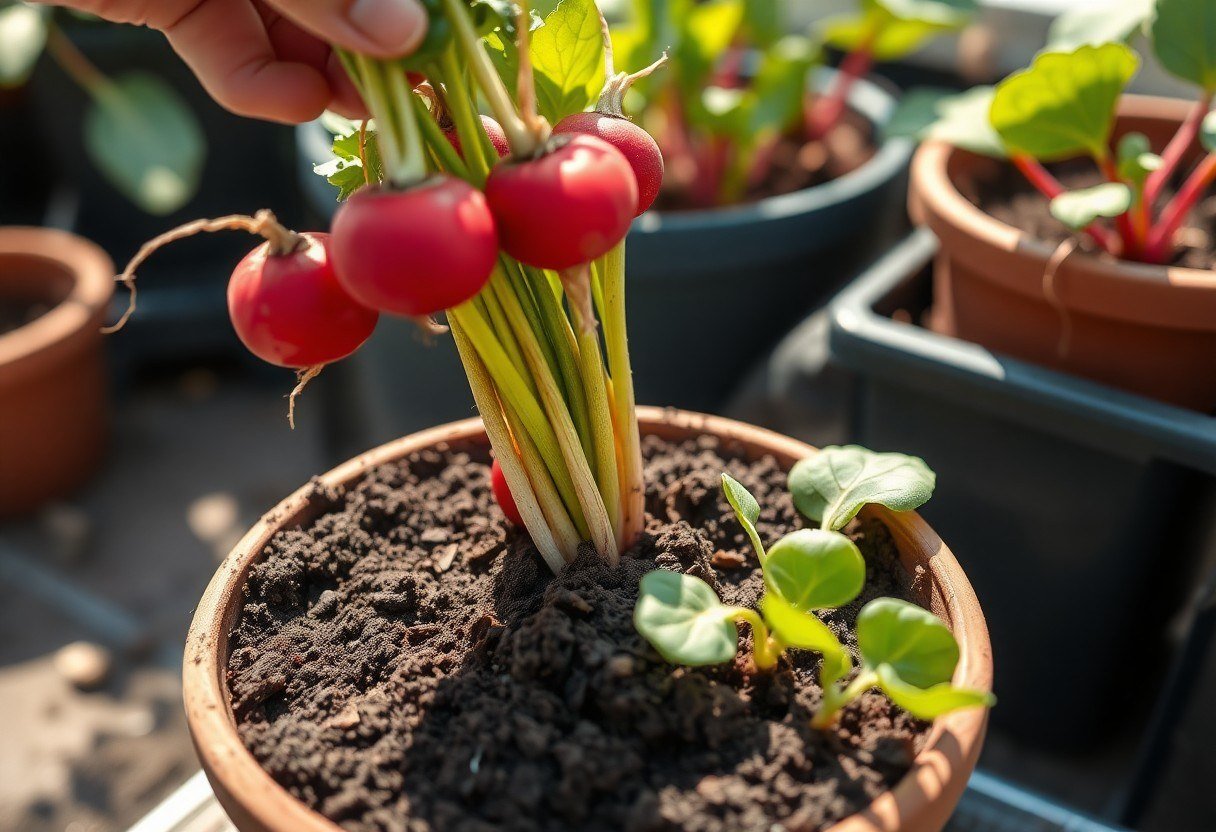
Close-up of red radish roots being pulled from moist soil in a small pot

Why is this important?

In Egypt, the problem of high vegetable prices is not new. The price of a kilogram of radish in the market can reach unexpected numbers in certain seasons. However, what's more important is that the available spaces for farming in homes are very narrow. A balcony of one meter by two meters or a small rooftop is not enough to plant tomatoes or cucumbers, but it's perfect for radish. Additionally, radish is a crop that consumes little water compared to other leafy greens, which is very important in our water-scarce conditions.

Statistically, radish is one of the fastest root crops in the world, with its complete life cycle from seed to plate ranging between 18 and 25 days depending on the variety. This means that if you plant 20 seeds today, after three weeks you will have a fresh, organic crop, saving you money and knowing its source. Moreover, growing radish teaches you the basics of farming, from watering and germination to care, making it an excellent introduction to any other crop.

The real problem

The problem that beginners face is that they choose slow crops or those that require high maintenance. Radish, on the other hand, is a "ready for success" crop. Its roots form quickly because the plant stores its energy in the root instead of spending time forming large leaves. Radish is part of the Brassicaceae family and is characterized by its ability to germinate at relatively low temperatures (15-25 degrees Celsius), making it ideal for the winter and spring weather in Egypt. The real problem is not the difficulty of farming, but rather the lack of knowledge among beginners about the right crop for their start.

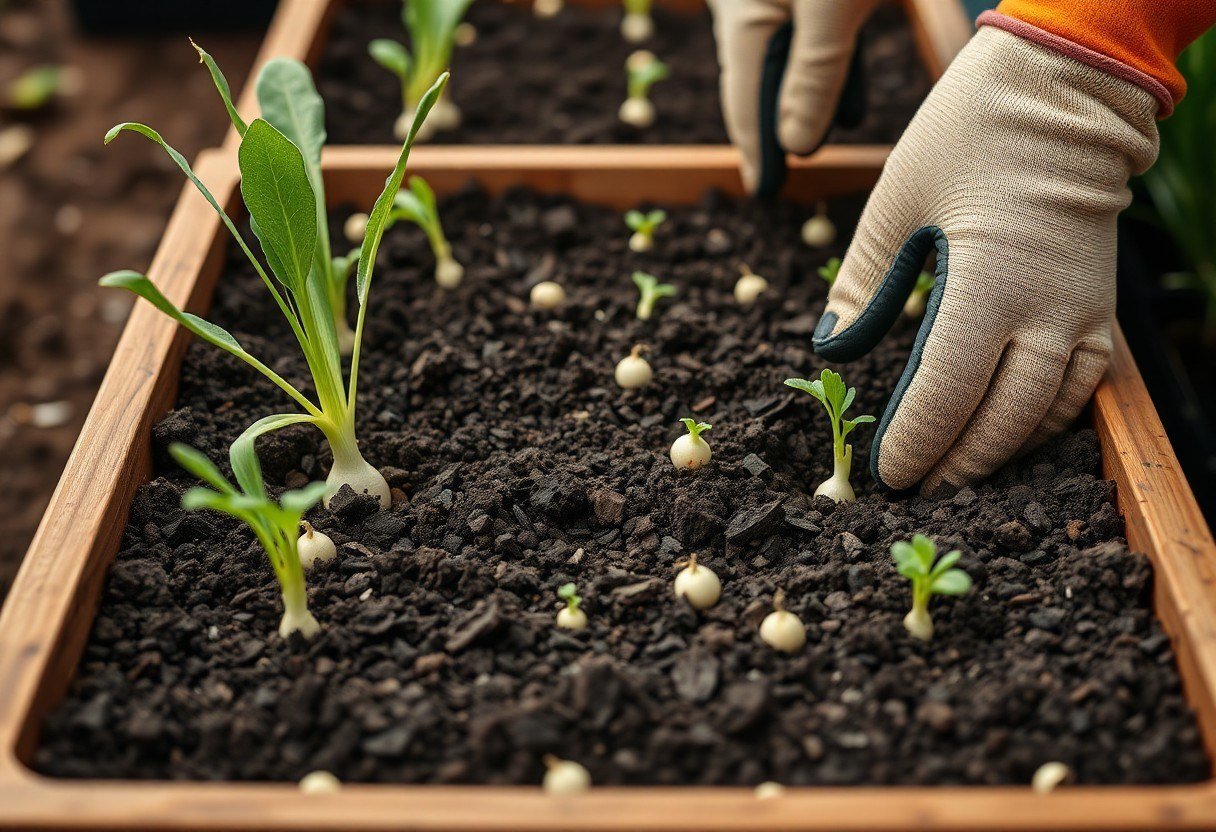
Radish seeds being planted in lines within a rectangular pot filled with dark agricultural soil

The solution step by step

  1. Choose the right container: Any pot or container with a depth of at least 15 cm and with drainage holes. A cut plastic container or a small wooden box works great.
  2. Prepare the soil: Use light agricultural soil (a mixture of peat moss with vermiculite or sand). Heavy soil (clay) can deform the roots. Add a small amount of decomposed organic fertilizer (compost) at a ratio of 1:4.
  3. Plant the seeds: Make shallow lines 1 cm deep, placing a seed every 5 cm. Cover the seeds with a thin layer of soil (half a centimeter), and water them lightly with a little water using a sprayer so the seeds don't move.
  4. Watering: Keep the soil moist but not flooded. Water once every two days in the winter and once a day in the summer (depending on the weather). It's best to use filtered water and not to let the soil dry out completely.
  5. Lighting: Radish needs direct sunlight for at least 6 hours a day. If your balcony is north-facing or covered, use a white LED grow light (6500 Kelvin), keeping it on for 12 hours a day.
  6. Thinning (pruning): After 7 days from the emergence of the seedlings, thin them out so that there is a 5 cm distance between each plant. Overcrowded plants produce very small roots.
  7. Harvest: After 18-25 days from planting, you will notice the top of the root emerging from the soil. Gently pull the plant from the leaves, and you will find a beautiful, edible red radish.
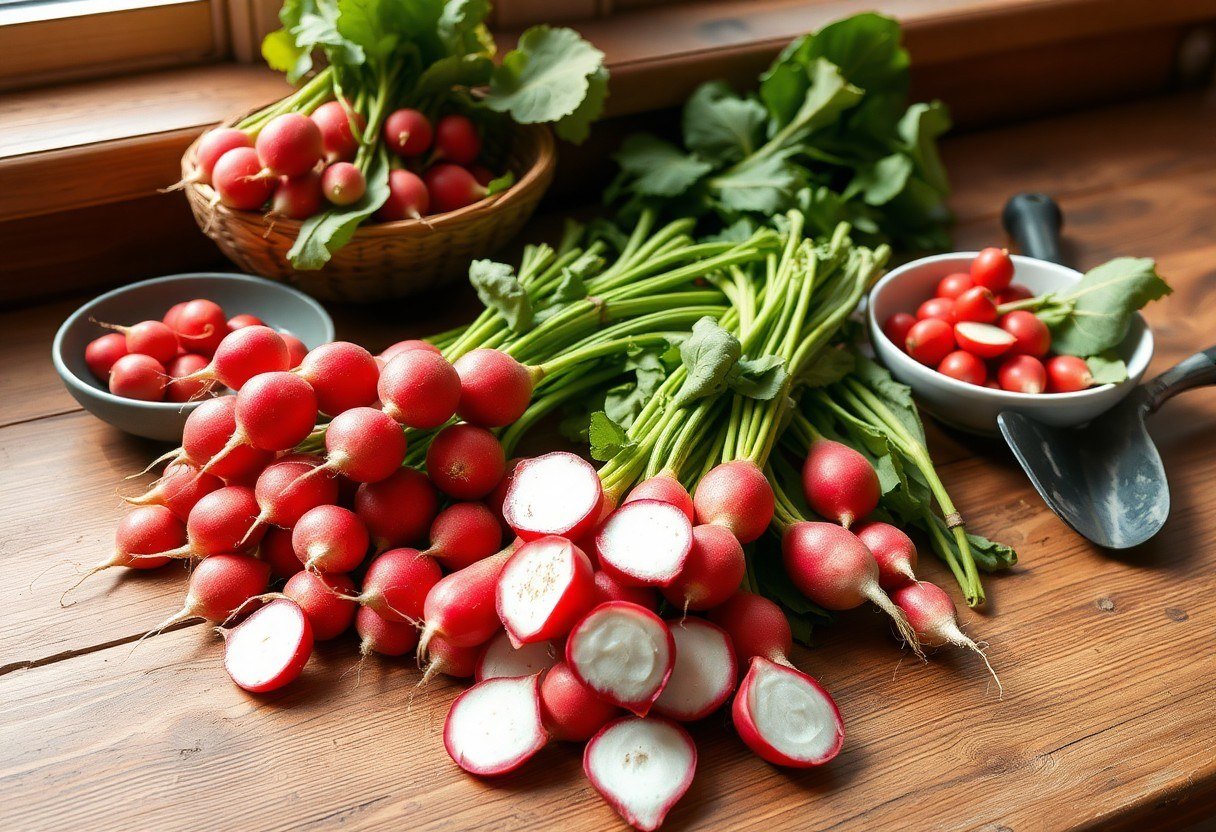
Harvested radish placed on a wooden table next to a small garden rake and a bowl of fresh radish

Practical tips and tools

  • Choose the right variety: There are varieties like 'Cherry Belle' for round red radish and 'Daikon' for long white radish. For beginners, round red radish is faster and easier.
  • Use a soil thermometer: A cheap tool (less than 50 EGP) that measures soil temperature. Radish germinates best when the soil is between 15 and 25 degrees Celsius.
  • Apply mulch: After planting, cover the soil surface with a light layer of straw or wood chips. This preserves moisture and prevents weeds from growing.
  • Rotate planting: Plant a new batch every two weeks to have a continuous harvest throughout the season. Radish thrives in cool weather but can bolt (go to seed) quickly in very hot weather.
  • Use rainwater or filtered water: Tap water in some areas may have high chlorine levels that can affect germination. Leave the water in an open container for 24 hours before watering to let the chlorine evaporate.

Common mistakes to avoid

  • Overwatering: Many people water radish every day with a large amount, leading to rot. Correction: check the soil moisture with your finger — if it's sticky, don't water. Water only when the surface is dry.
  • Planting in heavy clay soil: Roots become deformed and don't grow well. Correction: Use light, ready-made soil or mix clay with sand at a 1:1 ratio.
  • Insufficient lighting: If plants are elongated and pale, it means they are searching for light. Correction: Move the containers to a sunnier location or increase the duration of artificial lighting.
  • Delayed harvest: If you leave radish in the soil for more than 30 days, it becomes hard and its taste becomes very spicy and unpalatable. Correction: Stick to the mentioned timeline and harvest as soon as you notice the top of the root emerging.
  • Neglecting thinning: Planting seeds too densely in a small area makes each seedling compete for food and space, resulting in small and deformed roots. Correction: Thin out seedlings regularly after one week of germination.
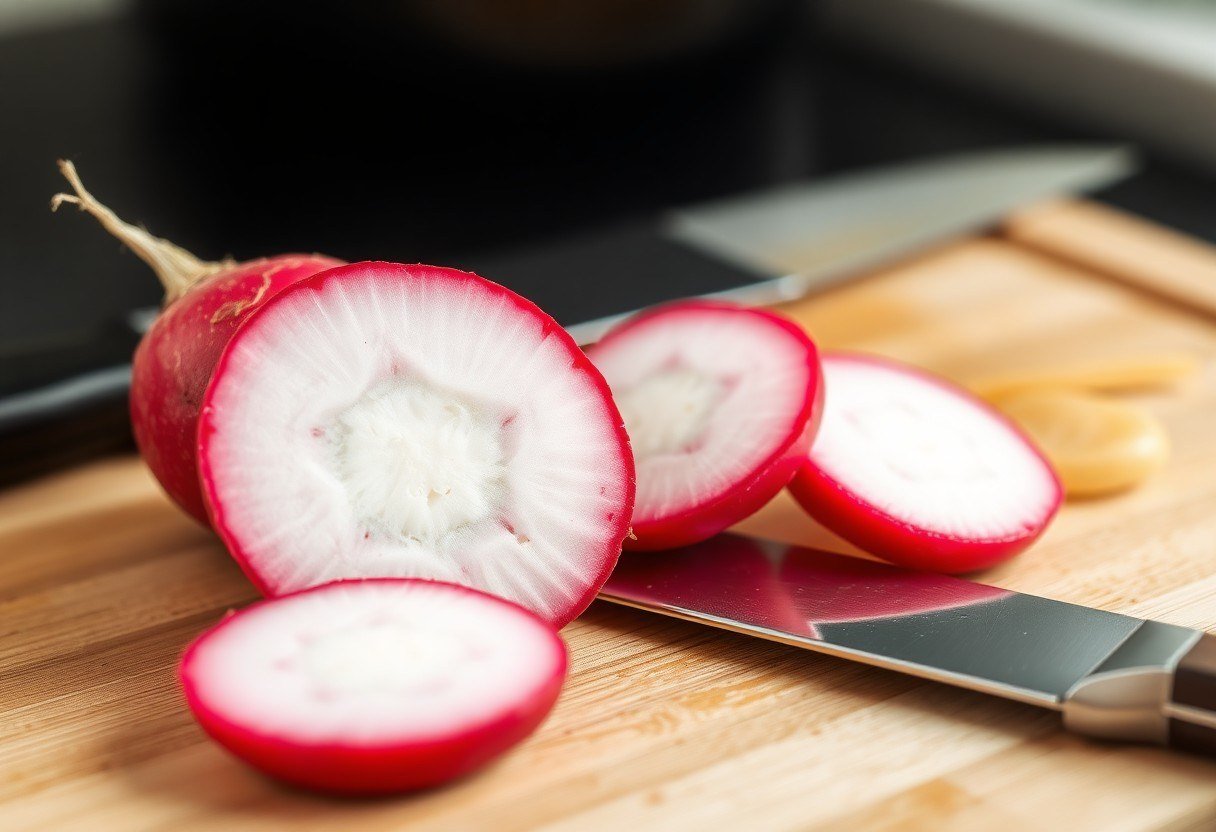
Cross-section of a red radish showing the white interior and red exterior on a cutting board with a knife

Frequently asked questions

Does radish require chemical fertilizer?

No, radish is a fast crop and doesn't require chemical fertilizer. Adding a small amount of compost or decomposed organic fertilizer before planting is enough. If you use high-nitrogen fertilizer, you will get large leaves and small roots.

Can I grow radish in my kitchen?

Yes, as long as there's sufficient light. Place the pot on a south or east-facing window, or use a grow light. Radish doesn't require a lot of space; a 20 cm deep pot is enough.

Does radish attract pests?

Rarely. Radish might attract aphids in hot weather. Treat them with a light spray of diluted liquid soap (one teaspoon of soap per liter of water), and rinse the leaves after an hour.

Can I also eat radish greens?

Yes, radish greens are healthy and delicious, and can be used in salads or sautéed. However, if you want the root to grow, it's best to minimize the harvesting of leaves since they feed the root.

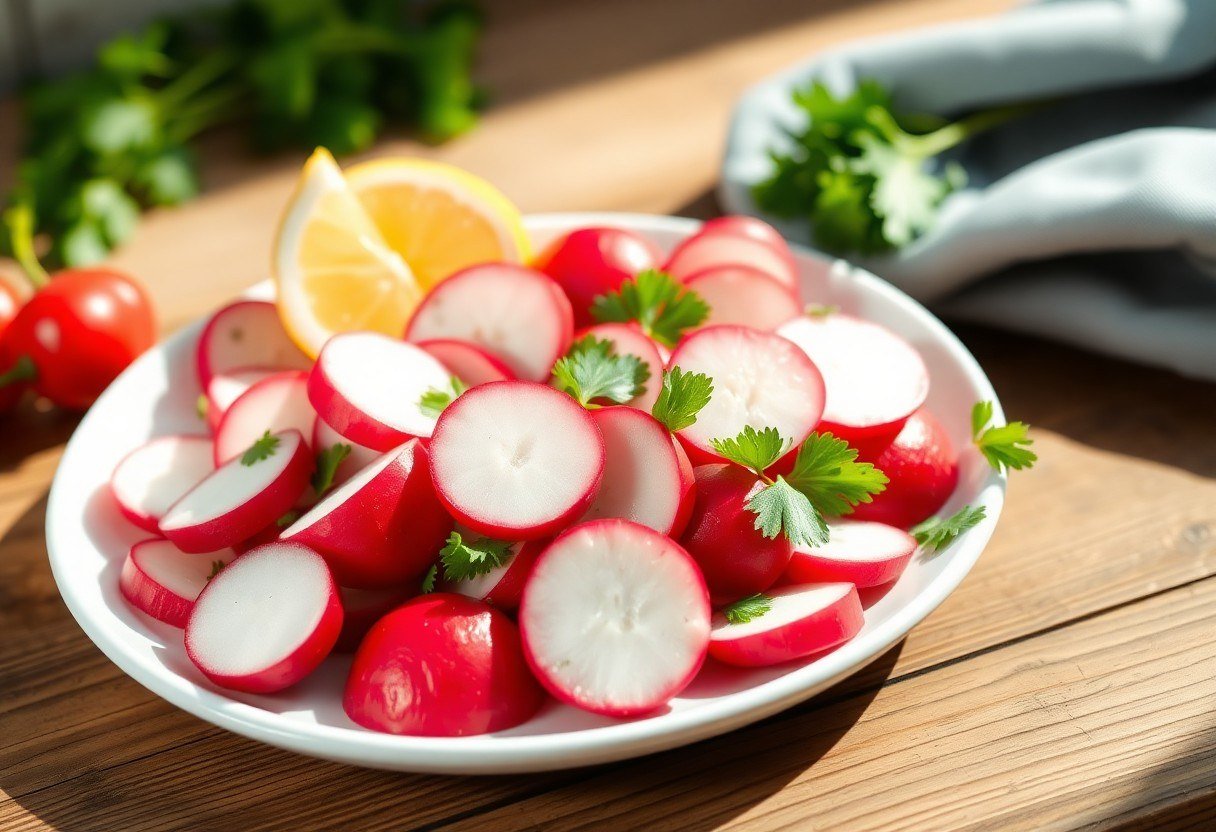
A plate of fresh radish salad with radish slices, parsley, and lemon slices on a wooden table

In conclusion

Radish is the fastest and most guaranteed crop you can start your farming journey with. In just 18 days, you will see the result of your effort — crunchy, red roots ready to eat. It doesn't require space, money, or experience. All it needs is light soil, a pot, some seeds, and regular watering. Try it today, and you will be surprised at how simple and enjoyable farming can be. If you liked this article, follow the 'From Seed to Plate' series every day to learn about a new crop.


Contact Us تواصل معنا