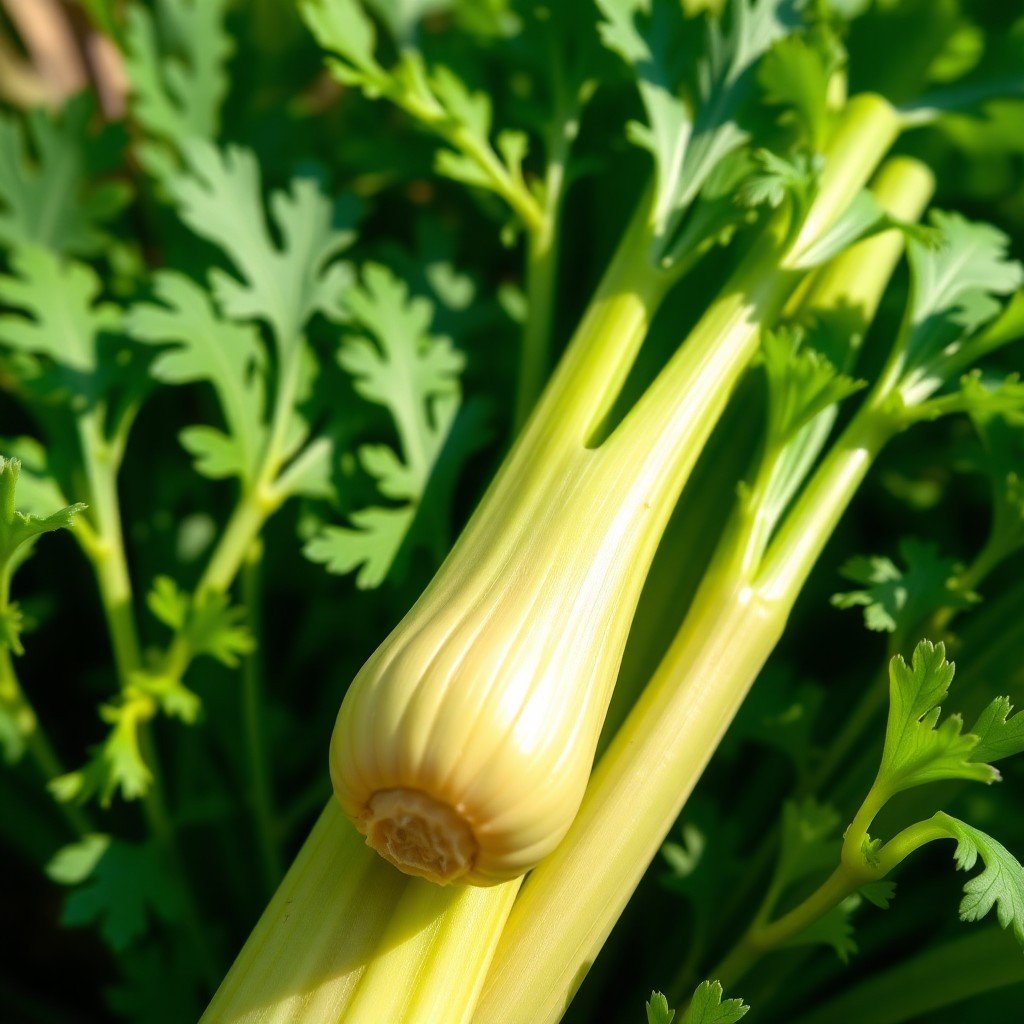
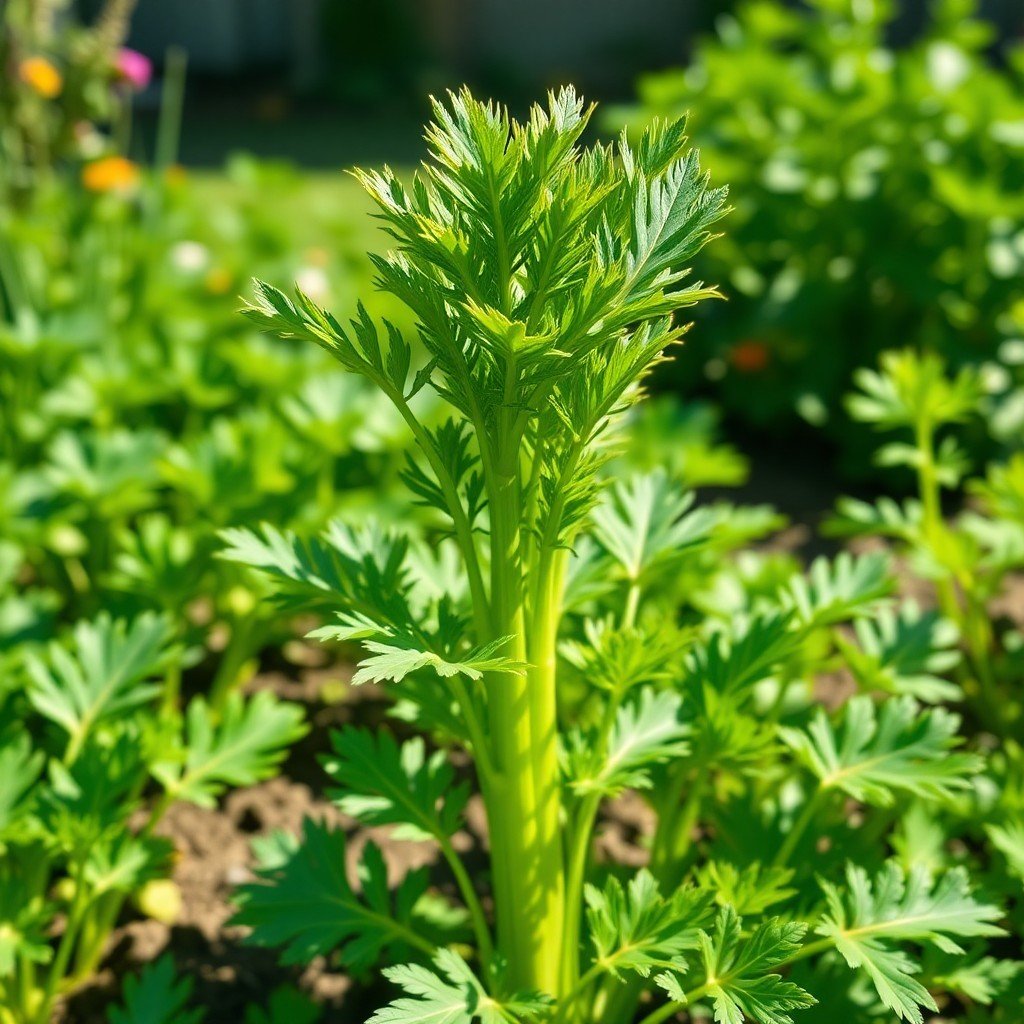
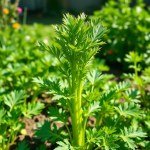
Celery (Apium graveolens) is a cool-season favourite grown for its upright bunches of ribbed, pale-to-deep-green petioles. Each stalk delivers a crisp, watery crunch and that unmistakable fresh, slightly peppery aroma that defines a good stock, mirepoix or soup base. The tender inner hearts are sweet and mild for snacking and salads, while the leafy tops season broths beautifully. Since the stalks are roughly 95% water, steady growing conditions are the secret to plump, juicy ribs.
Planting
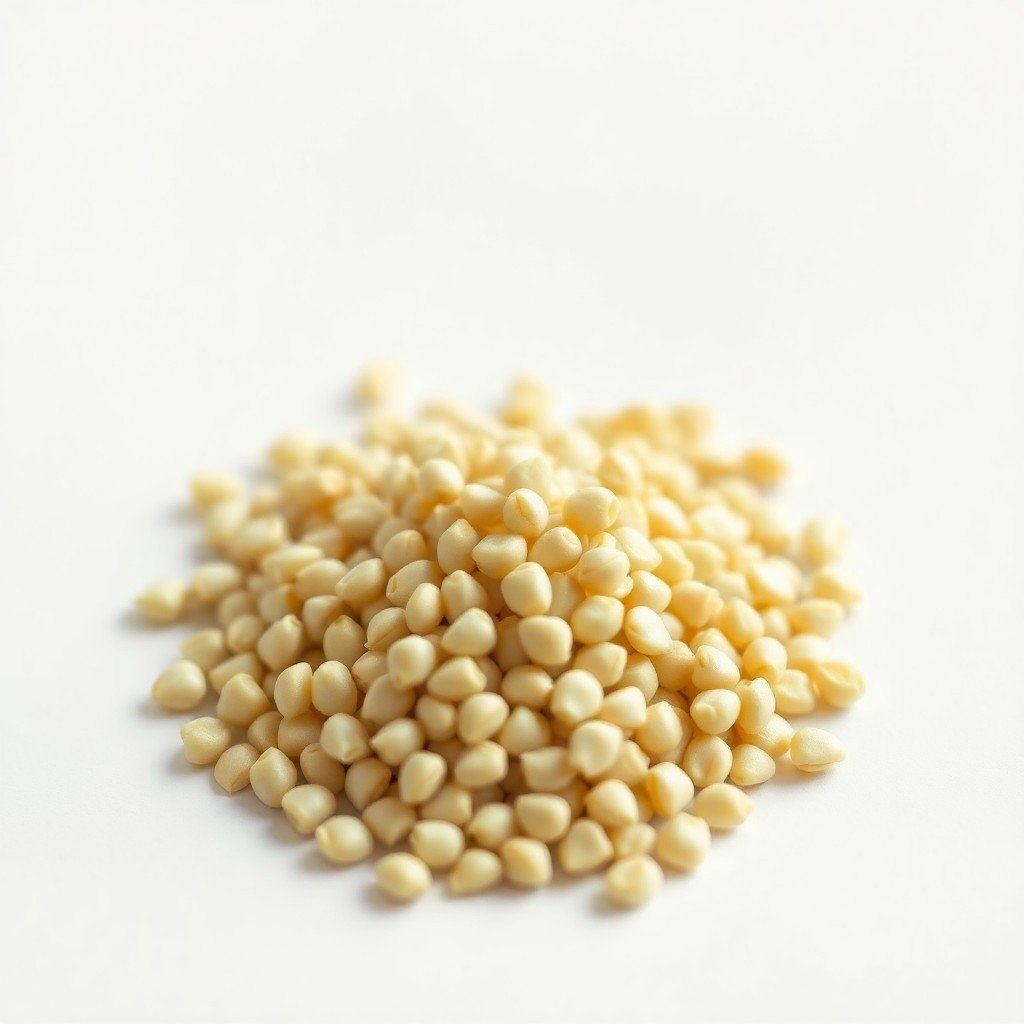
In Egypt celery is a winter crop: sow seed in the nursery during July-August for a January-March harvest. Scatter seed thinly on the surface and barely cover it, about 3 mm deep, because the seed needs light to germinate. Keep it warm at 21-24°C at first, then hold 16-21°C; emergence is slow, taking around 2-3 weeks. Start in trays roughly 10-12 weeks before transplanting, pot on into individual 7.5 cm modules, and keep seedlings above 10°C. Transplant about 1.5-2 months after sowing into full sun and rich, well-drained soil, spacing plants 20-30 cm apart.
Fertilizing
Work a complete, high-potassium fertilizer such as 4-4-8 into the bed before planting. Sidedress with nitrogen (21-0-0) about 4 and 8 weeks after transplanting, then stop feeding once the stalks bulk up to prevent splitting. Egyptian practice adds ammonium sulfate, superphosphate and potassium sulfate in two doses near 3 and 5 weeks after planting, alongside well-rotted manure.
Care
This shallow-rooted crop never wants to dry out. Supply consistent moisture all season, about 25-50 mm of water weekly, soaking the soil thoroughly. Watch for aphids (which spread celery mosaic virus), carrot rust fly, leafhoppers and cutworms, plus blights, powdery mildew, fusarium yellows, pink rot and blackheart, a calcium-deficiency disorder eased by steady moisture. Harvest about 10-12 weeks after planting, when outer petioles reach 30 cm or more, before they turn pithy or hollow.