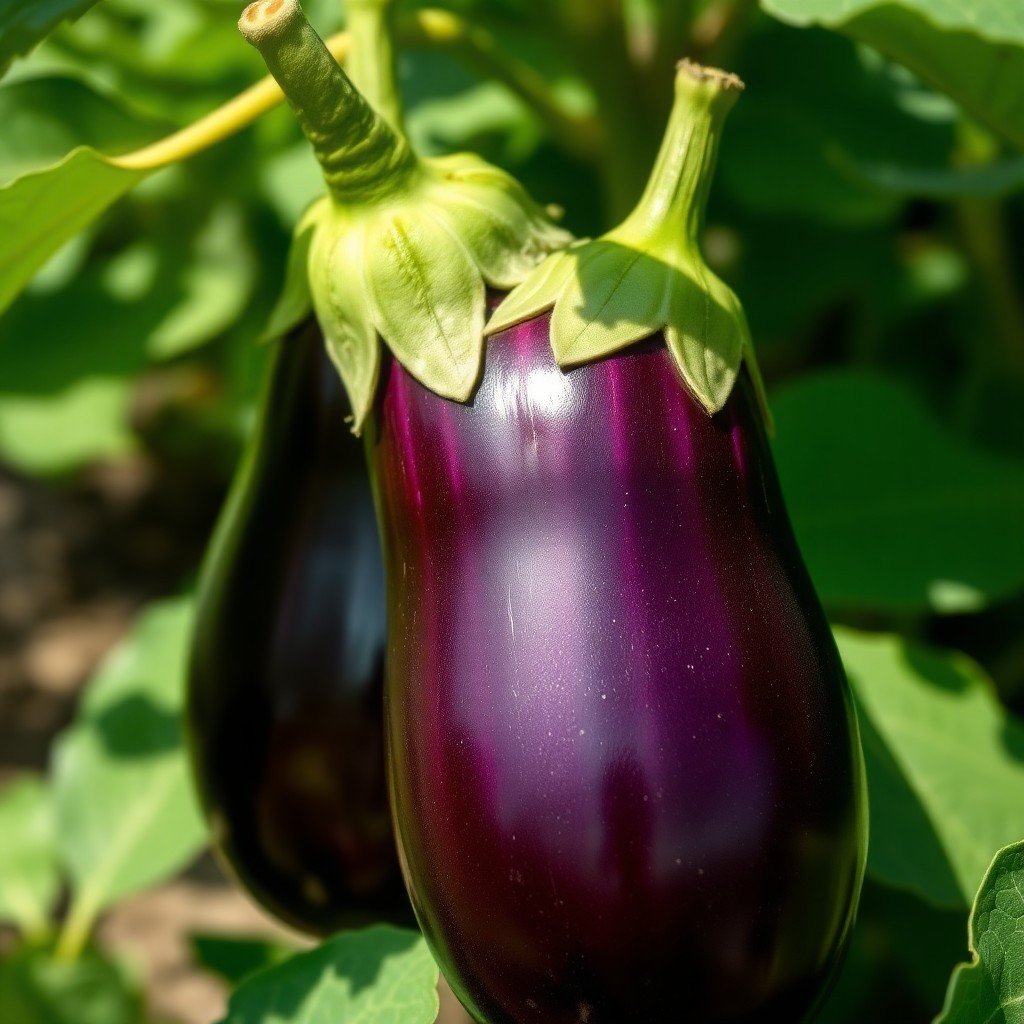
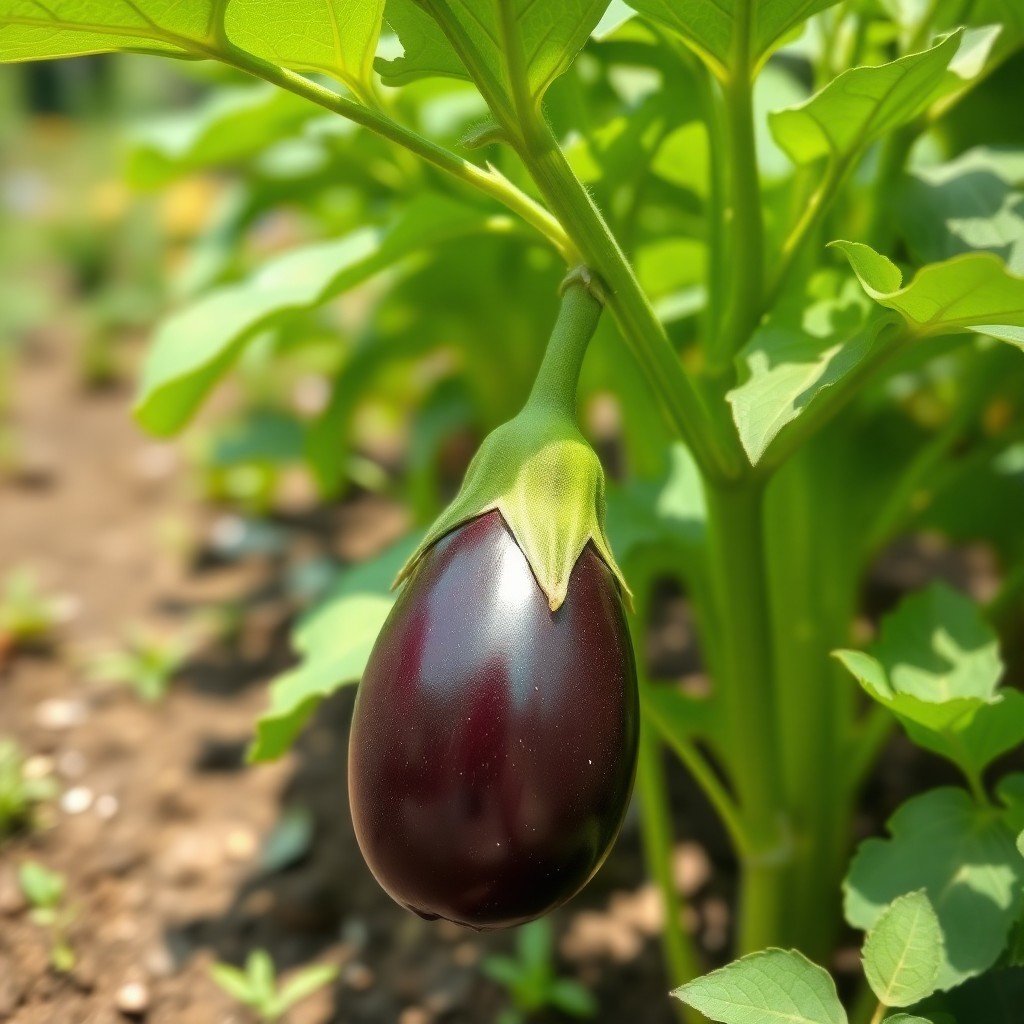
Roumi eggplant is the classic round, globe-shaped variety prized in Egyptian kitchens for its large, plump fruit, smooth deep purple-black skin and a glossy sheen that signals freshness. Its creamy, mild flesh holds together well and turns silky and tender once cooked, making it the go-to choice for stuffing (mahshi), grilling over coals, roasting for baba ghanoush, or slicing for fried eggplant. The generous size means fewer fruits go a long way, and the rich flavour soaks up oil, garlic and spices beautifully.
Planting
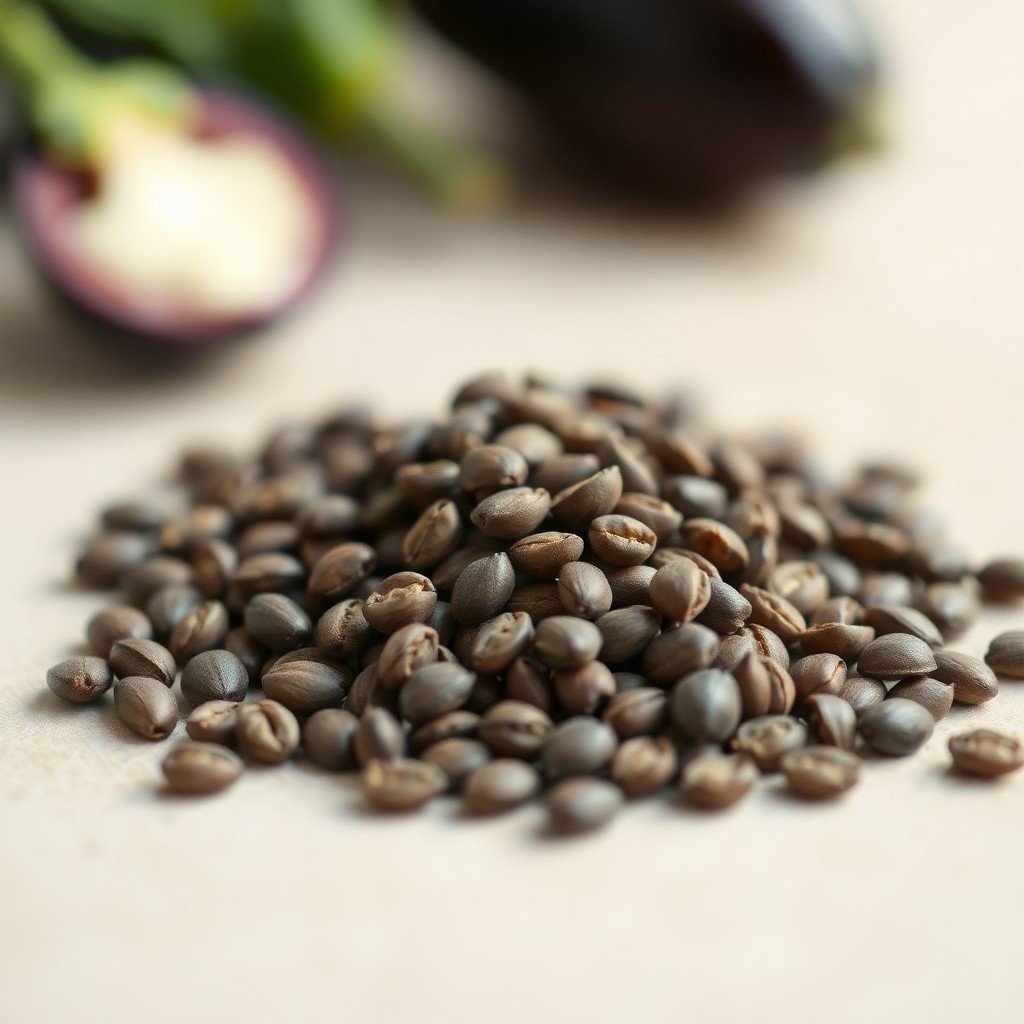
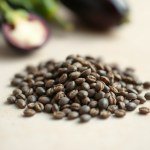
Eggplant is a warm-season, frost-sensitive crop, so timing matters. Start seeds indoors about 6 to 8 weeks before you plan to transplant outdoors (roughly 8 weeks is recommended). Sow seed about 0.6 cm (6 mm) deep and cover lightly. Eggplant will not germinate in cool soil: keep the soil at 27-32°C until the seedlings emerge, then lower it to about 21°C; a heat mat holding the flat around 24-29°C works well, with about 21°C being ideal. At these warm temperatures germination usually takes about 7 to 14 days. Once true leaves appear, thin or transplant the seedlings so they stand 5-8 cm apart in flats, or pot them into individual 5-8 cm pots. Before planting out, harden the plants off by reducing water and dropping the temperature to about 16°C for roughly a week. Transplant outdoors only after frost danger has passed, nighttime lows stay consistently above 10°C and the soil is about 18-21°C; choose a cloudy, calm day or late afternoon. Space the transplants about 45 cm apart in rows 75-90 cm apart, or 45-60 cm between plants when growing two rows on plastic mulch. Give the plants full sun, at least 6 hours of direct light per day, and ideally 8-10 hours for the best fruiting.
Fertilizing
Before transplanting, work a balanced complete fertilizer such as 10-10-10 or 13-13-13 into the soil at about 1.5 kg per 9.3 m² (roughly 145-160 g/m²), adjusting phosphorus and potassium according to a soil test. Keep the soil pH between 6.0 and 7.0. Once the first fruits have formed, side-dress the plants with nitrogen, and again after the first harvest. Go easy on the nitrogen, though: too much produces bushy, leafy plants that are slow to set fruit.
Care
Consistent moisture is key. Provide about 2.5-5 cm of water per week; if rainfall falls below about 2.5 cm in a week, soak the soil thoroughly at least once that week to a depth of around 15 cm. A drip system or soaker hose delivers the steadiest moisture. Watch for common pests such as flea beetles (which leave pinhole damage in the leaves), Colorado potato beetle, eggplant lacebug, spider mites and cutworms, and for the main diseases, Verticillium wilt (the most common) and early blight. To manage Verticillium wilt, rotate away from all members of the Solanaceae family (potato, tomato, pepper) for 4 to 5 years. Harvest is counted from transplanting, roughly 55-80 days depending on the variety. Pick the fruit while it is still glossy and firm, at about two-thirds of its maximum size, for the best quality: press the side with a thumbnail and if the indentation stays, it is ready. Dull skin and browned seeds mean the fruit is overmature. Cut the stem with pruners or a sharp knife rather than pulling it from the plant.