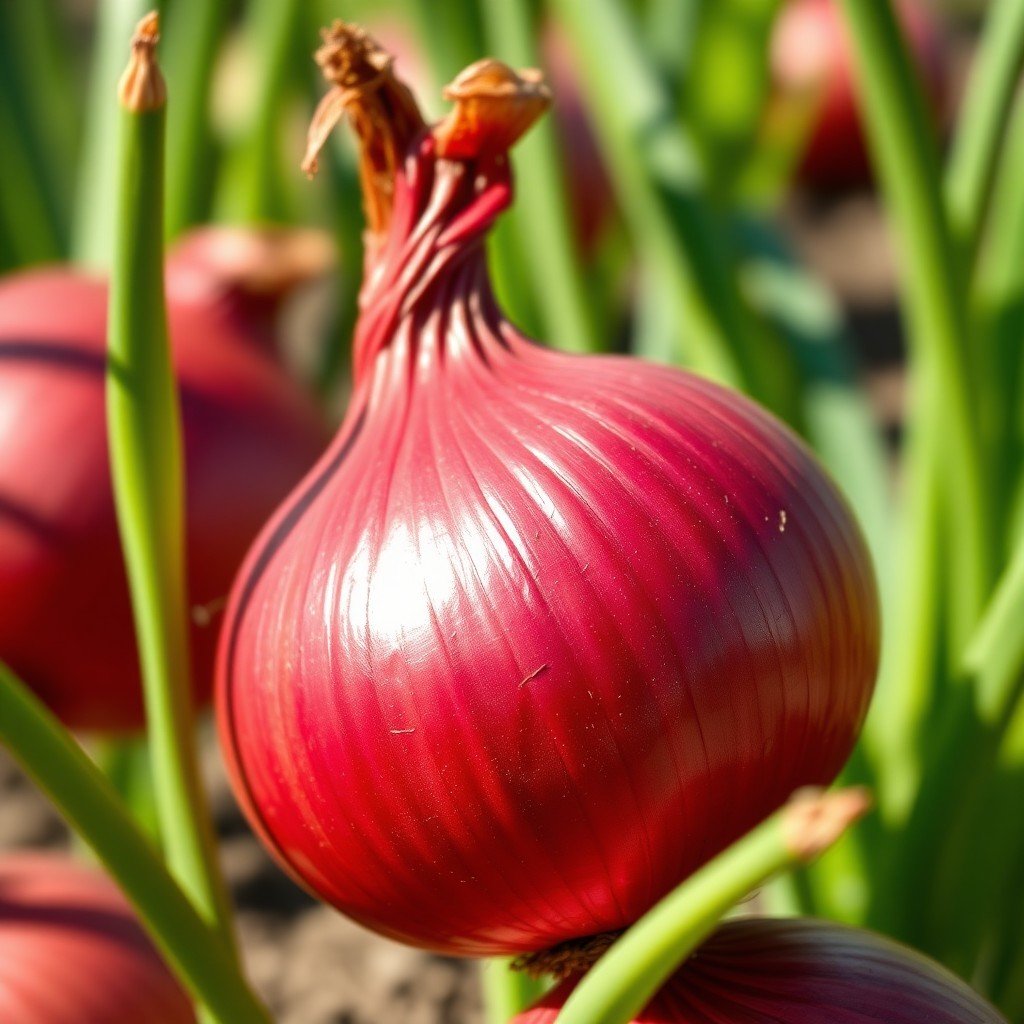
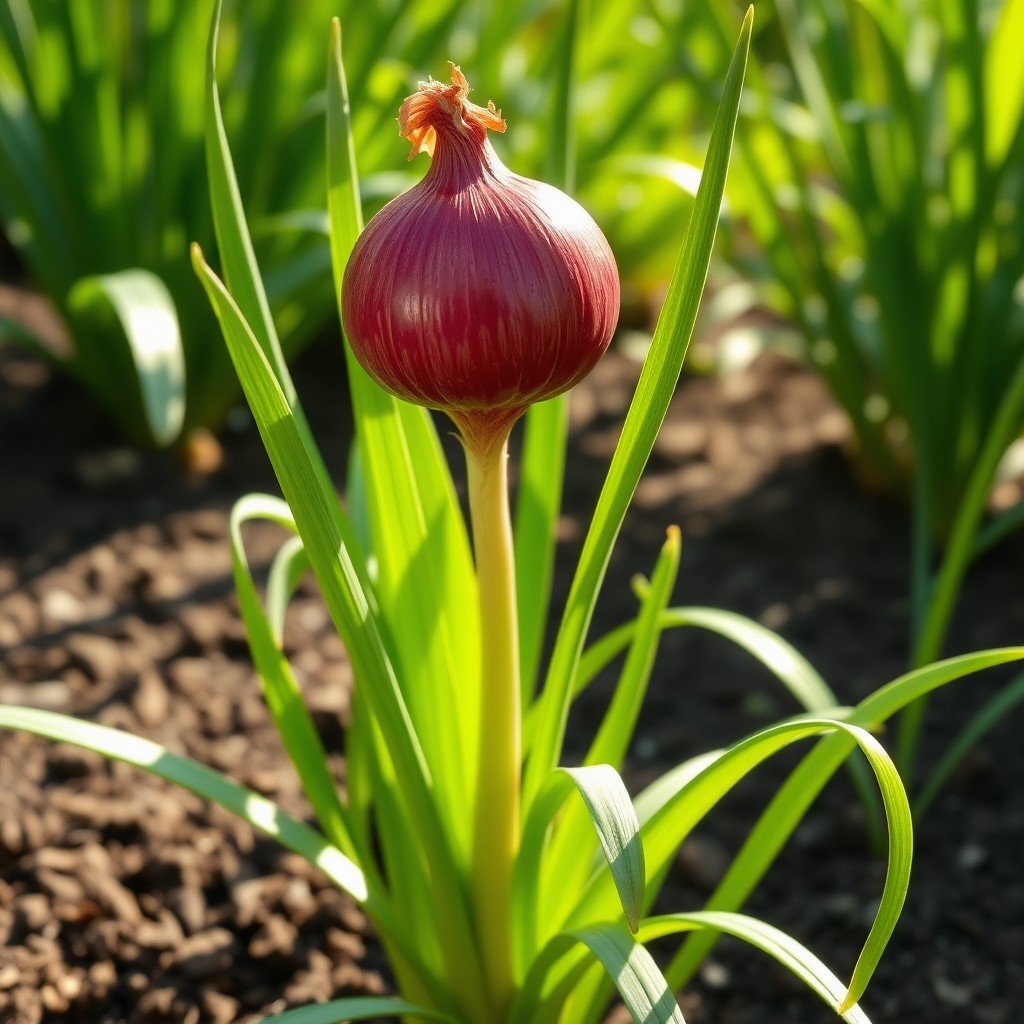
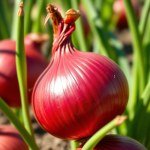
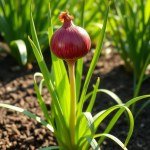
Red Onion stands out for its deep red-to-purple papery skin and its crisp, mildly sharp flesh that turns sweeter and milder once cooked. Eaten raw, its colour and gentle bite make it a natural choice for fresh salads, sandwiches and garnishes, while in cooked dishes it lends both rich colour and a full, savoury onion flavour. As a short-day, cool-season variety it is well matched to Egypt's low latitude, where it bulbs reliably through the mild winter and matures into firm, well-skinned bulbs.
Planting
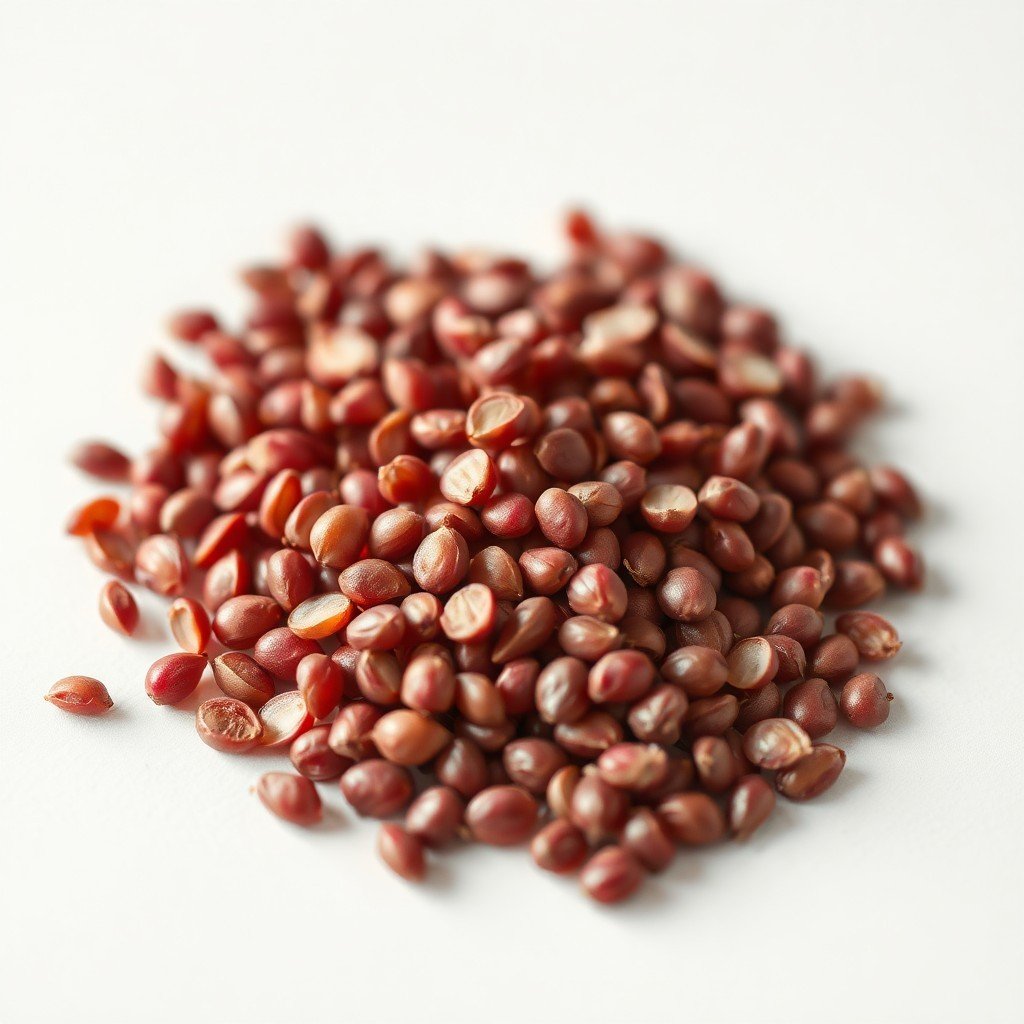
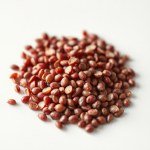
Onion is a cool-season crop, and at Egypt's low latitude (roughly 22-31 N) short-day varieties are essential, since bulbing here is triggered at only about 11-12 hours of daylight; long-day temperate types would grow leaves but never form bulbs. The practical Egyptian method is to sow seed in a nursery in autumn, from mid-September to mid-October, then transplant the pencil-thick seedlings around mid-November, about 30-35 days (up to 6-8 weeks) after sowing. The nursery establishment period from sowing to transplanting runs about 30-35 days, with seedlings usually emerging in roughly 2-3 weeks (15-25 days) at an optimum germination soil temperature of 15-25 C. Where you start from seed, sow it about 1.3 cm deep (0.6-1.3 cm when direct-sowing outdoors, around 1.9 cm when starting indoors). Choose a spot in full sun, which onions need for best growth. Set transplants about 5 cm deep, allowing a final in-row spacing of 7.6-10 cm between plants in rows 20-46 cm apart; wider in-row spacing of up to about 15 cm produces larger bulbs, while closer spacing yields smaller ones. In the cooler Nile Delta keep to the October-November transplanting window, and in warmer Upper Egypt the same mid-November transplanting works but should not be delayed late into autumn, or bulbing may coincide with rising heat.
Fertilizing
Aim for a soil pH of 6.0-7.0 with plenty of organic matter. Before planting, work fertilizer into the top 15 cm or so and apply phosphorus and potassium according to a soil test. Through the vegetative winter period, side-dress with nitrogen to support leafy growth. Crucially, stop nitrogen once bulbing begins in late winter, because excess nitrogen delays bulb maturity and produces softer bulbs. Onion is sensitive to soil salinity, a real concern in parts of the Delta, so pair good-quality irrigation water and well-drained beds with your fertilizer programme.
Care
Keep the soil consistently moist near field capacity, supplying about 2.5 cm of water per week and wetting to roughly 30 cm depth; the total seasonal requirement is about 350-550 mm. The crop is most sensitive to water shortage at transplanting and during bulb enlargement, around 60 days after transplanting. Once bulbs reach full size and the tops begin to fall, stop watering. Thin any direct-seeded onions to 7.6-10 cm apart before the plants crowd one another or start to bulb. Watch for the common pests onion thrips and onion maggot (onion fly), and for diseases including neck rot, basal and Fusarium rot, pink root, downy mildew, purple blotch and white rot; avoiding excess nitrogen and rotating your crop both help reduce disease pressure. Bulbs develop through the cool winter and enlarge as daylength increases in late winter and early spring. Harvest from roughly March to May, when about half the tops have fallen over and dried, the necks have softened and papery outer skins have formed.