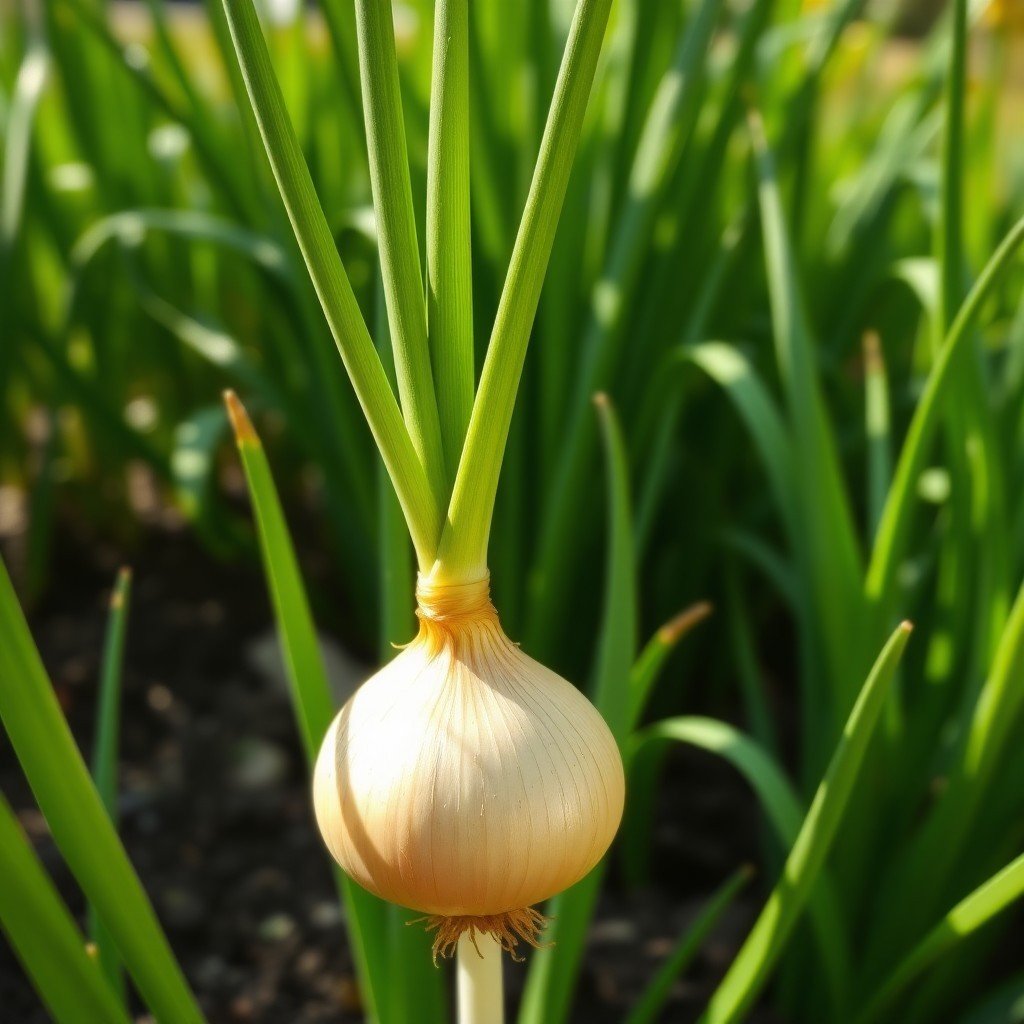
The Yellow Onion (Allium cepa) is the classic all-purpose kitchen onion, recognised by its golden, papery outer skins and dense, crisp, ivory flesh. Raw, it delivers a warm and savoury bite, but its real magic shows in the pan: gentle heat softens its sharpness into a deep, sweet richness, which is why it is the first choice for frying, caramelising, and building the base of soups, stews, and everyday Egyptian cooking. Firm and well-skinned, it is the dependable workhorse of the kitchen.
Planting
Onion is a cool-season crop that thrives in full sun, which it needs for its best growth. At Egypt's low latitude a short-day variety is essential, since bulbing here is triggered at only about 11-12 hours of daylight; long-day temperate types would grow leaves but never form a bulb. The practical method is to sow seed in a nursery in autumn, between mid-September and mid-October, with an October sowing tending to give firmer, higher-quality bulbs. Optimum soil temperature for germination is 15-25 C, and seedlings usually emerge in about 2-3 weeks, with the nursery taking roughly 30-35 days from sowing to transplanting. Sow nursery seed around 1.9 cm deep. Transplant the pencil-thick seedlings around mid-November, setting them about 5 cm deep with 7.6-10 cm between plants in rows 20-46 cm apart; wider in-row spacing produces larger bulbs while closer spacing yields smaller ones.
Fertilizing
Aim for a soil pH of 6.0-7.0 that is rich in organic matter. Before planting, work fertilizer into the top 15 cm or so and apply phosphorus and potassium according to a soil test. Through the vegetative winter period, side-dress with nitrogen to keep the plants growing strongly. Then stop applying nitrogen once bulbing begins in late winter, because excess nitrogen delays bulb maturity and leaves you with softer bulbs.
Care
Keep the soil consistently moist near field capacity, providing about 2.5 cm of water per week and wetting to roughly 30 cm depth; the total seasonal need is around 350-550 mm. The crop is most sensitive to water shortage at transplanting and during bulb enlargement, about 60 days after transplanting, so do not let it dry out then. Onion is also sensitive to soil salinity, a real concern in parts of the Delta, so use good-quality irrigation water and well-drained beds. Watch for onion thrips and onion maggot, and for diseases such as neck rot, basal and Fusarium rot, pink root, downy mildew, purple blotch, and white rot; avoiding excess nitrogen and rotating crops helps reduce disease. Once the bulbs reach full size and the tops begin to fall, stop watering. Harvest when about half the tops have fallen over and dried, the necks have softened, and papery outer skins have formed, which falls roughly between March and May.