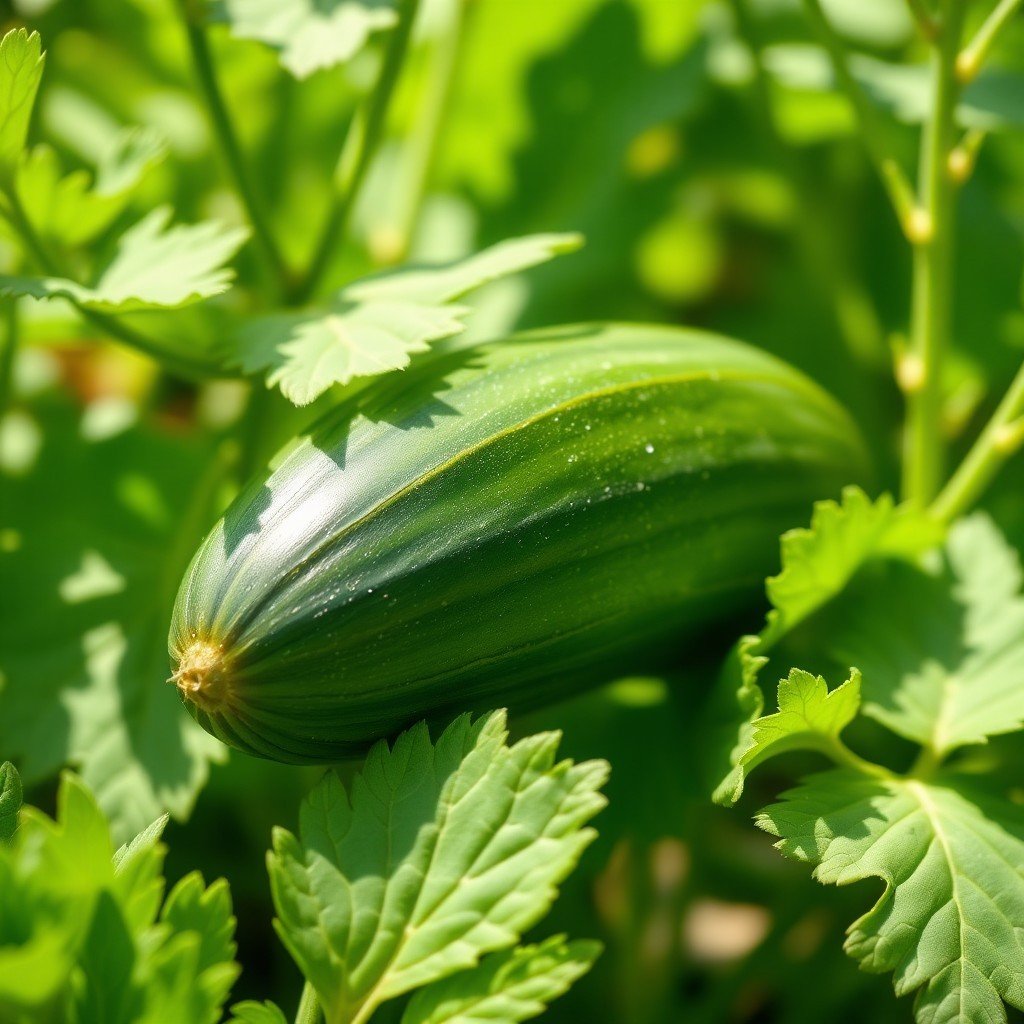
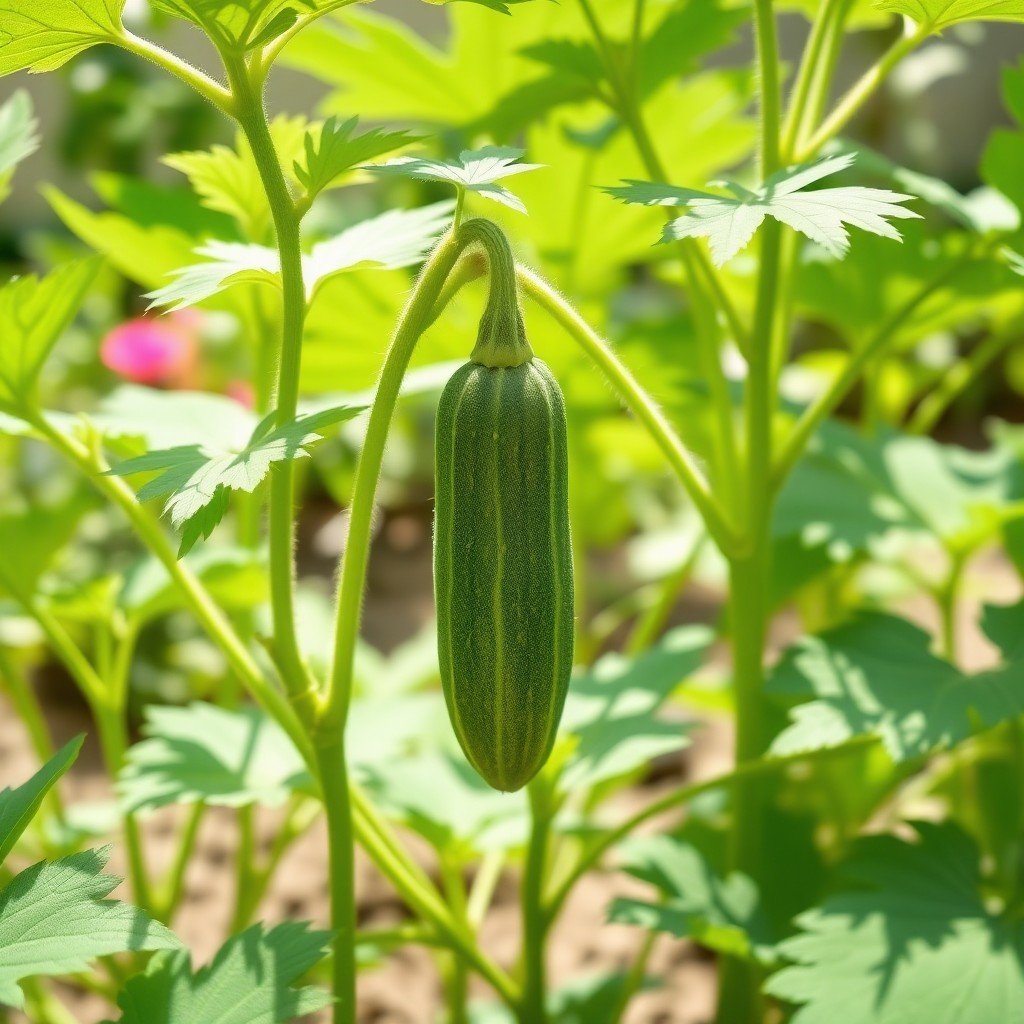
The Snake Cucumber, also loved as the Armenian Cucumber, stands apart from ordinary cucumbers with its remarkably long, slender, gently curved fruit ribbed along its length and wrapped in a thin, pale-green skin so tender it never needs peeling. The flesh is crisp and refreshing with a clean, mild flavour that stays sweet rather than turning bitter, making it a favourite for fresh salads, pickling, and adding a cooling crunch to summer dishes. Its elegant coiling shape also makes it a striking choice for the trellis, both ornamental and delicious.
Planting
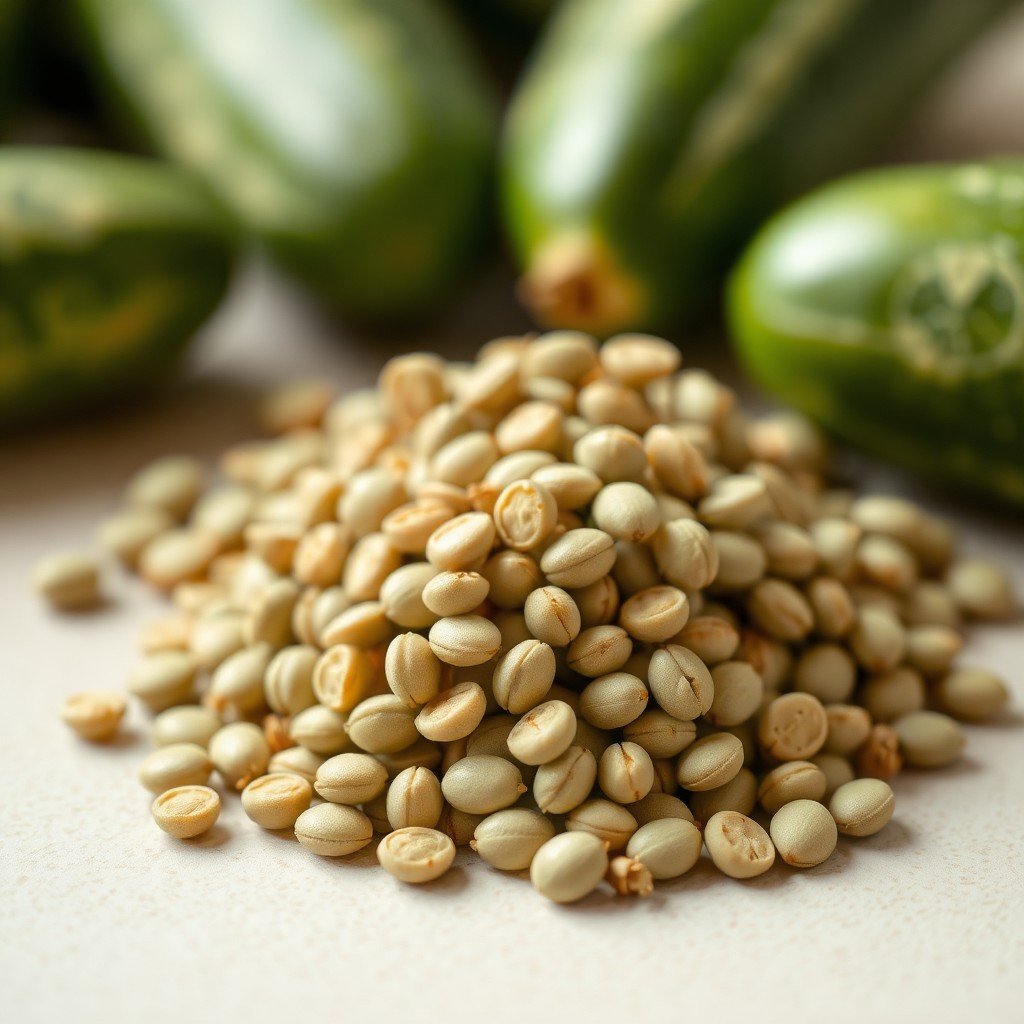
This is a warm-season, frost-tender crop, so sow only after all danger of frost has passed and the soil has warmed. Seeds germinate best when soil sits at roughly 18-29 C, sprouting in about 5-10 days; below about 10-13 C they simply rot, so patience with soil warmth pays off. Place each seed around 1.3 cm deep, with a practical range of 1.3-2.5 cm. In Egyptian open-field practice, 4 seeds are sown per hill and later thinned to the 2 strongest plants. After thinning, give plants about 20-46 cm between them in the row, and space vining rows generously at roughly 1.2-1.8 m apart so the long vines can run. You can also start seed indoors 3-4 weeks before field planting in cell trays kept above about 21 C by day and 16 C by night, then transplant about 30 cm apart; handle the root balls gently, as cucumbers dislike root disturbance.
Fertilizing
Feed the soil before sowing by working in an all-purpose 10-10-10 fertilizer at roughly 0.5-1 kg per 9 sq m, or a preplant 5-10-10 at about 1.4 kg per 9 sq m. Once the plants are established, sidedress with nitrogen: apply about 0.45 kg of 33-0-0 per 9 sq m roughly one week after blooming begins and again three weeks later, placed about 15 cm from the plant base. A simple alternative once runners develop is about 3-4 tablespoons of 21-0-0 per plant before flowering. Go easy on the nitrogen, though, an excess pushes too much leafy vine growth and delays flowering and fruit set, which lowers your harvest, so a split-feeding program beats one heavy dose.
Care
Grow your cucumbers in full sun for the strongest vines and best fruiting. Keep moisture steady, about 25-50 mm of water per week depending on plant size, and be especially generous during flowering and fruiting when the plants are most sensitive to drought; drip or soaker hoses are ideal because dry foliage discourages disease. Watch for striped and spotted cucumber beetles (the striped beetle also spreads bacterial wilt), aphids, spider mites in hot dry spells, and pickleworms; floating row covers, pyrethrin, or neem (azadirachtin) help, but remove covers at flowering so pollination can happen. Guard against bacterial wilt, powdery and downy mildew, anthracnose, angular leaf spot, and cucurbit viruses through crop rotation, resistant varieties, and dry foliage. Fruit is usually ready about 50-70 days from planting, roughly 5-7 days after flowering; pick young, firm fruit every 2-3 days (daily at the peak) to keep the plants producing.
Growing in Egypt
Cucumber is a warm-season crop that needs soil near 18-21 C to germinate and is killed by frost, so in Egypt it is grown only in the frost-free warm windows, never in the cold heart of winter. For open-field production the established Egyptian calendar gives two main seasons: a summer (spring) crop direct-sown from about 20 February to 7 April, and a fall crop sown from about 10 to 20 July, while protected plastic-house crops are sown from about 1 September to 7 October. In the Nile Delta and Lower Egypt, wait until late February-March for the spring sowing once the soil at 2-3 cm depth holds near 18-21 C and frost risk has passed; the crop then matures through late spring and early summer, about 60-70 days after sowing. The July fall sowing matures into the cooler autumn and avoids the harshest midsummer heat at fruit-set, which is preferable because extreme heat and drought stress cause bitter, misshapen fruit. In warmer Upper Egypt the spring window can start a few weeks earlier (early-to-mid February) as frost clears sooner, while the intense July-August heat there makes a strictly summer crop risky for quality, so the autumn sowing and September plastic-house production are the more reliable choices. The deep cold of December-January is unsuitable for open-field cucumber and is reserved for greenhouse and tunnel growing. Throughout, full sun, steady irrigation, and harvesting young fruit every 2-3 days keep quality high. Egyptian field spacing places rows about 1 m apart with hills 20-30 cm apart.