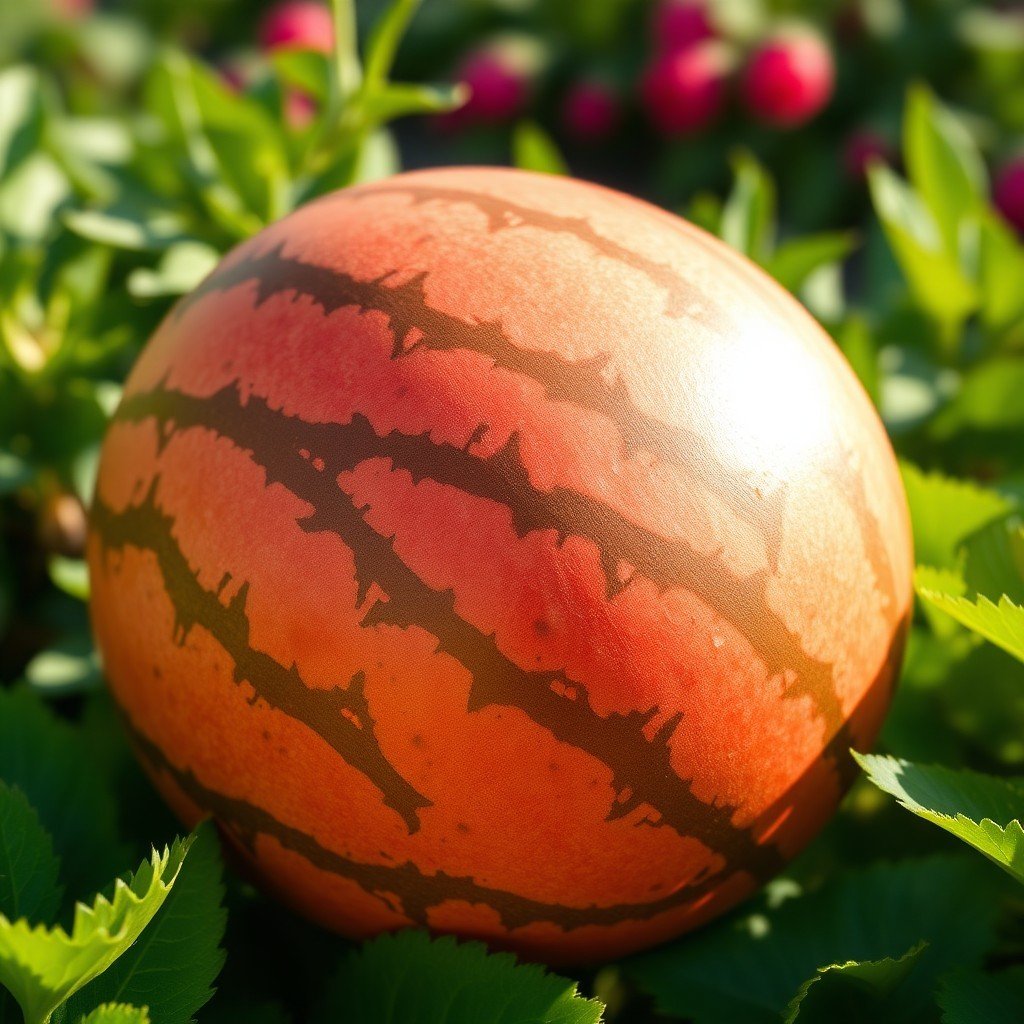
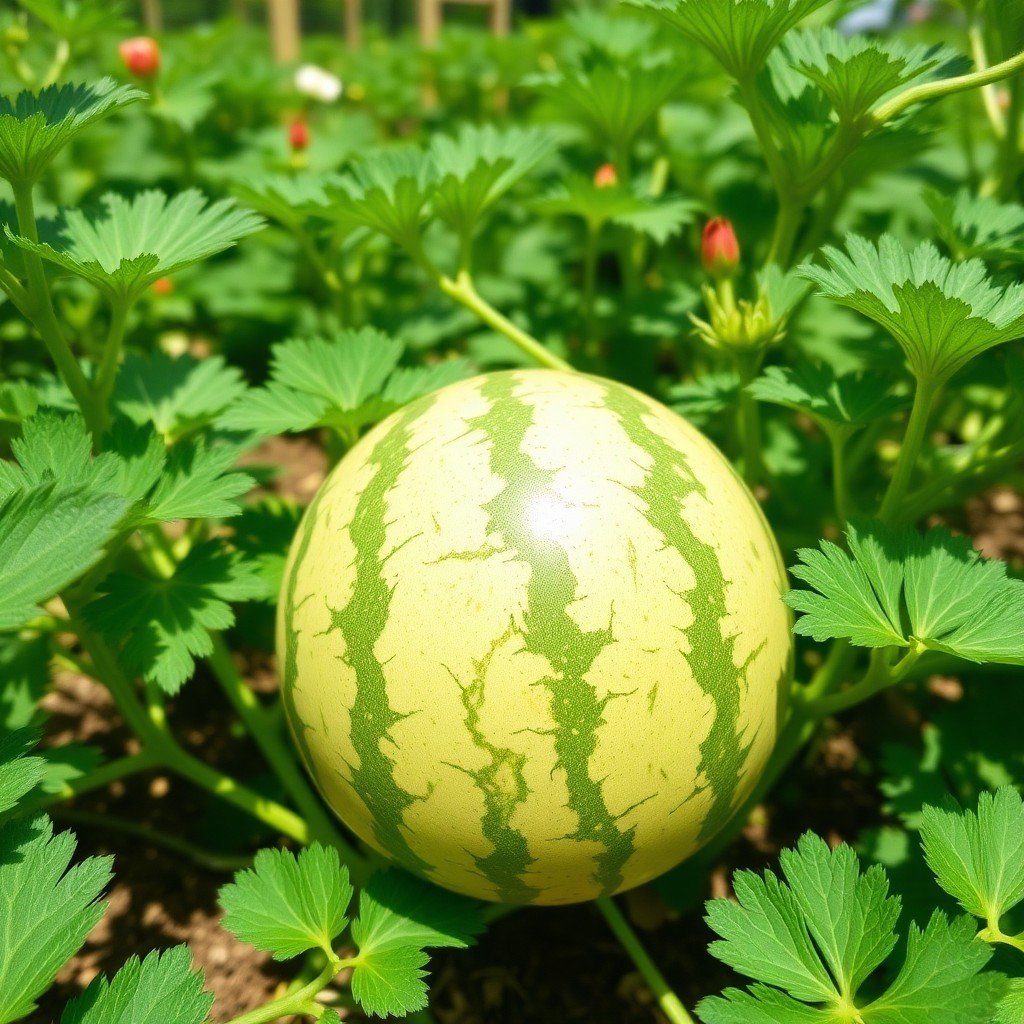
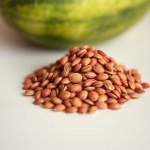
The Austrian Watermelon is a warm-season fruit grown for its sweet, deeply refreshing flesh and that unmistakable juicy crunch that makes it the star of any summer gathering. It loves heat and sun, rewarding a long hot season with melons that are perfect chilled and sliced for the family table or served fresh at celebrations. This is a true sun-and-summer crop, and Egypt's warm climate suits it beautifully.
Planting
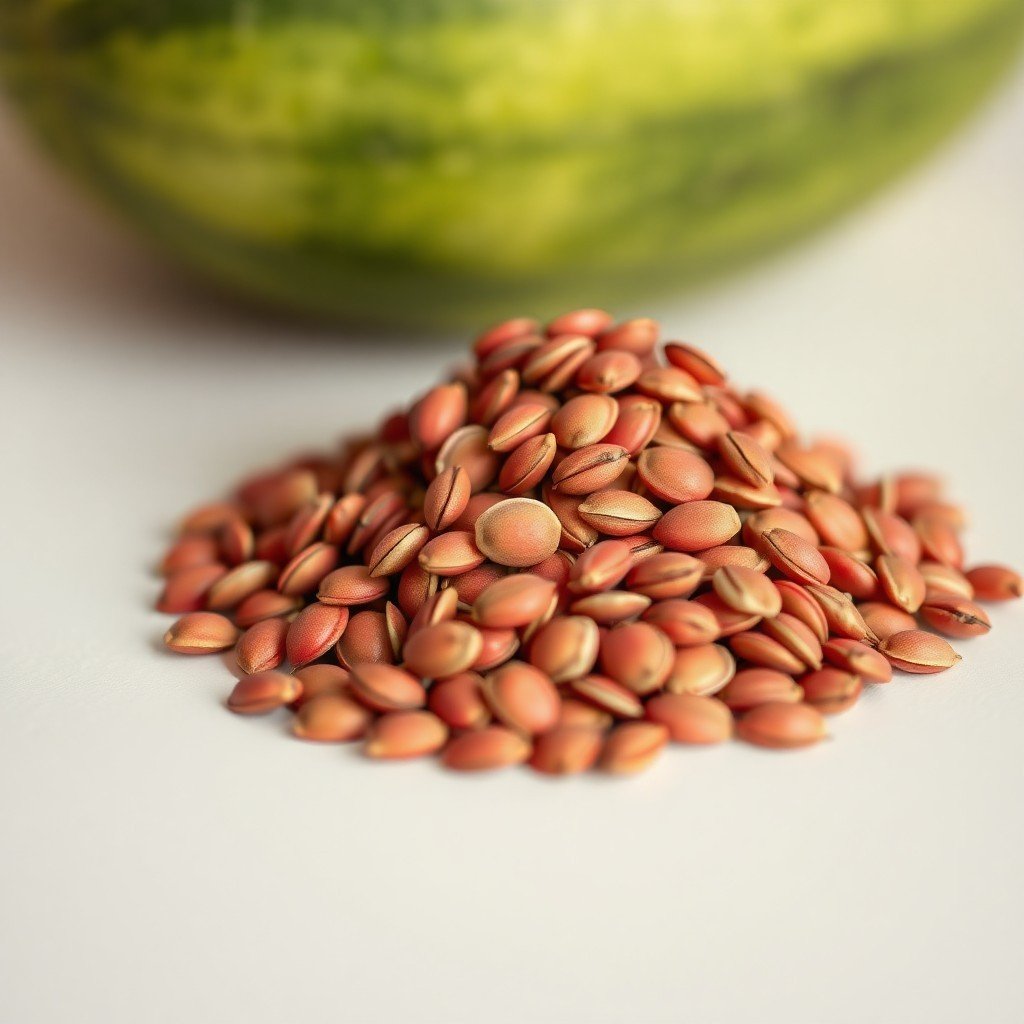
Watermelon is a warm-season, very frost-sensitive crop, so timing matters. Direct-seed it 1 to 2 weeks after the last frost once the soil is warm (above roughly 21 C), or start transplants indoors about 4 to 5 weeks ahead and set them out only after frost danger has passed and the soil reaches 18 to 21 C. Sow seed about 1.3 to 2.5 cm deep — close to 2.5 cm when direct-seeding into hills. For good germination the soil should be at least 16 to 18 C at 10 cm depth, with 21 to 32 C being ideal; at around 25 C seedlings emerge in roughly 5 days, while germination is very slow below 21 C. Give each plant plenty of room: space rows about 1.8 to 2.4 m apart and plants about 0.9 to 1.8 m apart in the row, allowing roughly 2.2 square metres per plant. If planting in hills, sow 4 to 5 seeds per hill with hills 1.8 to 2.4 m apart. Choose a hot, sunny spot in full sun — about 8 to 10 hours of direct sunlight a day. In Egypt, the Nile Delta and Lower Egypt (Cairo, Alexandria) are best sown or transplanted from mid-February to April once the soil has warmed past 18 C and frost risk is gone, for a May–July harvest; transplants can be started indoors in January to gain 4 to 5 weeks. In Upper Egypt (Minya, Asyut, Luxor, Aswan) it warms earlier, so sowing can begin from late January to March for an April–June harvest, and a late-summer crop sown in August for an October–November harvest is also workable in warm areas. Avoid sowing from November to January in the Delta, where the soil is too cool and an occasional frost can kill seedlings.
Fertilizing
Feed before planting with a complete fertilizer worked into the soil — for example 5-10-10 at about 1.5 kg per 100 square metres, or a 10-10-10 / 13-13-13 blend at about 1.5 kg per 10 square metres. Side-dress with nitrogen before the vines begin to run, such as 34-0-0 at 1 lb per 100 ft of row or calcium nitrate (15.5-0-0) at 2 lb per 100 ft, then give a second feed after bloom while the fruit is developing. Go easy on nitrogen overall: too much delays fruiting and can cause hollow heart.
Care
Keep the soil uniformly moist but never saturated, watering deeply and infrequently — about 2.5 to 5 cm per week, ideally through a drip line or soaker hose. Moisture is most critical early on and during flowering and fruit set; then ease off or stop watering in the last week before the fruit ripens, since overwatering dilutes the flavour. Thin direct-seeded hills to about 2 strong plants per hill roughly a week after germination (or to a single plant per spot when spaced individually). Watermelons resent root disturbance, so start transplants in cells or pots and set them out while small with the rootball intact, watering them in with a gentle starter or fish-emulsion solution that won't burn tender roots. Watch for cucumber beetles (striped and spotted), squash bugs, aphids, spider mites, thrips, and caterpillars such as rind/pickle worms and cutworms; cucumber beetles do the most harm at the seedling stage and also spread disease, so use floating row covers (removed at flowering for pollination) or an approved insecticide such as pyrethrin. Common diseases include anthracnose, gummy stem blight, powdery and downy mildew, Fusarium wilt, cucurbit viruses, and root-knot nematodes — rotate your beds and don't plant watermelon or related cucurbits on the same ground for at least 3 years. Harvest when the curly tendril nearest the fruit stem turns brown and dries, the ground spot shifts from greenish-white to creamy yellow/orange, the rind loses its gloss and turns dull, and a thump gives a dull, hollow sound rather than a high-pitched ring — typically about 35 days from fruit set and roughly 70 to 90 days from planting depending on the season.