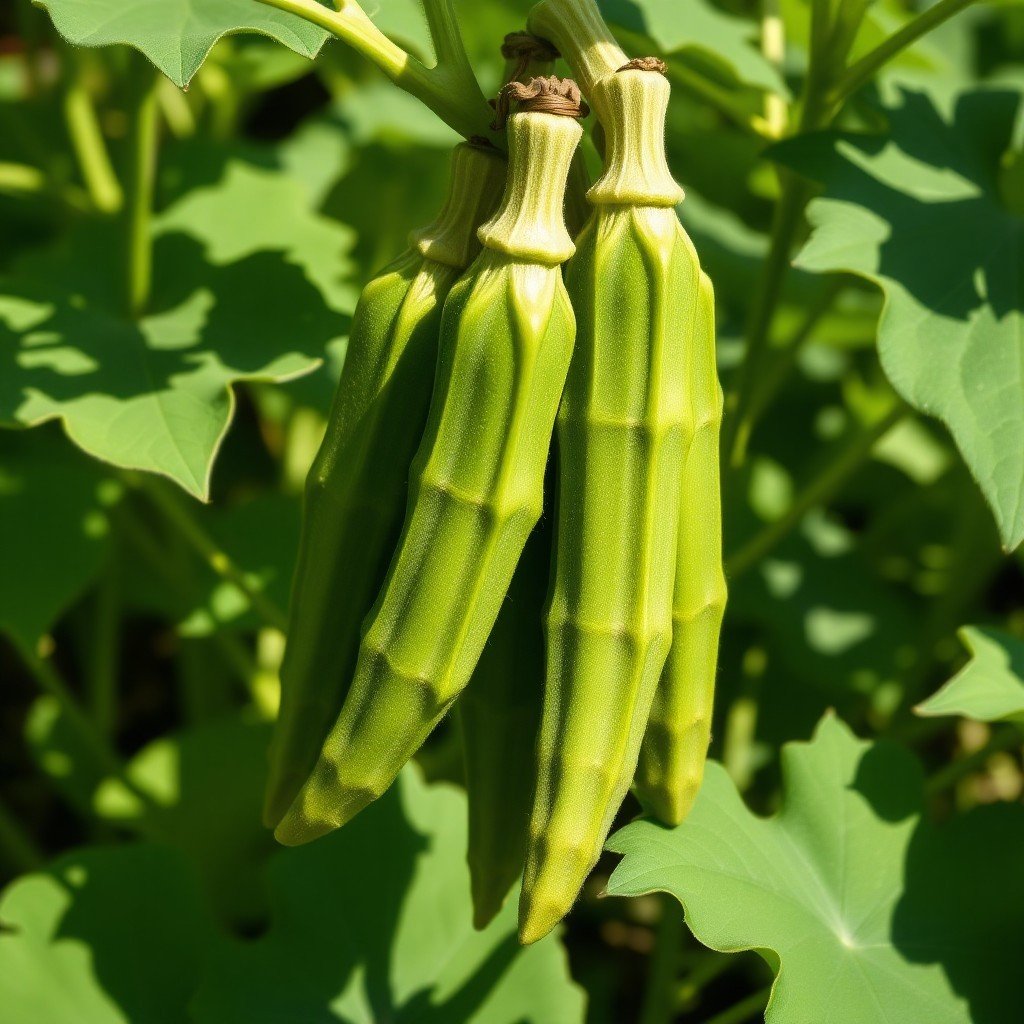
Okra is a true child of the heat, and that is exactly what makes it special: it thrives in the long, hot Egyptian summer that defeats many other vegetables. The plants carry slender, ridged green pods that are at their best when picked young and tender, with the soft, melting texture that makes them a cornerstone of the Egyptian kitchen. Pick them small and they stay sweet and silky; the moment you grow it yourself you get pods far fresher and more tender than anything from the market, harvested at the perfect size straight from your own bed.
Planting
Okra is a warm-season vegetable with no tolerance for cold, so direct-sow it only after all danger of frost has passed and the soil has warmed. Aim for a soil temperature of at least 18 C measured at 10 cm depth for an even, uniform stand; sowing only once the soil reaches 21 C gives the most reliable results. Set the seed about 2 to 2.5 cm deep, or around 1.3 cm deep when you are direct seeding, and just 0.6 cm deep if you start transplants indoors. Soaking the seed in water for several hours or overnight before sowing softens the hard seed coat and speeds things up. Germination runs best when the soil sits between 21 and 35 C, and seed generally comes up in about 7 to 14 days, fastest when the soil is warm toward 27 to 32 C. Give okra full sun and align the rows east to west to catch the most light. Space plants about 23 to 30 cm apart in the row with rows roughly 0.9 to 1.8 m apart, then thin the established seedlings to a final 45 to 60 cm apart once they are several centimetres tall. In Egypt, the sowing window follows soil warmth rather than the calendar: in the Nile Delta and Lower Egypt direct-sow mainly from mid-March through April, with a feasible second sowing in May and June, while warmer Upper Egypt can start a few weeks earlier, from late February into March, and on through spring. Avoid the cool, damp November to February period, when low soil temperatures cause poor, uneven germination and serious root-rot and seedling losses.
Fertilizing
Work a complete fertilizer into the bed before planting; a balanced 10-10-10 mix applied at roughly 1 kg per 9 m2 sets the plants up well. Go easy on nitrogen, because an excess pushes leafy growth at the expense of flowers and pods. Once the plants are established and bearing, side-dress to keep them productive: begin when they are about 15 to 20 cm tall and feed again two to three weeks later, or work in calcium nitrate as the plants start flowering and fruiting, around three to four weeks after planting and again at six to eight weeks. This steady feeding through the flowering and fruiting stage keeps the pods coming.
Care
Keep the soil evenly moist to about 15 cm depth throughout the season. During dry spells give a deep soaking of roughly 2.5 to 4 cm of water once every 7 to 10 days, and increase this in the hot, arid south of Egypt. Water at ground level under the foliage, early in the day, so the leaves and pods stay dry and disease has less of a foothold. Watch for common pests including flea beetles, Japanese, blister and cucumber beetles, worms such as corn earworm, plus stink bugs and aphids. The most serious troubles are root-decay and root-rot diseases that kill young seedlings, along with root-knot nematode, Southern stem blight and Fusarium or Verticillium wilt, which is another reason to keep sowing out of cold, wet soil. Okra is ready about 60 to 70 days after planting. Harvest the pods while young and tender, at about 5 to 8 cm long, clipping them at 8 to 10 cm at most, and pick at least every two days because the pods grow very fast. Never leave pods to mature on the plant, or they turn tough and fibrous and production slows right down.