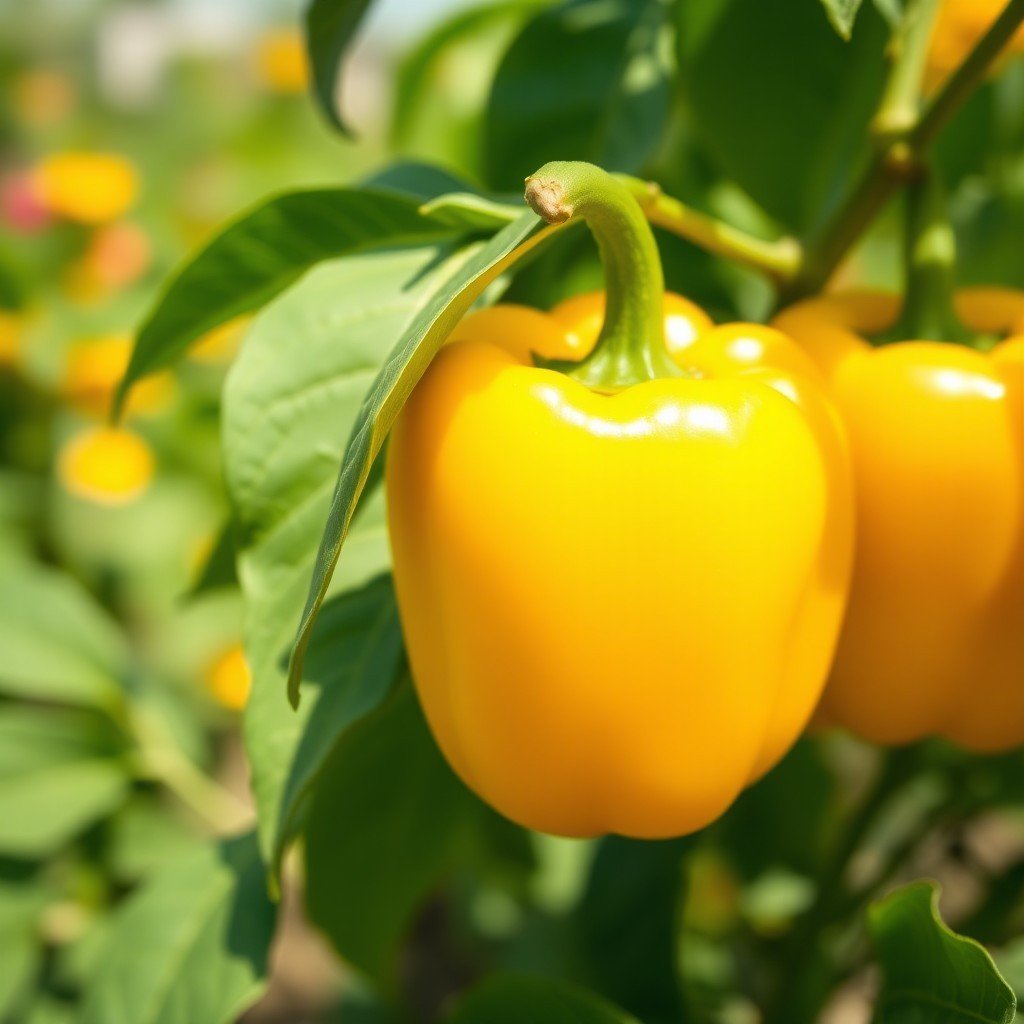
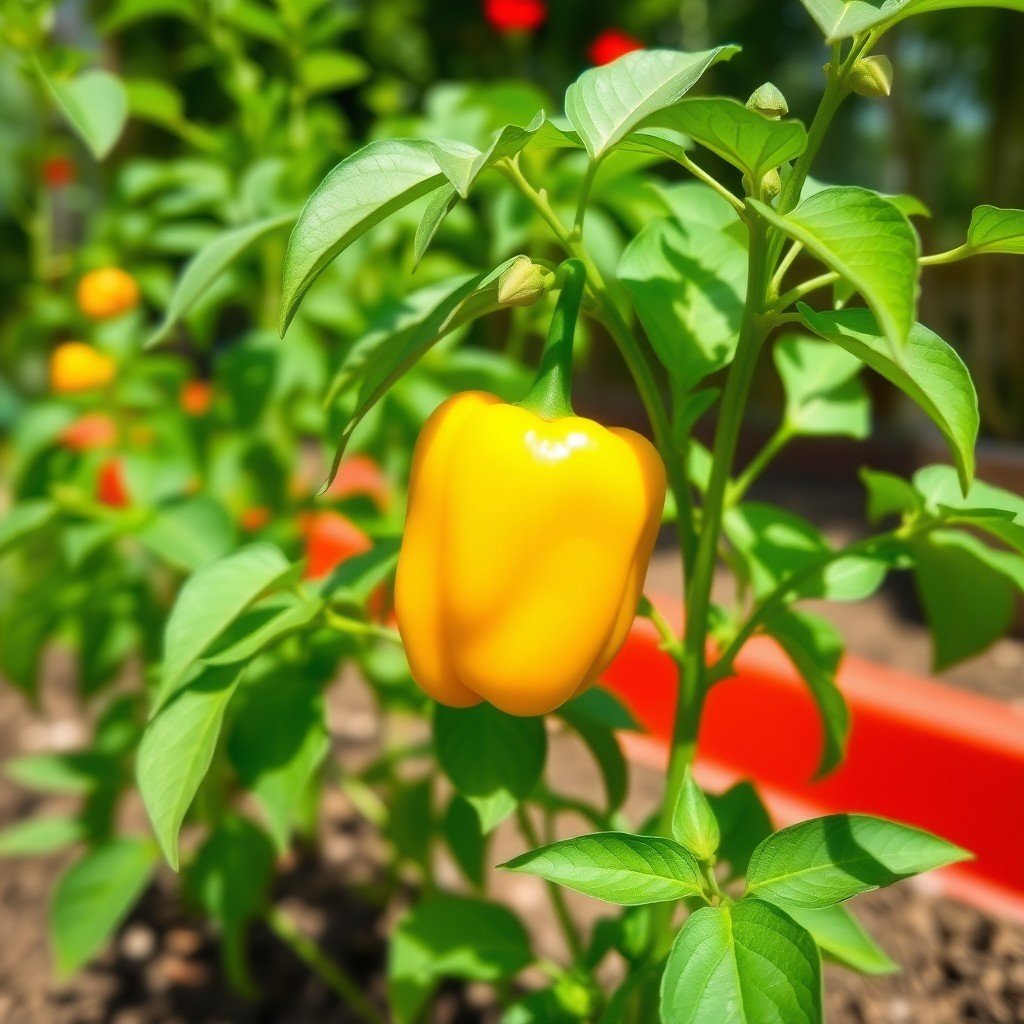
Mexican Yellow Pepper is a striking hot chili prized for its bright, golden-yellow pods that ripen to a glossy, sun-coloured finish on the plant. The fruit carries a warm, fruity heat with a clean, slightly sweet edge that sets it apart from ordinary green chilies — equally at home brightening salsas, pickles and colourful hot sauces, or grown simply for its ornamental glow in pots on a sunny balcony. Like all chilies you can pick the pods green for milder flavour and heavier yields, or let them ripen to their full yellow colour for a hotter, more developed taste.
Planting
Because hot chilies need a long, warm season, start the seeds indoors 8-10 weeks before your average last-frost date (some hot types want up to 12 weeks of a head start). Sow about 0.6 cm deep in a sterile, soilless germination mix. Seeds need warmth of around 21°C to sprout and usually emerge in about 10 days; a heat mat held at 27-32°C speeds and improves germination. Once the seedlings appear, grow them on at 16-18°C in bright light. When true leaves form, thin or prick the seedlings out so they stand 5-8 cm apart, or pot each one on when it is 2-3 cm tall. Move plants outdoors only after nighttime lows stay above 10°C and the soil has warmed to at least about 18°C. In the open ground, space chili plants 38-45 cm apart (30 cm for dwarf types), or grow one plant per 22 cm pot in containers. Give them the warmest, sunniest spot you have — full sun of at least 6 hours a day, ideally 8-10 hours.
Fertilizing
Before transplanting, work a balanced fertilizer such as 10-10-10 or 13-13-13 into the soil at about 1 kg per 9 m², adjusting phosphorus and potassium to suit a soil test, and keep the soil pH between 6.0 and 6.5. After the first fruits set, side-dress with nitrogen to support continued growth and fruiting — but go easy, since too much nitrogen produces bushy, leafy plants that are slow to bear. For chilies in containers or under glass, feed weekly with a high-potassium liquid fertiliser (such as a tomato feed) as soon as flowering starts, which pushes the plant to favour fruit over leaves.
Care
Keep soil moisture even and uniform. If the plants do not receive about 2.5 cm of rain a week, soak the soil thoroughly at least once weekly, and water with drip irrigation or soaker hoses rather than overhead to reduce disease. Watch for common pests including cutworms, aphids, tomato hornworms and stink bugs, along with diseases such as bacterial leaf spot, bacterial wilt and viruses; even watering also helps prevent blossom-end rot and sunscald. The pods are usually ready 70-85 days after transplanting. Pick the first fruits promptly once they reach full size to encourage more to set — leaving chilies on the plant to ripen to full yellow develops a hotter flavour but suppresses new flowers and can cut total yield by a quarter or more, so picking some green keeps the harvest coming.
Growing in Egypt
Hot chili is a warm-season, frost-sensitive crop, so the main planting window in Egypt is a spring crop. Start seeds under protection from late December to February (the 8-10 week lead before transplanting), then move plants outdoors once the cold spells pass. In the Nile Delta and Lower Egypt, transplant from late February to March for a harvest from May into summer; in the warmer soils of Upper Egypt, transplant a few weeks earlier, from mid-February. Because Egyptian summers regularly climb above 30°C — which suppresses flowering and causes flower and fruit drop — aim to have plants flowering and setting fruit before peak summer heat, with the heaviest harvest in late spring to early summer. A second autumn crop is also possible: sow in summer (July-August) under shade and transplant in late August-September for a cooler-weather harvest into November-December, as Egypt's mild winters rarely bring killing frost. Keep young transplants protected from any January cold snaps, especially in the Delta.