0 0
0
No products in the cart.

Garlic in Winter: How to Grow the Strongest Natural Antibiotic at Home | tna W rna

Jun 20, 2026 / By Anas Heaba / in Growing Guides

You buy a head of garlic from the market for a small amount, and after two weeks you find it starting to dry out or sprouting green cloves, so you throw it away thinking it's spoiled. But did you know that these sprouting cloves are the most valuable thing you can use? In a country like Egypt, where we rely on imported garlic out of season and prices multiply in winter, growing it at home becomes a practical solution that saves you money and gives you a fresh organic harvest.

Garlic is not just a spice added to food; it is a natural antibiotic, an immune booster, and a blood pressure reducer. The best part is that it is the easiest winter crop you can grow without prior experience. It does not need a large area or complicated care—just a few cloves, good soil, and a sunny spot. In this article, we will take you step by step from clove to harvest, so you can become self-sufficient in garlic all year round.

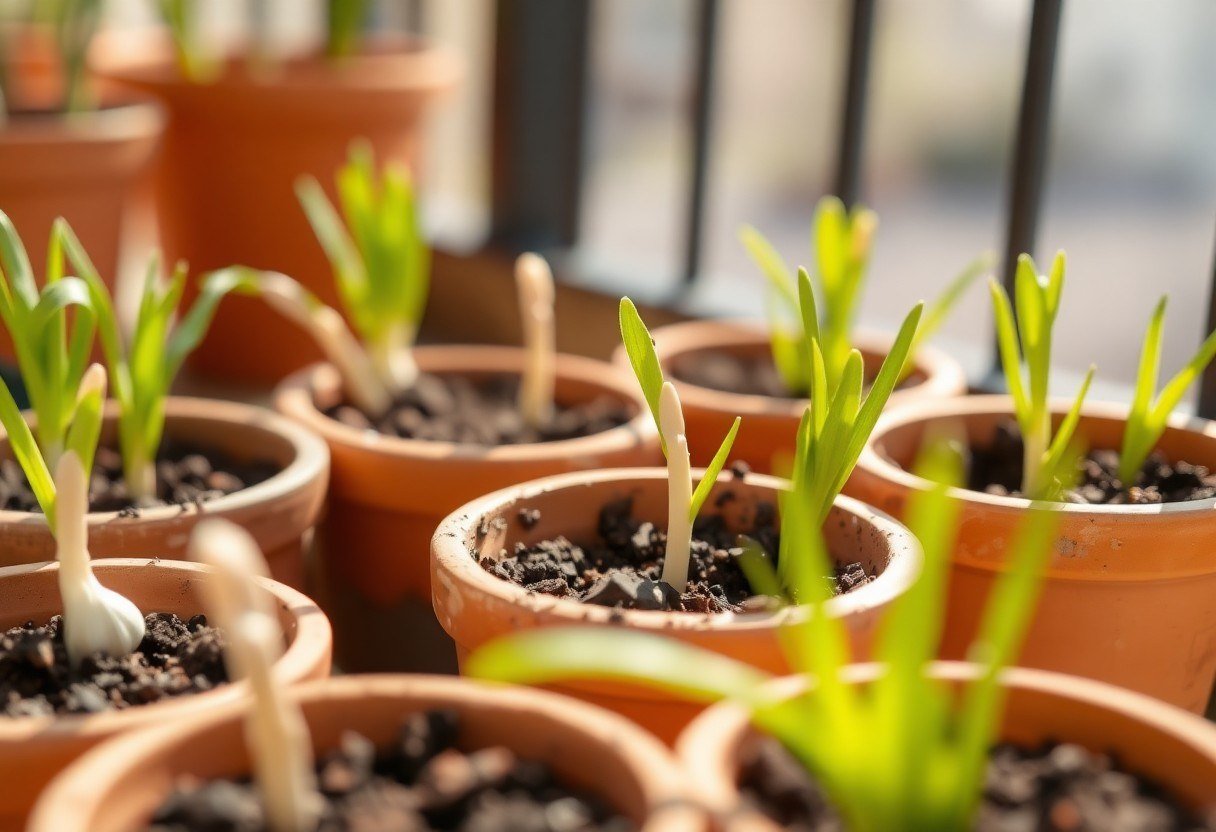
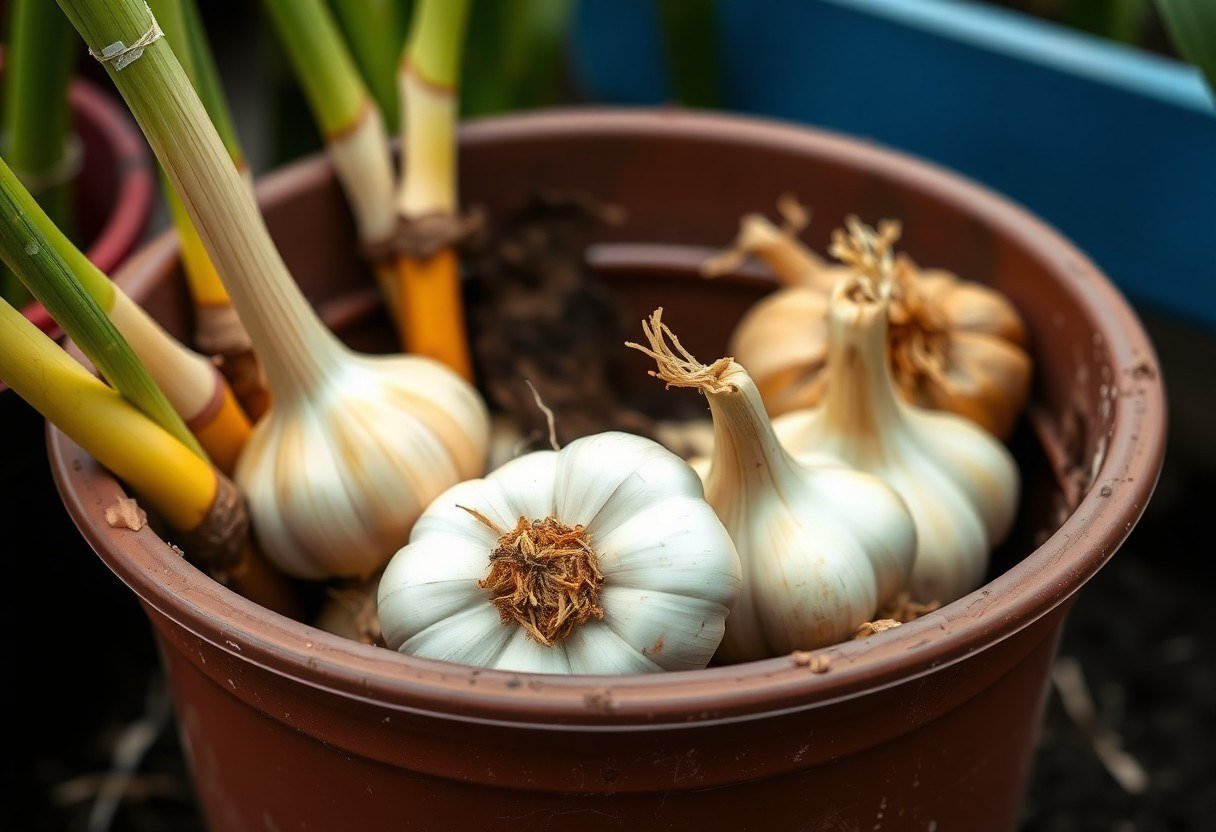
Garlic cloves planted in terracotta pots on a sunny balcony beginning to sprout

Why Is This Topic Important?

In Egypt, we consume about 300,000 tons of garlic annually, but local production does not cover all needs, especially outside the harvest season (May–June). This means the garlic you buy in winter is often imported or old stock, losing much of its nutritional value over time. A study published by Cairo University in 2021 showed that fresh garlic contains twice the amount of allicin (the active compound responsible for its health benefits) compared to garlic stored for more than 3 months.

Moreover, growing garlic at home does not require large spaces. You can grow it in pots on the roof or balcony, or even in wooden boxes on the wall. It is an ideal winter crop, tolerating cold down to 5°C, and uses less water than most leafy vegetables. In times of water scarcity and rising prices, growing garlic is a smart step toward household food security.

The Root of the Problem: Why Isn't the Garlic We Buy Always Fresh?

The problem is not with garlic itself, but with its natural life cycle. Garlic is a winter crop planted in October–November and harvested in May–June. After harvest, it enters a dormancy period lasting several months. During this time, it gradually loses its allicin and volatile oil content. Traders store it in large refrigerators, but long storage reduces its flavor and benefits. The garlic you buy in December–January is often last year's crop, having lost 30–40% of its antibacterial effectiveness.

The ideal solution is to grow garlic at its correct time (autumn) so you can harvest it fresh in spring. The difference between fresh and stored garlic is like the difference between local tomatoes in summer and imported tomatoes in winter: no comparison.

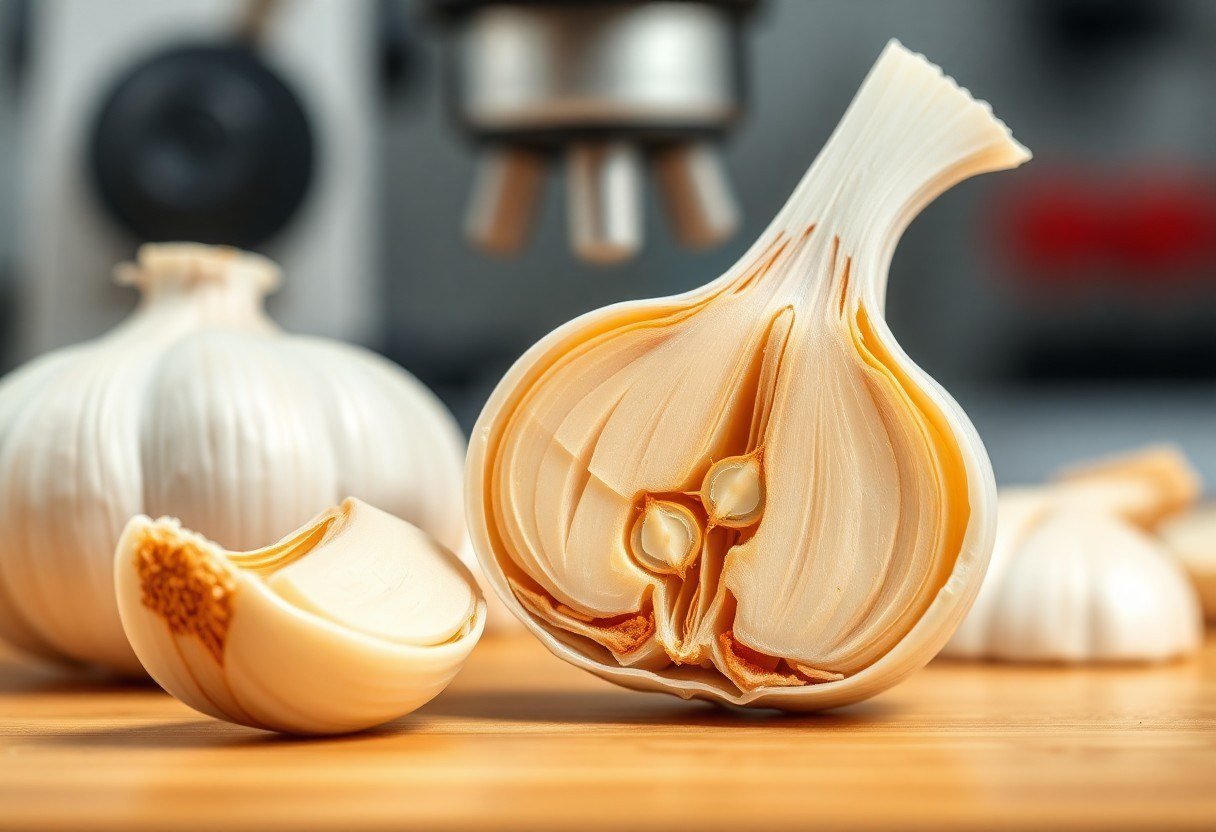
Cross-section of a garlic clove showing the allicin chemical structure under a microscope

The Solution Step by Step: Grow Garlic at Home from Today

  1. Choose the right variety: In Egypt, the best varieties for home growing are local garlic (small cloves, strong flavor) and Chinese garlic (large cloves, high yield). You can buy a fresh head of garlic from the market and separate it into individual cloves a day before planting.
  2. Prepare the soil: Use a mix of silt and compost in a 2:1 ratio. Garlic likes well-drained soil. Add a little sand if the soil is heavy. Make sure the pots have drainage holes.
  3. Plant the cloves: Insert each clove into the soil with its pointed tip facing up, at a depth of 2–3 cm. Leave 10 cm between cloves. Do not peel the clove before planting; the skin protects it from rot.
  4. Water moderately: Immediately after planting, give the soil a thorough watering. After that, water every 5–7 days depending on the weather. Garlic does not like constantly wet soil; overwatering causes root rot.
  5. Provide sunlight: Place the pots in a spot that receives 6–8 hours of direct sunlight daily. If you are planting in winter, choose the warmest spot on the balcony or roof.
  6. Wait for harvest: After 4–5 months, you will notice the lower leaves turning yellow and drying. This indicates the bulbs are complete. Stop watering completely for two weeks before harvest, then gently pull out the heads.
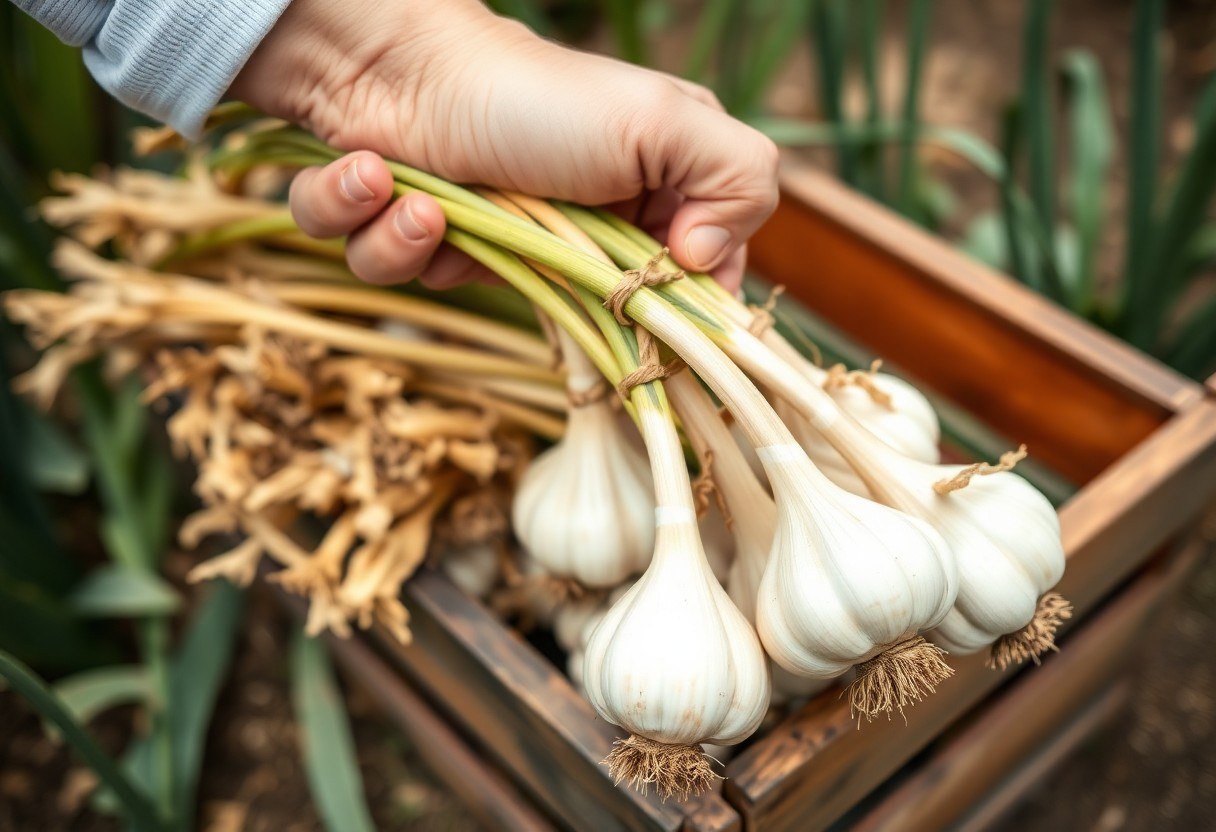
Hand holding fresh garlic heads after harvest with dry leaves on a wooden box

Practical Tips and Tools

  • Choose large cloves: A large clove yields a large head. Use small cloves for eating or for planting in separate pots to get green leaves (green garlic) that can be picked after a month.
  • Use home compost: Add one teaspoon of compost per clove at planting time. This feeds the plant throughout the growing season without the need for chemical fertilizers.
  • Monitor for pests: The most common pest affecting garlic is the small onion fly. You can prevent it by covering the soil with rice straw or wood chips. If it appears, use yellow sticky traps (available at gardening stores).
  • Harvest early in the morning: Harvesting in the morning reduces moisture loss and extends storage life. After harvest, leave the garlic in the shade for a week to dry completely before storing.
  • Store properly: Keep garlic in a dry, dark, well-ventilated place. Do not put it in the refrigerator; low humidity and good ventilation keep it for months.

Common Mistakes to Avoid

  • Planting cloves in heavy clay soil: Clay soil retains water for a long time, exposing roots to rot. Solution: Add sand and compost to improve drainage.
  • Frequent watering: Many think plants need water every day. Garlic tolerates drought better than excess moisture. Solution: Water only when the soil is dry to a depth of 2 cm.
  • Planting cloves upside down: If you plant the clove with its base facing up, the stem will struggle to emerge and may die. Solution: Always make sure the pointed end is facing up.
  • Harvesting too early: If you harvest garlic before the leaves are completely dry, the bulbs will be small and underdeveloped. Solution: Wait until 70% of the leaves turn yellow.
  • Neglecting fertilization: Garlic needs continuous nutrition. Solution: Add liquid organic fertilizer (such as compost tea) once a month during the growing season.
Common mistakes in garlic growing: overwatered pot with yellow leaves and rotten bulbs

Frequently Asked Questions

Can garlic be grown in winter in Egypt?

Yes, garlic is a quintessential winter crop. The best time to plant is from October to December. In cold coastal areas, planting can continue until January. Garlic needs cool temperatures (10–15°C) to form bulbs properly.

How many cloves do I need to grow a full head of garlic?

Each clove produces one head. If you want 10 heads, plant 10 cloves. You can plant 20 cloves in a 40 cm diameter pot. Garlic does not compete heavily for space, but good spacing improves head size.

Can garlic be grown in water (hydroponics)?

Yes, but hydroponic garlic only produces green leaves (green garlic), not full bulbs. To get garlic heads, you need soil. Hydroponics is suitable for those who want to continuously harvest green leaves.

When do I harvest garlic grown at home?

Usually after 4–5 months from planting. In Egypt, if you plant in November, you harvest in March–April. The sure sign is yellowing and drying of the lower leaves. Leave the garlic in the ground for an additional two weeks after the leaves dry to complete ripening.

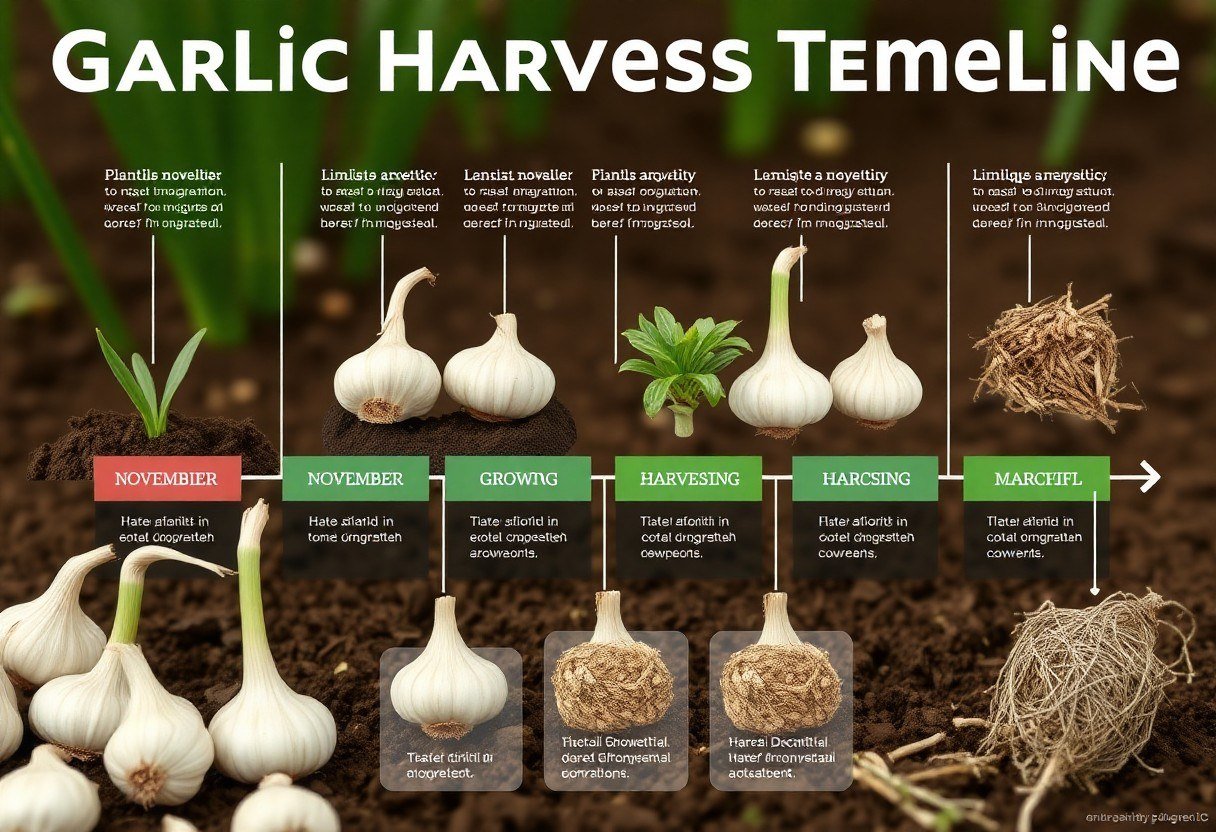
Timeline graphic for garlic harvest: planting in November, growth in December–February, harvest in March–April

Conclusion

Garlic is not just a crop; it is an investment in your health and food independence. With simple steps, you can turn a small clove into dozens of fresh heads that will last your family for months. Start today by choosing a pot and good cloves, and follow the steps we explained. You will be amazed at how easy it is, and you will taste the difference between garlic grown at home and what you bought from the market. Follow us tomorrow in the series "Journey from Seed to Plate," where we will talk about another equally important winter crop: green onions.


Contact Us تواصل معنا