Jun 17, 2026 / By Anas Heaba / in Growing Guides
Imagine opening the bag of onions you bought last month, only to find most of them have sprouted long green stems and become soft and unusable. This scene repeats itself in nearly every Egyptian household, especially with rising temperatures and humidity during storage seasons. You might see this waste as a nuisance, but what if I told you that this 'spoiled' onion in your eyes is precisely your golden gateway to starting a new life cycle and obtaining a bountiful harvest of fresh local onions without needing to buy expensive seeds?
In light of the current wave of rising prices, the onion is no longer just a staple ingredient on the Egyptian table; it has become a strategic commodity. Learning how to produce a new onion from an old one, and understanding the difference between onion varieties meant for immediate consumption and those suitable for long-term storage, is a skill that will save you a lot of money and effort. In today's article from the 'Seed to Plate Journey' series, we will take you step by step on the onion's journey from the heart of your kitchen to your soil, so you can harvest the white gold of the kitchen yourself.

You might ask yourself: why should I grow onions when their market price is sometimes reasonable? The truth is that the real cost is not just in the price, but in quality and sustainability. Onions are crops that consume relatively less water compared to leafy vegetables, making them ideal for facing water scarcity challenges in Egypt. According to FAO data, a simple drip irrigation system can reduce onion water consumption by up to 30% compared to flood irrigation, a very significant figure if you are planting on a balcony or in a home garden.
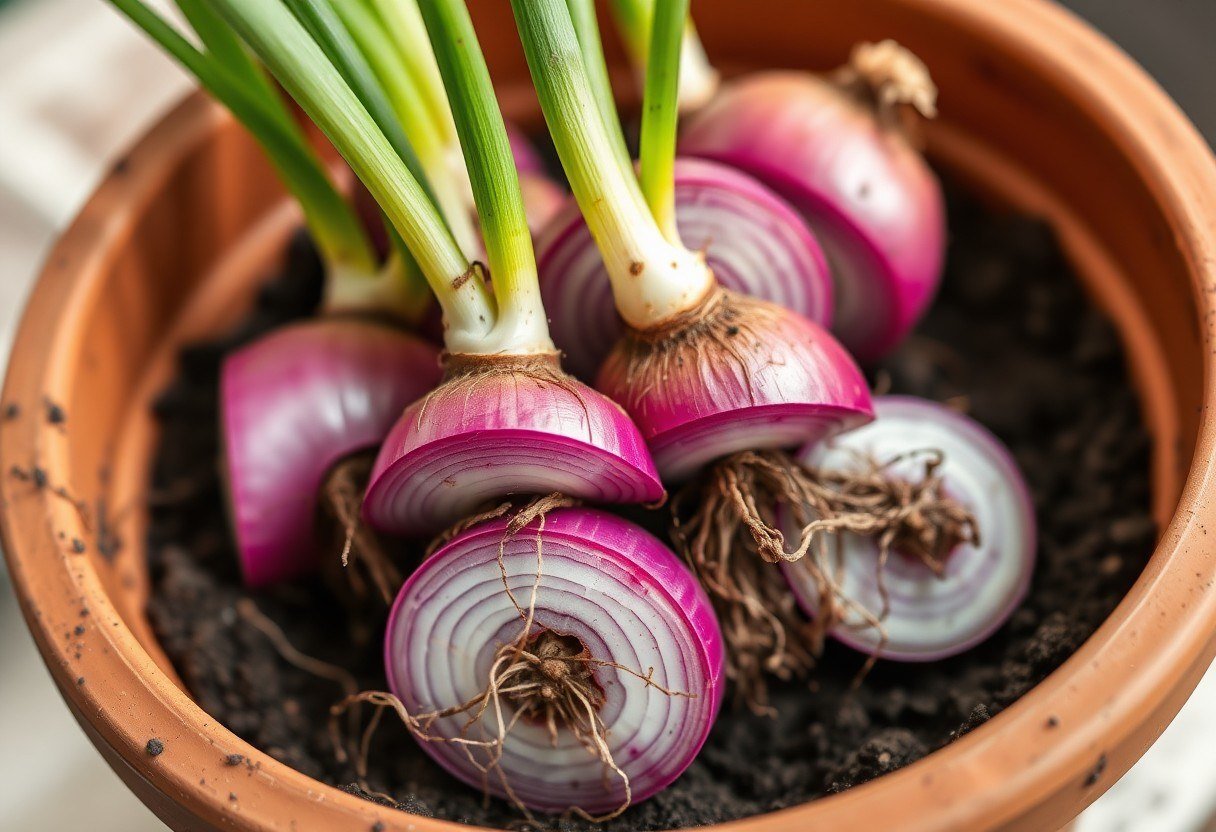
More importantly, it is about 'food security' for your family. Commercially stored onions may undergo chemical treatments after harvest to prevent sprouting, while your home cultivation guarantees an organic product free of inhibitors. Additionally, the fresh local onions you harvest with your own hands contain less water in the core, making them more concentrated in flavor and suitable for cooking at high temperatures without turning into mush. In small spaces, planting just 10 onions in a deep pot can give you a harvest of green leaves (a substitute for chives) within a month, and then a harvest of the bulbs themselves after 4 to 5 months.
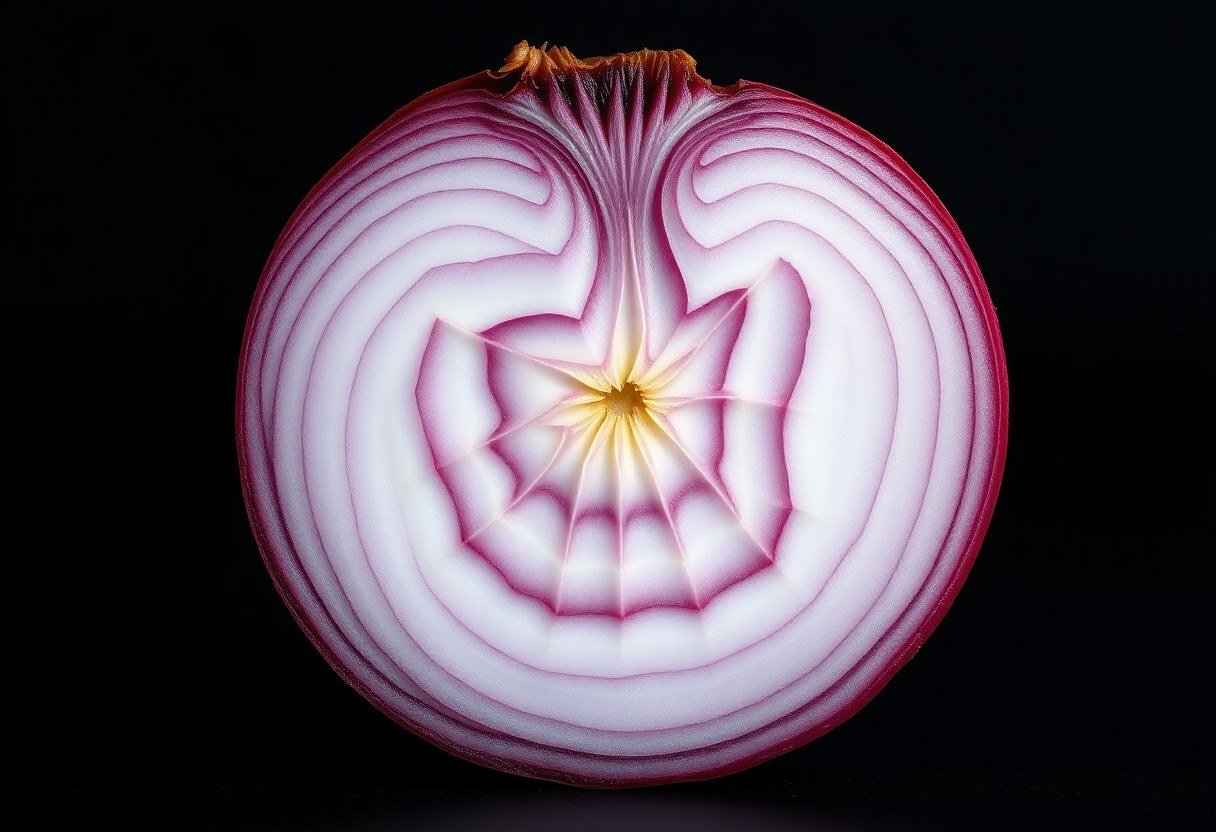
To understand how to get a new onion, we must first understand the physiology of the bulb itself. The bulb we eat is actually a 'central bud' surrounded by modified, thickened leaf bases that store food. The problem everyone faces, which is premature sprouting, is not a defect in the bulb, but a natural response to the hormone 'auxin' and the end of the dormancy period. When the temperature rises above 25 degrees Celsius with even a slight humidity level, the heart of the bulb senses that reproduction time has come, and it begins consuming the sugars stored in the scales to send out a flower stalk or green leaves, leaving you with empty shells.
The common mistake is believing that all onion types are the same. There are 'short-day' onions that need fewer daylight hours to form a bulb, which are suitable for Egypt's conditions in winter (such as local red onions and the improved Giza 6). And there are 'long-day' onions that, if planted in Egypt, may produce excellent green leaves but fail to form a large bulb head. So, when you buy an onion from the market with the intention of planting it, you are likely dealing with a good storage variety, but you need to trick it environmentally to complete its cycle instead of rotting in the soil. The solution starts with choosing the right onion and understanding the correct harvest signals.

Let's begin the journey of transforming a single onion into several new bulbs. This method relies on the principle of vegetative propagation, which is faster than seeds and guarantees you get the same variety you loved. Here are the practical steps:

To ensure your transition from merely growing onions to storing them for the longest possible period, there is a set of smart practices you must adopt. These tips are based on practical experience in the Egyptian environment:
Even the most enthusiastic growers fall into simple mistakes that destroy the harvest. Avoiding these errors guarantees the difference between a bountiful harvest and an agricultural disaster:

Technically, you can plant them at any time to get green leaves (green onions), but if you aim to get a storage bulb head, the optimal time is planting in September and October. During this period, the days are relatively short and temperatures are moderate, which encourages the formation of large bulbs. Planting in spring or summer will cause the plant to flower early (bolt) and fail to form a bulb.
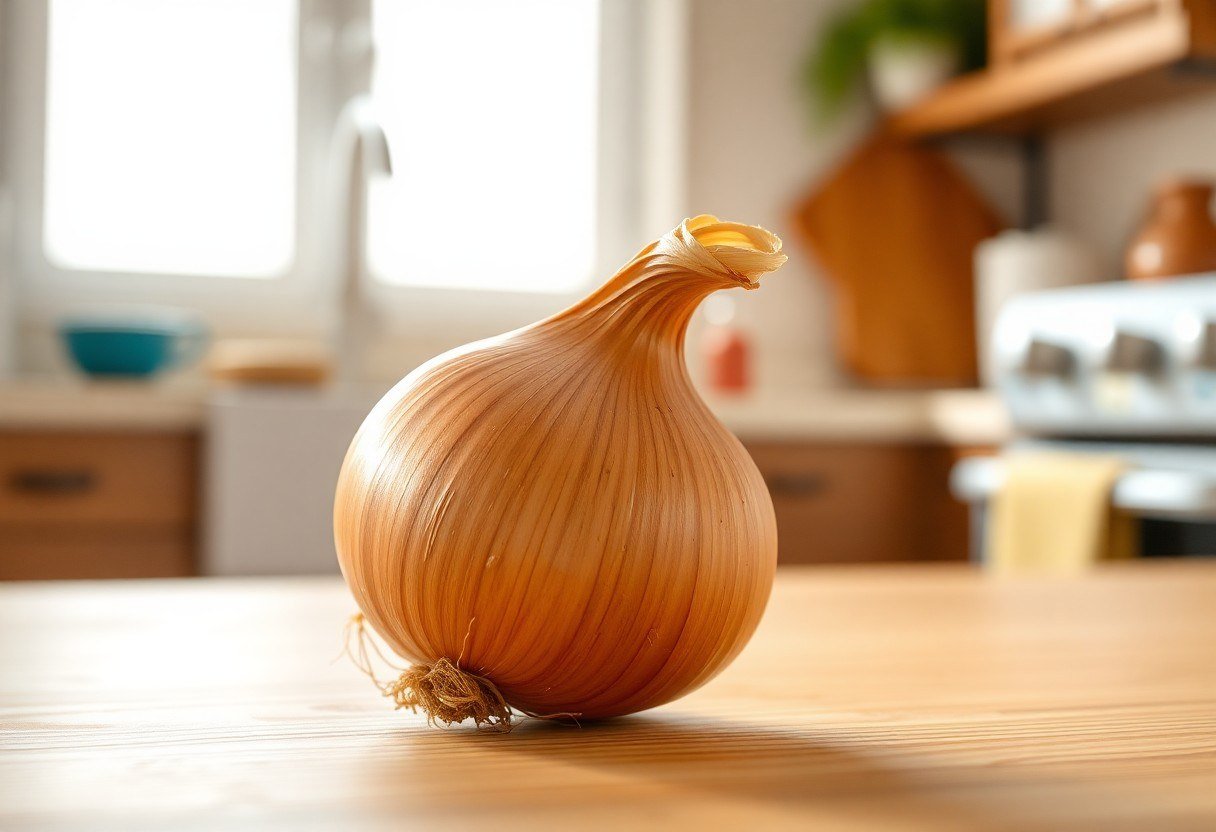
Storage onions are characterized by a hard, tight outer skin, a very thin and dry neck, and when pressed, they are rock-hard. If the neck is thick or soft, or the skin is thin and peels easily, this is a 'sweet' or fresh onion meant for immediate consumption within weeks. Red and dark golden varieties usually store better than white ones.
This phenomenon is called 'premature flowering' or bolting, and it occurs because the plant was exposed to a strong cold shock or severe weather fluctuations. Unfortunately, a bulb that has flowered cannot be saved, because all its energy went to the flower stalk. The solution is to break this flower stalk immediately upon its appearance from the base and use the onion immediately in cooking, because it will not store and will become woody in texture. Next season, try to protect the seedlings from sudden severe cold.

The journey of the onion from seed to plate, or from bulb to bulb, is one of the most rewarding agricultural experiences. It does not require vast spaces or complex equipment, just a little understanding of the nature of this patient plant. Always remember that the secret to success lies in three things: well-draining soil, patience until top lodging, and good curing after harvest. By growing onions, you are not only saving money, but you are also ensuring a clean harvest for your family that stays with you for long months, reminding you in every meal that the journey from the kitchen to the balcony and back is the shortest path to true sustainability. Try planting one onion today, and you will be amazed by nature's generosity.
Jun 20, 2026 by Anas Heaba