Jun 19, 2026 / By Anas Heaba / in Growing Guides
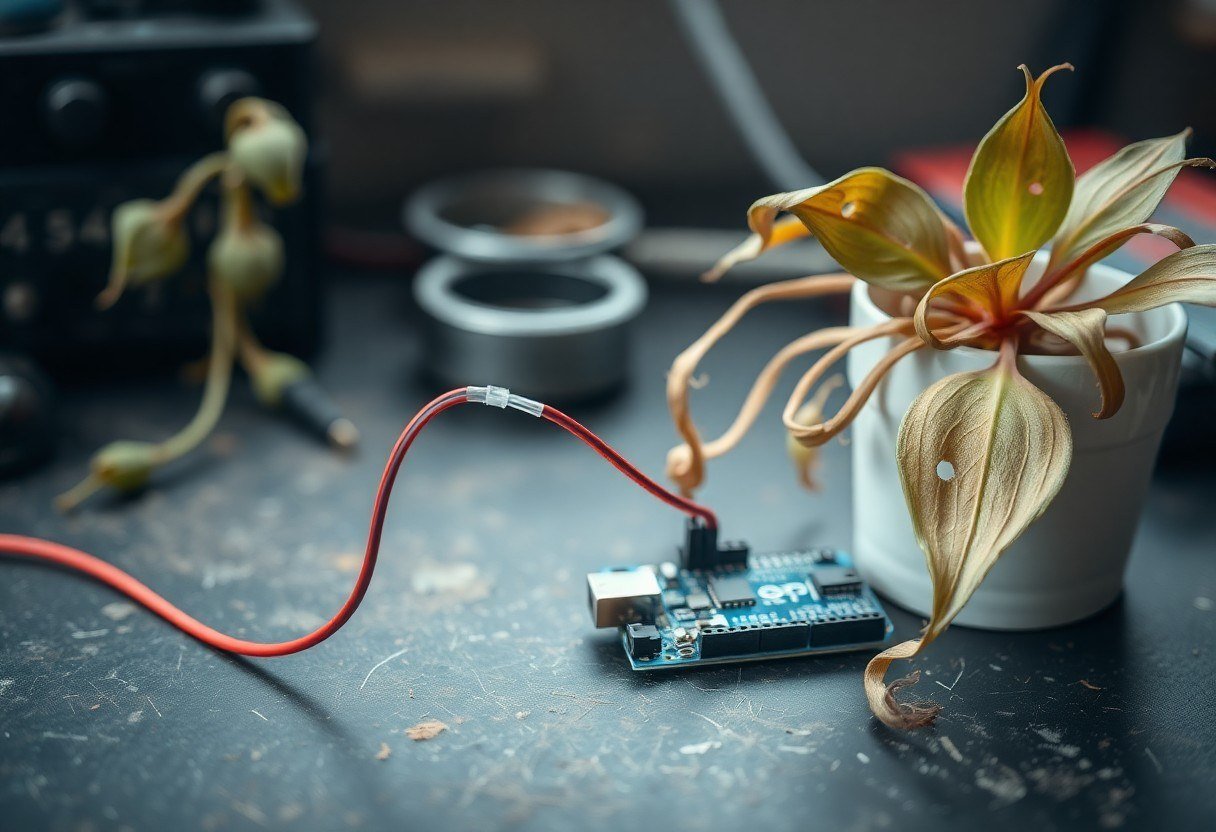
Imagine waking up at dawn to check on your small rooftop garden, only to discover that the water pump didn't run despite your programming, and the tomato plants you painstakingly nurtured have begun to wilt. You inspect the electronic circuit and find that a thin wire has come loose from its place due to a slight vibration or because the wires expanded from the Cairo sun's heat. This scene is not science fiction; it's a real nightmare faced by every Egyptian hobbyist or farmer trying to harness technology for their land. The difference between a successful project and a failed one doesn't always lie in complex code, but in something much simpler: the quality and stability of electrical connections.
In an era where automation tools are within reach, the question is no longer: "Can I automate irrigation?", but rather: "How can I make the automation system work efficiently and reliably for months without my intervention?". This is where the real problem lies, and this is where the difference between amateur and professional work becomes apparent. We are not just talking about assembling electronic components, but about building a reliable nervous system for your farm, one that withstands dust, humidity, and heat, and ensures that not a single drop of water is wasted or a plant dies due to a simple physical connection error.

In the Egyptian context, we deal with harsh climatic challenges. The heat in Upper Egypt or on Cairo rooftops can easily exceed 45 degrees Celsius in summer. This heat causes the metals in wires and connections to expand, loosening connections that rely solely on friction. Add to this the high humidity levels in the Delta regions or inside greenhouses, which cause corrosion of copper ends and the formation of an insulating layer of rust that prevents signal transmission. Estimates from the Food and Agriculture Organization (FAO) indicate that smart irrigation systems can reduce water consumption by up to 30-50%, but this percentage is only achieved if the system operates with 100% accuracy throughout the season. Any interruption in the soil moisture sensor reading due to a loose connection means either drowning the crop or leaving it thirsty, potentially destroying an entire crop in a small area that cannot tolerate error.
Limited agricultural spaces, whether a home garden or a planted rooftop, cannot tolerate the margin of error found in large open fields. If the irrigation pump fails for one day in a 50-square-meter greenhouse, the loss could be catastrophic. The problem is not in the intelligence of the code you wrote, but in the way the microcontroller (Arduino) communicates with the outside world. When you rely on random "jumper" connections, you are building your system on a fragile foundation, where any vibration from a fan or even a large insect falling could disconnect the temperature or humidity sensor circuit. The mechanical stability of the circuit is the backbone of any successful agricultural automation project.
To understand the problem from its roots, we must look at the physics of electrical connections. The standard Arduino Uno board is equipped with female headers designed to receive male jumper wires. This mechanism relies on mechanical friction between two metal surfaces. In ideal laboratory conditions, this is sufficient. But in the agricultural environment, three destructive factors come into play: First, chemical oxidation, where copper reacts with humidity and oxygen to form a copper oxide layer that significantly increases electrical resistance, turning the precise analog sensor signal into a completely false reading. Second, mechanical vibrations resulting from the operation of water pumps or fans lead to what is known as "fretting corrosion," where metal surfaces rub against each other causing microscopic wear that cuts the signal. Third, continuous thermal expansion and contraction leads to a loosening of the grip force in the plastic sockets, making the connection loose and losing contact intermittently in a way that is difficult to detect.

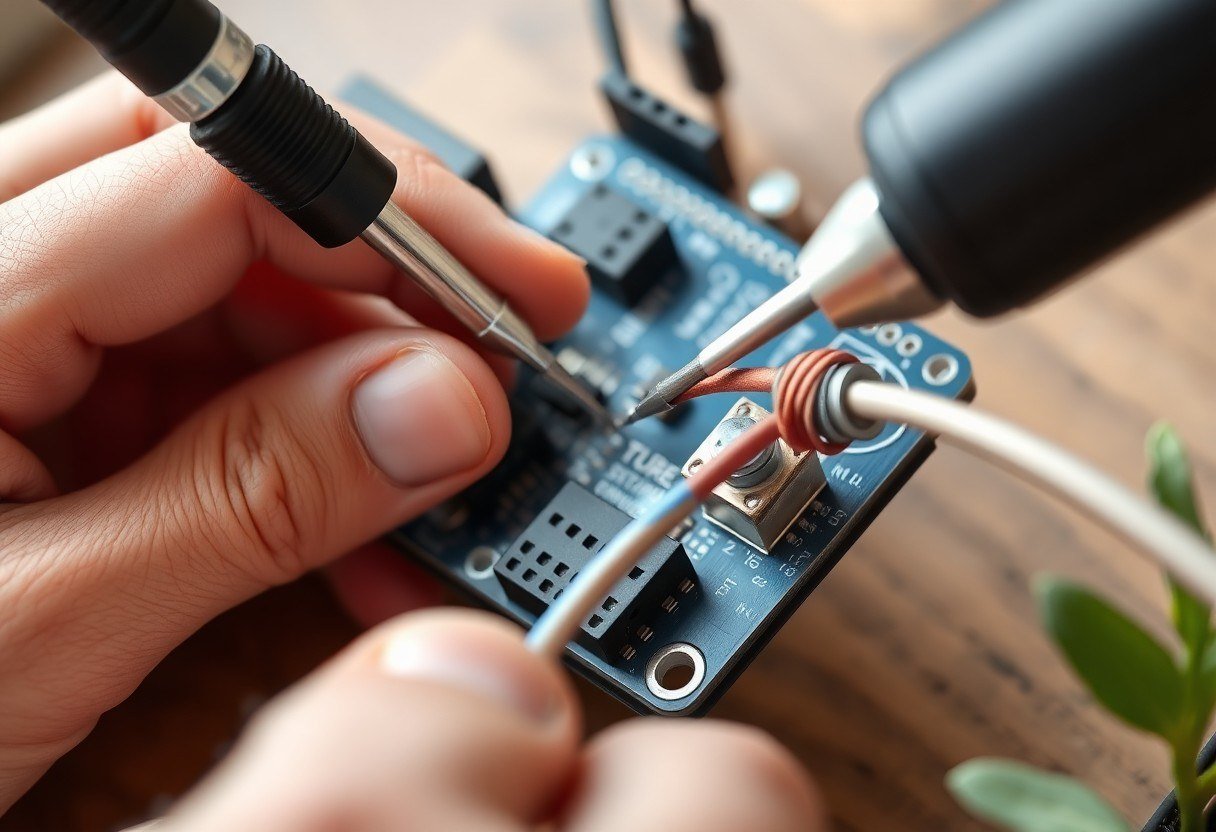
The optimal solution is to shift from a "temporary connection" mindset to a "permanent connection" mindset. We need to transform every Arduino pin into a secure mechanical anchoring point. Follow these steps to turn your board into a miniature industrial controller suitable for operation in the harshest conditions:

After mastering the basics of secure connections, there is a set of tools and practices that take your project to the professional level. These tips are inspired by real experiences on Egyptian farms:
Even with the best intentions, many fall into design mistakes that render their efforts futile. Learn from others' mistakes to save yourself time and money:

This shield is specifically designed to be compatible with the physical form factor and dimensions of the Arduino Uno board. For the Mega board, it requires its own specific shield due to the different number and location of pins. As for the Nano board, it is smaller in size and the shield cannot be mounted directly on top, but you can use an external breadboard with separate screw terminal blocks to achieve the same principle.
The standard screw terminals on these shields typically handle a current of up to 1.5 Amps per terminal safely. This is excellent for operating sensors, display screens, and small relay modules. But always remember not to pass high-load currents like pumps or motors directly through the Arduino or the shield; instead, use an external power circuit and a relay for control, as the shield here is intended for signal transmission, not high power.
No, not at all. This is one of the biggest advantages of this solution. The shield usually comes ready with male headers on the bottom, and all you have to do is press-fit it onto the Arduino's female headers. This makes it an ideal solution for those who lack soldering skills or want a clean and removable solution. The mechanical connections between the shield and the Arduino are strong enough for normal use, but in very high vibration environments, you can add a small mounting screw if a hole is available for it.

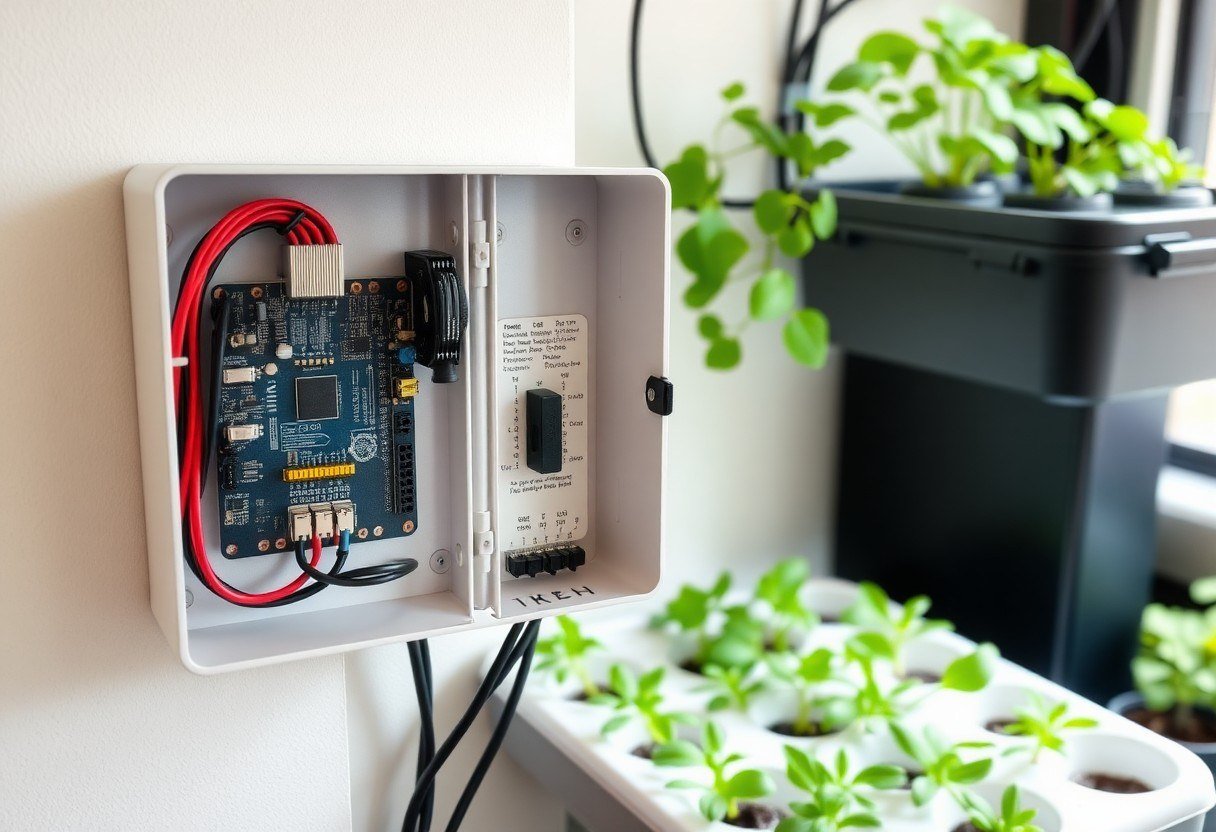
In the end, remember that smart farming is not just programming; it is integrated engineering. You can write the best code in the world, but if you neglect the physical aspect of the connections, your system will be like a car with a flat tire. Using simple tools like the Arduino UNO Screw Terminal Block Shield, you can transform your electronic board from a fragile experimental prototype into an industrial control unit capable of withstanding the heat of August and the humidity of September. Don't let a loose wire stand between you and an abundant harvest. Start today by re-evaluating your system's connections, and build every connection as if the entire season's crop depends on it, because, simply put, it actually does.
Jun 20, 2026 by Anas Heaba