0 0
0
No products in the cart.

Protect Your Crops from Extreme Heat with Simple Smart Tools | tna W rna

Jun 21, 2026 / By Anas Heaba / in Growing Guides

Dear farmer, small nursery owner, or rooftop gardening enthusiast. You surely noticed last year that the heat was scorching. The sun doesn't just burn the leaves; it strikes the roots, raises soil temperature, and causes the water you use to evaporate before the plant can benefit from it. And you know that the electricity bill if you run a pump all day is the last thing you need, and water itself is expensive and precious.

This isn't just a tough summer; it's a new climate pattern. Every year the weather gets more intense, and every year the yield decreases if we keep farming the same old way. The solution isn't buying expensive equipment or importing complex technology. The solution is being smart with what you have. With simple tools, like an Arduino Nano and readily available sensors, you can build a system that monitors soil moisture and temperature, and waters your crops exactly at the right time, without you lifting a finger. Let's find out how.

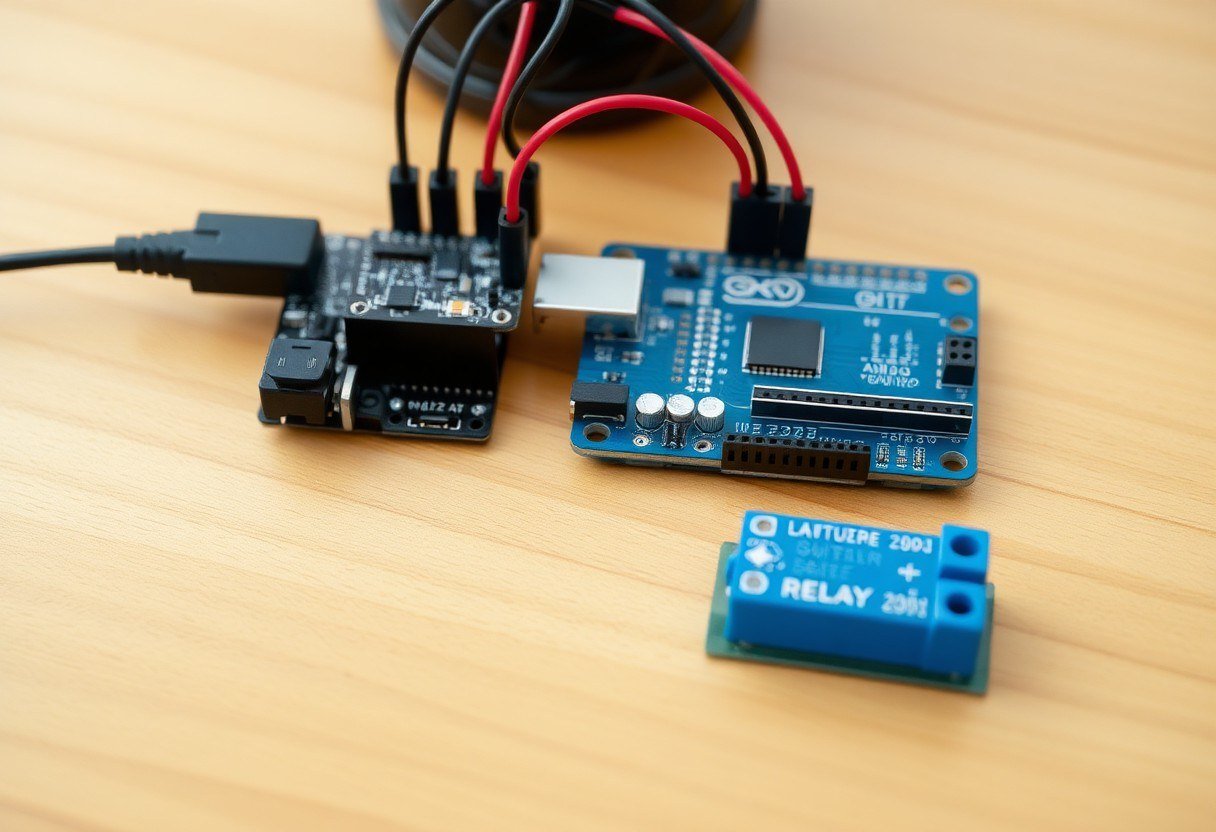
Arduino Nano board connected to a soil moisture sensor and relay

Why is this important right now?

Egypt is suffering from a real water gap. According to statistics from the Ministry of Water Resources and Irrigation, the per capita share of water is less than 600 cubic meters annually, which is far below the global water poverty line (1000 cubic meters). At the same time, the agricultural sector consumes about 80% of available water. This means every drop of water you put on the ground must reach the plant, not evaporate into the air.

And here's another problem: recurring heatwaves. In the summers of 2023 and 2024, temperatures in the Delta and Upper Egypt reached record highs above 45 degrees Celsius. Studies show that every degree above 35 degrees Celsius reduces tomato productivity by 10%, and peppers even more. Flood irrigation at midday not only wastes water but also shocks the roots and increases the chances of fungal diseases. Smart drip irrigation is the only viable solution for small and medium-sized areas.

The root of the problem: Why do plants get thirsty even though you water them?

Plants drink water from the soil through their roots, but roots don't just absorb any water. They absorb the water held in soil pores, which is bound to soil particles with a certain force. If the soil is very hot (like in summer under the sun), the water around the roots evaporates quickly, and the temperature of the root zone increases, causing the roots to close up and stop their activity. The result: the plant is thirsty even though you watered an hour ago.

Also, if you use flood irrigation, the water covers the entire soil surface, and a huge amount evaporates before it reaches the roots. Drip irrigation solves this problem because it delivers water directly near the roots in calculated amounts. But the real challenge is irrigation timing. If you water at midday, the water will evaporate before the roots absorb it. If you water at night, excess moisture can cause fungal diseases. The solution is a system that monitors actual soil moisture and decides to irrigate based on the plant's needs, not your mood.

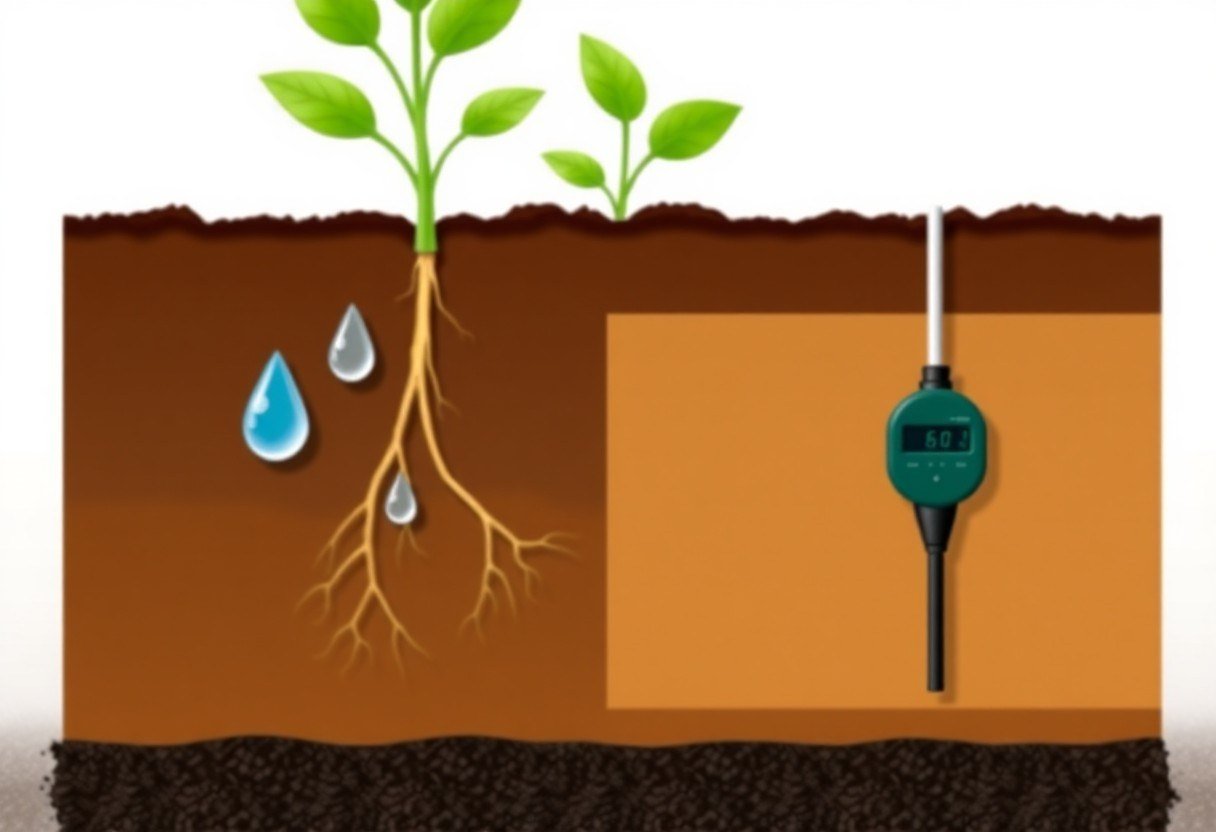
Cross-section of soil showing roots, drip point, and moisture sensor

The step-by-step solution: Build a smart irrigation system yourself

  1. Gather the essential components: You'll need an Arduino Nano board, a soil moisture sensor (e.g., YL-69 or a capacitive sensor, which is better and longer-lasting), a relay to operate a small water pump or electric valve, an LCD screen (optional for displaying readings), and a 5V or 12V power supply depending on the pump. All these components are available in Egypt at very reasonable prices.
  2. Assemble the circuit on a breadboard: Use a breadboard to connect the sensor and relay to the Arduino. The Arduino Nano operates at 5V, and the sensor outputs an analog signal that you read on pin A0. Connect the relay to a digital pin (e.g., D7) to turn it on or off. For better accuracy, use a Prototyping Shield like the ones available in the tna W rna store to secure the wires neatly and protect the circuit from short circuits.
  3. Write the code (software): The code is simple. You'll read the sensor value (from 0 to 1023) and convert it to a percentage. If the percentage is below a certain threshold (e.g., 30% meaning dry soil), turn on the relay for one minute. If the percentage is above 60% (moist soil), stop irrigation. In the code, place a delay between each reading to ensure the sensor works correctly.
  4. Test the system: Before planting, test the circuit on a table. Dip the sensor in dry soil and see what the screen (if you added one) displays. Wet the soil and observe the relay turning off. Adjust the thresholds according to the soil type (sandy soil dries faster than clay).
  5. Move the system to the field: Install the sensor in the soil near the plant roots, and connect the drip hose to the pump. Cover the sensor with a plastic cover to protect it from direct sunlight. Run the system and monitor it for the first two days to ensure its performance.
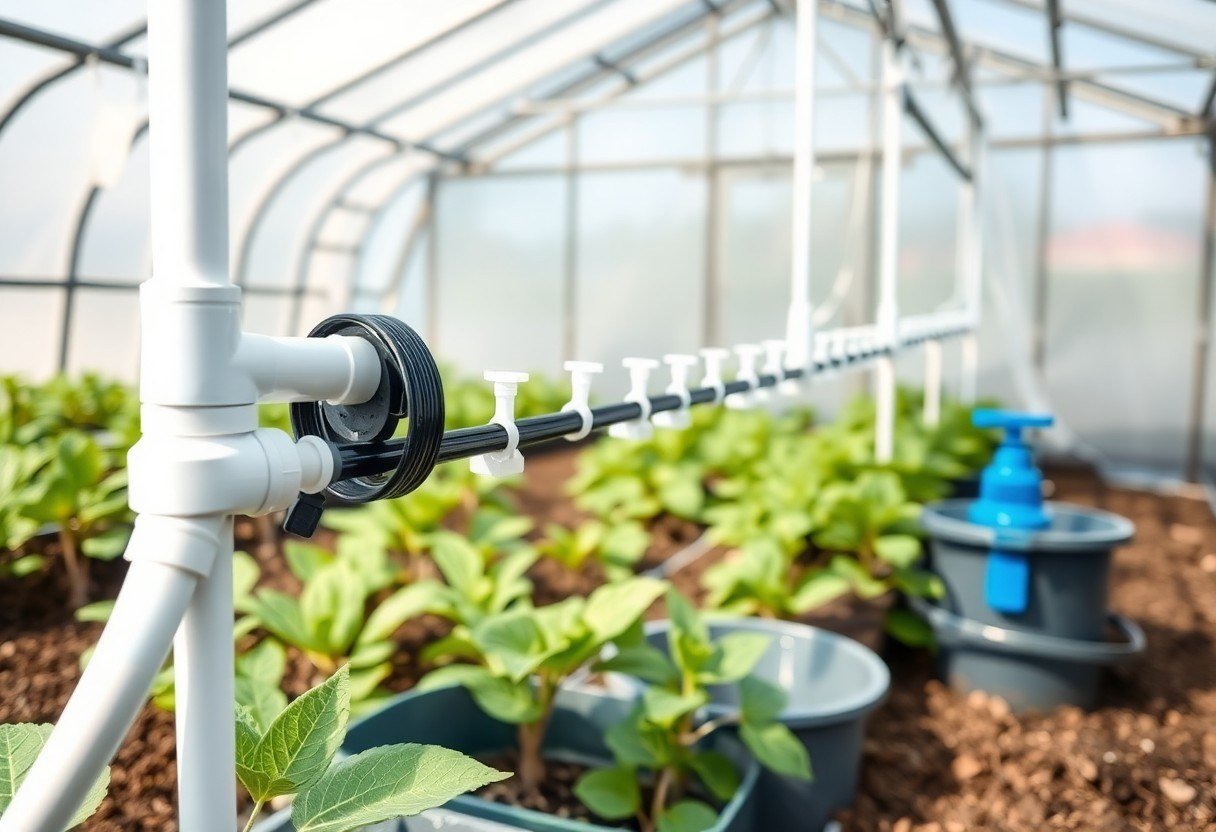
Drip irrigation system operating inside a small greenhouse

Practical tips and tools

  • Use a capacitive sensor: Cheap YL-69 sensors rust quickly in moist soil. The capacitive sensor is slightly more expensive but lasts much longer and is more accurate.
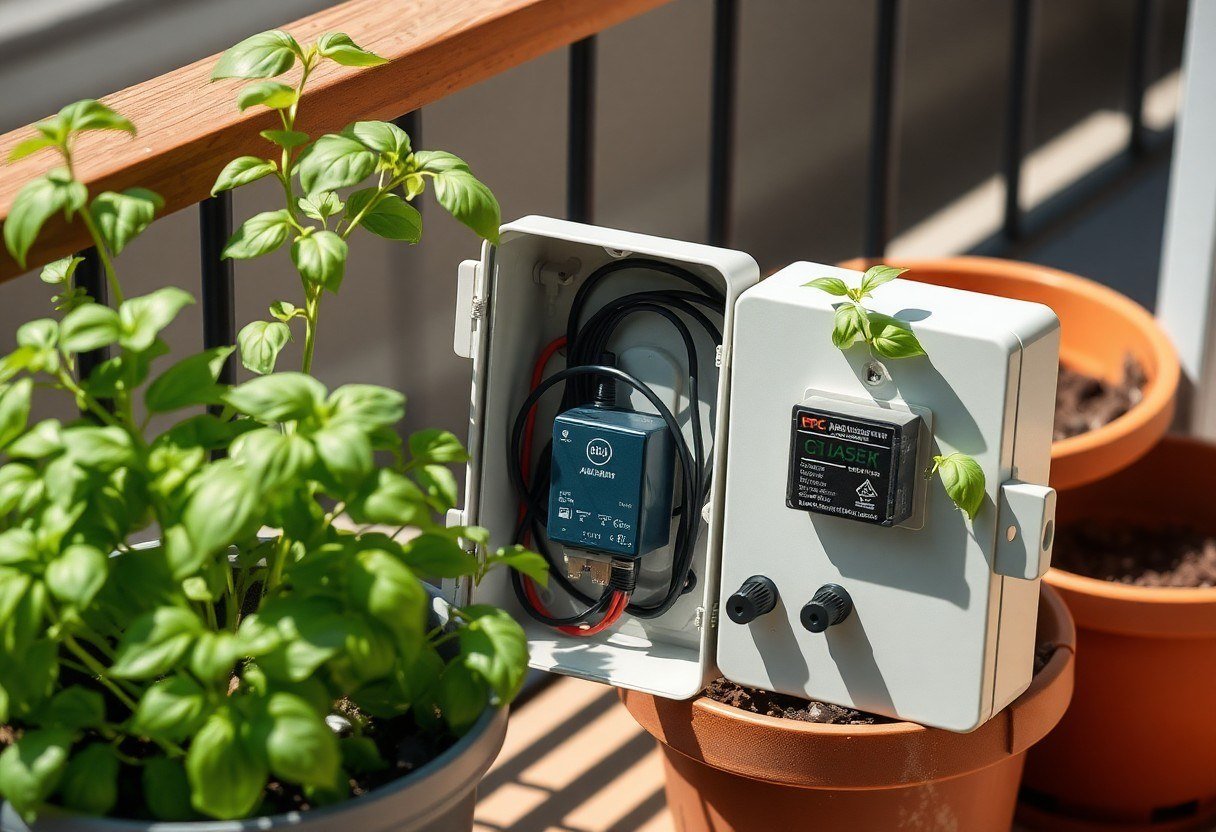
  • Protect the circuit from moisture: The Arduino and relay's worst enemy is moisture. Place them in a tightly sealed plastic box (a small electrical junction box) with a small opening for the sensor wires.
  • Adjust irrigation timing by season: In summer, soil dries faster, so set the minimum irrigation threshold higher (e.g., 40%), and lower it in winter (20%).
  • Use a small 12V pump: If your space is small (balcony or rooftop), a 12V pump running on an old car battery and a small solar charger can save you on the electricity bill.
  • Log the readings: If you can, add a memory unit (SD card module) or send the data to your phone via Bluetooth. You'll be able to detect problems like sensor blockage or pump failure before the crop is damaged.

Common mistakes to avoid

  • Burying the entire sensor in the soil: Part of the sensor must remain above the soil to prevent rapid oxidation. Insert it so that its metallic (or plastic for capacitive) tip is 5-7 cm below the surface.
  • Irrigating at midday: Even if the system runs automatically, program it not to operate the pump between 11 AM and 4 PM. The water will evaporate before it does any good.
  • Neglecting the power source: If using a battery, ensure it's charged. If using a power adapter, choose one with sufficient current (at least 1 Amp for the Arduino + pump).
  • Not insulating connections: Any exposed wire in the soil or near water will cause a short circuit and burn the circuit. Use heat shrink tubing or good insulating tape.
  • Ignoring sensor calibration: Each sensor gives different readings. Test the sensor in completely dry soil and record the reading, then in water-saturated soil and record it. Use these two values in the code to calculate the percentage accurately.
Farmer watching humidity and temperature data on his phone next to the control unit

Frequently Asked Questions

Does this system work for all types of plants?

Certainly, but you must adjust the thresholds according to each plant's needs. For example, tomatoes prefer consistent moisture (40-60%), while cacti need dry soil most of the time (less than 20%). Research your crop's needs and adjust the code.

I'm not a programmer, can I write the code myself?

Yes, absolutely. There are ready-made libraries online for the Arduino Nano with a moisture sensor. You can download a ready-made code and just modify the numbers. If you need help, there are many videos on YouTube in Arabic explaining the steps in detail.

How much will this system cost me approximately?

A genuine Arduino Nano is about 200-300 EGP, the sensor is 50-100 EGP, the relay is 50 EGP, and the rest of the components (wires, power supply) are about 150 EGP. The total is less than 600 EGP, which is less than two months of water bills in summer if you use flood irrigation.

Can I use it for a large area (e.g., an acre)?

This basic system is designed for small areas (balcony, nursery, small greenhouse). For larger areas, you'll need an Arduino Mega or Raspberry Pi, large electric valves, and multiple sensors. But the principle is the same; you can expand the system gradually.

Small control box next to a basil plant on a balcony

Conclusion

Farming in Egypt is not easy, and the climate is not merciful, but the Egyptian mind is capable of innovating simple and effective solutions. A smart irrigation system with an Arduino Nano is not a luxury; it's an investment in the future of your farm. You'll save water, save electricity, and increase your productivity because every plant will get exactly what it needs. Start with a small step: buy the components, experiment on a single pot, then expand. And don't forget to share your experience with fellow farmers; knowledge does not diminish when shared.


Contact Us تواصل معنا